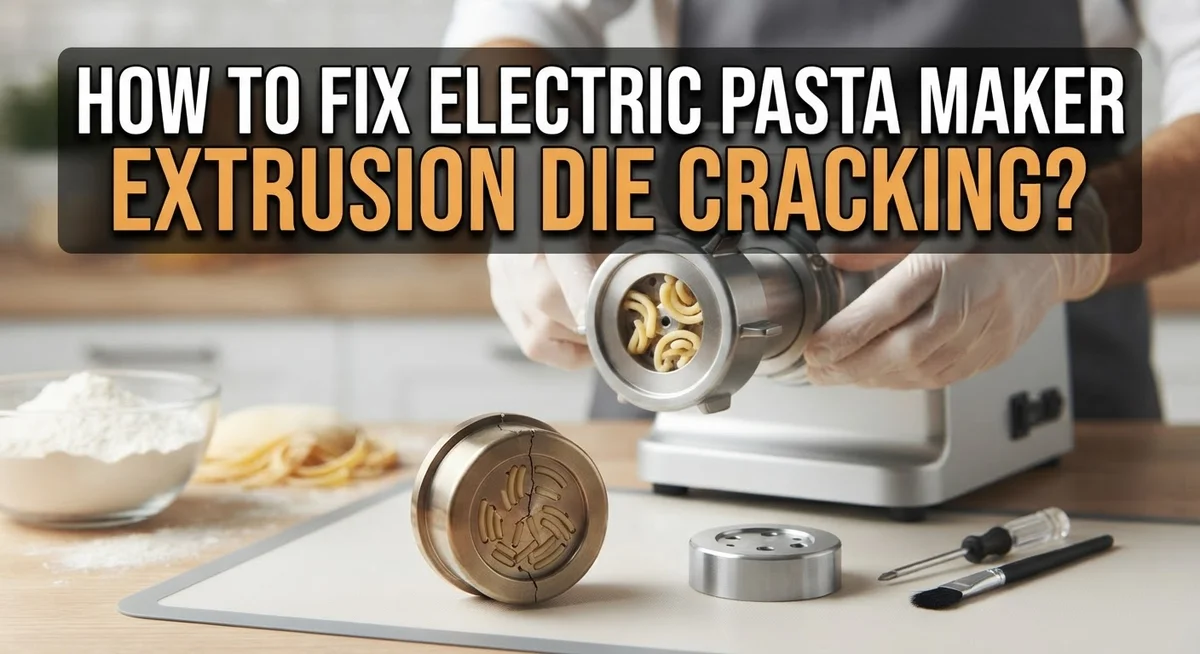
How To Fix Electric Pasta Maker Extrusion Die Cracking?
Does your pasta come out cracked or split instead of smooth and shiny? This is a common problem with electric pasta makers. The good news is you can fix it fast.
Extrusion die cracking usually points to one thing: dry dough. When your dough lacks enough moisture, it struggles to pass through the die cleanly. This causes rough edges, splits, or a crumbly texture.
Sometimes the issue looks different. You might notice delamination, where layers of pasta peel apart. This signals a moisture imbalance in your dough mix.
Other times, flour buildup inside the extruder causes friction and damage. This is called cementation, and it happens when dough consistency is off.
In this guide, we will break down why cracking happens and how to stop it. You will learn the right dough formulation, including hydration levels and kneading times.
We will also cover simple prevention tips, like covering unused dough and warming your die. By the end, you will know exactly how to get smooth, perfect pasta every time.
In a Nutshell
Here is a quick summary to keep in mind. These points cover the main fixes for die cracking.
-
Fix your dough hydration first. Most cracking happens because the dough is too dry. Try a mix like 500g flour with 210g egg for better results.
-
Knead and rest properly. Give your dough a full 10 minutes of kneading. Then let it rest for at least 1 hour before extruding.
-
Cover dough when not in use. Air exposure dries out dough fast. A towel or plastic wrap keeps moisture locked in.
-
Watch for delamination. Peeling or splitting layers often mean your dough needs more moisture or better conditioning.
-
Keep the die clean and warm. Buildup causes friction and damage over time. A slightly warmed die can also smooth out texture problems.
-
Reprocess dough if quality drops. If extrusion looks rough or uneven, run the dough through again. This simple step can save your batch and your die.
Understanding Why Extrusion Die Cracking Happens
Extrusion die cracking happens for specific, fixable reasons. Understanding these causes helps you prevent damage and keep your pasta maker working well.
Dry dough is the main culprit. When dough lacks enough moisture, it cannot flow smoothly through the die. The friction increases, and stress builds up. This stress causes cracks to form in the die itself. Your dough should feel slightly sticky but not wet. It needs to hold together without falling apart.
Delamination shows moisture problems clearly. This is when pasta layers peel or separate during extrusion. It means your dough has uneven hydration. Some parts are too dry while others are wetter. The dry sections cannot bind properly to wet sections, so they split apart.
Flour buildup creates internal damage. When dough is too dry, flour particles do not fully integrate. They pack together like cement inside the extruder. This buildup creates friction against the die walls. Over time, this friction weakens the die and causes cracks to spread.
Air exposure dries dough quickly. Leaving dough uncovered allows water to evaporate. Even 15 minutes of exposure can change the dough’s texture. This is why covering unused dough with a towel or plastic wrap matters so much.
Improper kneading and resting affect texture. Dough needs at least 10 minutes of kneading to develop proper structure. After kneading, let it rest for one hour minimum. This resting time allows gluten to relax and moisture to distribute evenly throughout the dough.
Die temperature also plays a role. A cold die can cause dough to stick and crack. Warming the die slightly helps dough flow more smoothly and reduces stress on the equipment.
Identifying the Signs: Cracking vs. Delamination vs. Cementation
When your pasta maker produces damaged pasta, you need to identify what went wrong. Three distinct problems look similar but require different fixes: cracking, delamination, and cementation.
Cracking appears as visible splits or fractures in your finished pasta strands. The pasta breaks apart cleanly, and pieces separate during extrusion. This happens when your dough lacks sufficient moisture. The dough becomes brittle and cannot hold together as it passes through the die opening.
Delamination shows as peeling or layered separation. The pasta looks like it’s splitting into thin sheets or flakes. Your dough layers peel away from each other rather than breaking cleanly. This indicates your dough needs better hydration or more thorough conditioning. The moisture distribution is uneven throughout the mixture.
Cementation refers to flour buildup inside the extruder. You’ll notice resistance when pushing dough through. The machine sounds strained or produces rough, uneven pasta. Flour particles haven’t fully incorporated into the dough, so they pack together like cement inside the die chamber. This creates friction and internal damage over time.
To tell them apart, watch what happens during extrusion. Does the pasta snap cleanly? You have cracking. Does it peel into layers? That’s delamination. Does the machine struggle and produce bumpy pasta? You’re dealing with cementation.
Each problem points to dough issues. Cracking and delamination both signal moisture problems. Cementation means your dough needs better mixing. Start by checking your hydration levels. Use 500 grams of flour with 210 grams of egg for proper consistency. Knead for a full 10 minutes, then rest for at least one hour. This simple approach fixes most extrusion problems before they damage your machine.
Getting Dough Hydration Right: Ratios That Work
Getting your dough hydration right is the foundation of preventing extrusion die cracking. The moisture content in your dough directly affects how smoothly it flows through the die and whether cracks form during extrusion.
The basic ratio that works well for egg pasta is 500 grams of flour combined with 210 grams of egg. This creates a dough with proper moisture balance that extrudes cleanly without cracking or sticking. If you prefer a semolina and water dough instead, aim for a consistency that feels slightly firm but holds together when squeezed.
Hydration is not a guess. Too little water or egg causes the dough to dry out and crack. Too much moisture makes the dough sticky and causes it to stick inside the die. You need to find the middle ground.
Start by mixing your ingredients thoroughly. Knead for a full 10 minutes to help the flour absorb moisture evenly. This kneading time matters because it develops the gluten structure and distributes hydration throughout the dough.
After kneading, let your dough rest for at least one hour. This resting period allows the flour to fully hydrate and the gluten to relax. The dough becomes more elastic and easier to extrude.
Keep your unused dough covered while working. Use a towel or plastic wrap to prevent air exposure. Even a few minutes of air contact causes surface drying, which leads to cracking during extrusion.
If you notice cracking still occurs after adjusting hydration, check your kneading and resting times. Insufficient conditioning of the dough causes moisture distribution problems. Reprocess the dough through the extruder if the first extrusion looks rough or uneven.
Step-by-Step Fix: Kneading, Resting, and Extruding Correctly
Start by kneading your dough for exactly 10 minutes. This develops gluten structure and distributes moisture evenly throughout. Use a steady, firm pressure as you knead.
After kneading stops, let your dough rest for at least one hour. This resting period allows gluten to relax and helps the dough absorb moisture completely. Cover the dough with a towel or plastic wrap during this time.
Check your dough texture before extruding. It should feel smooth and slightly tacky, not dry or crumbly. If it feels too dry, add a small amount of water or egg and knead for 2 more minutes.
Load your dough into the extruder carefully. Push it down steadily without forcing it. Forcing causes pressure buildup that can crack the die.
Start extruding at medium speed. Fast speeds can shock the dough and cause splitting. Watch the pasta as it comes out.
If you notice cracking in the first batch, stop immediately. Remove the dough and check its consistency. It may need more moisture or additional kneading time.
If the texture looks uneven, run the dough through the extruder again. This reprocessing helps redistribute moisture and improves consistency.
Warm your die if you experience texture problems. A slightly warm die helps dough flow more smoothly. Let it warm for just a few minutes before continuing.
Between batches, keep leftover dough covered. Exposure to air causes rapid drying and future cracking problems.
These steps work together to prevent die cracking and produce quality pasta consistently.
Managing Die Temperature for Smooth Extrusion
Temperature control directly affects how your dough flows through the die. A cold die creates friction that pulls moisture from your dough. This causes cracking because the dough becomes too stiff to extrude smoothly.
Your electric pasta maker’s die should stay warm during operation. Most machines generate heat naturally as the motor runs. However, if your machine sits idle between batches, the die cools down. Cold dies require extra force to push dough through, which increases cracking risk.
Check your die temperature before starting. If it feels cool to the touch, warm it up first. Run the machine empty for 2 to 3 minutes. This allows friction to heat the die gradually. Never use external heat sources like hair dryers or heat guns on your machine. These create uneven temperatures that damage internal parts.
During extrusion, monitor your dough’s texture. If pasta emerges with a rough or uneven surface, your die may be too cold. Stop the machine and let it run empty for another minute. Then resume extrusion.
Humidity in your kitchen also affects die temperature. Dry air pulls moisture from dough faster, making temperature control even more important. In dry conditions, your die needs to stay slightly warmer than usual.
Keep consistent extrusion speed. Slow speeds allow more time for moisture loss. Fast speeds reduce drying but can cause other texture problems. Medium speed typically works best.
Between batches, leave your machine running at idle speed. This maintains die temperature and prevents the cooling cycle that causes cracking. When you finish for the day, run the machine empty for several minutes. This clears remaining dough and lets the die cool slowly instead of rapidly.
Preventing Moisture Loss While Working With Dough
Moisture loss happens quickly when dough sits exposed to air. Your pasta dough contains water and egg that evaporate constantly. Even a few minutes without protection can cause surface drying that leads to cracking during extrusion.
Cover your dough immediately after kneading finishes. Use a clean kitchen towel or plastic wrap to seal it completely. This simple step stops air from reaching the dough surface. The trapped moisture creates a protective barrier that keeps your dough workable.
When you portion dough for extrusion, only remove what you need. Leave the rest covered on your work surface. This approach prevents unnecessary exposure to kitchen air. Your humidity level matters too. Dry kitchens cause faster evaporation than humid ones.
Timing is critical when working with portions. Extrude your dough within 15 to 20 minutes of removing it from storage. The longer dough sits exposed, the more moisture it loses. If you notice the surface feels slightly tacky or stiff, your dough is already losing hydration.
Between extrusion batches, keep leftover dough sealed. Don’t let it sit uncovered while you clean or adjust your machine. Every minute counts when preventing moisture loss.
Watch for early warning signs. If your first batch shows slight cracking at the edges, moisture loss is happening. Stop and cover your remaining dough immediately. This prevents the problem from getting worse.
Temperature also affects evaporation rates. Warm kitchens speed up moisture loss. If your kitchen runs hot, work faster and keep dough covered even more carefully.
These practices work together to maintain consistent dough moisture throughout your entire pasta making session.
Common Mistakes That Lead to Die Cracking
Starting with overly dry dough is the biggest mistake people make. Your dough needs enough moisture to flow smoothly through the die. If you begin with flour that’s too dry, the extruder will struggle, and cracks will form as the dough exits.
Exposing dough to air causes rapid moisture loss. Once you finish kneading, your dough starts losing water immediately. Air dries the surface first, then works inward. This creates an uneven texture that leads to splitting during extrusion.
Inadequate kneading time prevents proper gluten development. Your dough needs friction and heat from kneading to become elastic. Without this, it becomes brittle and cracks easily. Ten minutes of kneading is the minimum for proper conditioning.
Skipping the resting period is equally damaging. Rest time allows gluten strands to relax and absorb moisture evenly. Without this step, your dough remains tight and prone to breaking apart.
Poor die temperature control affects extrusion quality. A cold die causes dough to stiffen too quickly. This stiffness creates pressure buildup, which forces cracks through the pasta strands.
Improper hydration levels remain the most common issue. Too little water creates dry, crumbly dough. Too much water makes the dough sticky and causes different problems. Finding the right balance matters significantly.
Rushing between batches causes problems too. When you extrude immediately after preparing dough, moisture distribution is uneven. Your machine needs time to process the dough properly.
Cemented flour buildup inside the extruder creates blockages. When dry flour packs inside the chamber, it damages the die. This buildup forces uneven pressure during extrusion, which leads to cracking and splitting.
Cleaning and Maintaining Your Extrusion Die to Avoid Buildup
Flour buildup inside your extruder acts like cement. This hardened material damages your die and causes cracks to spread. Preventing this buildup starts with proper dough consistency.
Your dough should feel smooth and slightly tacky, not crumbly. When dough is too dry, loose flour particles escape during extrusion. These particles settle inside the die chamber and harden over time. Proper hydration prevents this problem entirely.
After each extrusion session, clean your die while it’s still warm. Warm dies release stuck dough much easier than cold ones. Use a soft brush to gently remove any dried paste from the die openings. Never use metal tools that scratch the surface.
Run a small batch of fresh dough through the extruder to push out remaining debris. This cleaning dough picks up leftover particles naturally. Discard this batch after it exits the machine.
For stubborn buildup, soak the die in warm water for 15 minutes. The moisture softens cemented flour without damaging metal components. Gently wipe the surface with a soft cloth afterward.
Store your die in a dry location between uses. Moisture causes rust, which weakens the die structure. A small cloth pouch works well for storage.
Check your dough consistency before each session. If flour particles appear loose or your dough crumbles easily, add more moisture and knead again. This simple step prevents most buildup problems.
Regular maintenance takes only five minutes per session. This small effort extends your die’s lifespan significantly. Clean dies produce better pasta quality and prevent the cracking issues that lead to expensive replacements.
Final Thoughts
Extrusion die cracking usually comes down to one simple factor. Your dough moisture level controls everything. Get the hydration right, and most cracking problems disappear on their own.
Start with a reliable recipe. A ratio like 500g flour to 210g egg gives you a solid foundation. This creates dough that holds together without becoming too wet or too dry.
Give your dough enough time to develop properly. Ten minutes of kneading followed by a full hour of resting makes a real difference. This step allows gluten strands to relax and moisture to spread evenly.
Pay attention to how your dough feels before you extrude it. It should feel smooth and slightly tacky. If it feels dry or crumbly, adjust your hydration before running it through the machine.
Small adjustments often solve big problems. If splitting continues, try adding a bit more liquid to your next batch. Testing small changes helps you find what works for your specific setup.
Warming the die can also help when texture issues pop up unexpectedly. A slightly warm die often extrudes dough more smoothly than a cold one.
Remember that prevention beats troubleshooting. Keeping dough covered, watching moisture levels, and maintaining your die regularly will save you time and frustration.
Every pasta maker has a slight learning curve. Once you understand how your dough responds to hydration and handling, cracking becomes rare.
Stay patient as you fine tune your process. Small tweaks in dough consistency and care usually lead to smooth, crack free pasta every time you extrude a new batch.
Frequently Asked Questions
Why does my pasta crack when it comes out of the extruder?
Cracking happens when your dough loses too much moisture. The pasta becomes brittle and splits apart during extrusion. Dry dough is the main culprit here. You need to check your hydration levels before you start. A proper dough should feel smooth and slightly tacky, not crumbly or stiff.
If your dough feels dry, add water one teaspoon at a time. Knead it thoroughly for at least 10 minutes. Let it rest for a full hour before extruding. This resting period allows the flour to fully absorb the moisture.
What causes delamination or peeling in my pasta?
Delamination means your pasta layers are separating or peeling apart. This happens when your dough lacks proper moisture and conditioning. The layers don’t bond together correctly during extrusion.
Low hydration is the primary reason for this issue. Your dough needs enough water to hold together as one piece. If you see peeling, increase your water content slightly. Also make sure you’re kneading long enough. Proper kneading develops the gluten network that holds everything together.
How can I prevent flour from cementing inside my extruder?
Cemented flour buildup acts like concrete inside your machine. This damage builds up gradually and blocks the die. The best prevention is using the right dough consistency. Your dough should be smooth and tacky, never crumbly.
After each session, clean your die while it’s still warm. Run a small batch of fresh dough through to push out debris. For stubborn buildup, soak the die in warm water for 15 minutes. Store it in a dry place between uses.
Should I warm my extrusion die if problems occur?
Yes, warming the die can help when texture issues pop up. Heat helps the dough flow more smoothly through the opening. A warm die also reduces sticking and uneven extrusion.
Let the die warm for a few minutes before you start. This small step often solves texture problems you might notice.

Welcome to The File Fix. I’m Millie, and I review tech so you don’t have to suffer buyer’s remorse.
Navigating the endless sea of Amazon devices and gadget releases can feel like a full-time job. That’s why I do the heavy lifting. I dig past the unreliable 5-star reviews and shiny spec sheets to test how these devices actually hold up in the real world. Whether you’re looking for the best budget earbuds, a reliable power bank, or the latest smart home gear, you’ll find honest, no-nonsense breakdowns here.