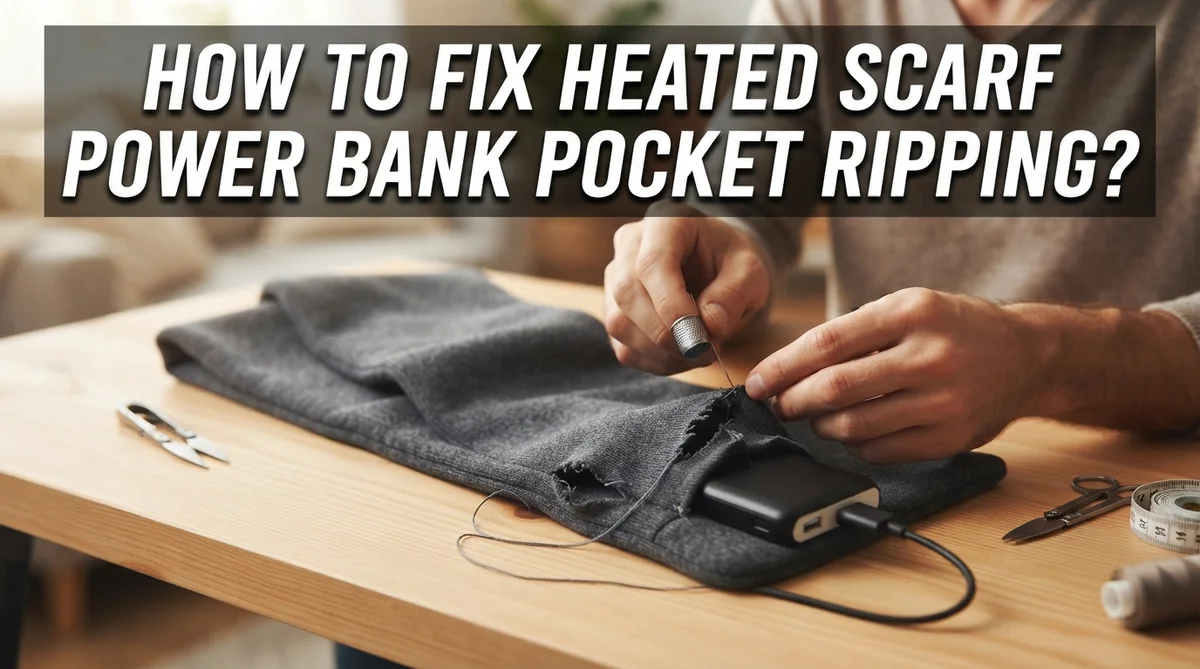
How To Fix Heated Scarf Power Bank Pocket Ripping?
Your heated scarf keeps you warm on cold days. But what happens when the power bank pocket starts ripping?
This is a common problem for many scarf owners. The pocket holds your power bank in place. It also connects the battery to the heating system through a small USB cable.
Repeated stretching and stuffing can weaken the fabric over time. Zippers get pulled too hard. Seams start to fray. Soon, you notice small tears near the pocket opening.
In a Nutshell
- Find the tear first. Check the pocket seams and edges. Look for loose threads or small holes before you start any repair.
- Empty the pocket completely. Take out the power bank and cable. This gives you room to work and stops further damage.
- Use fabric glue or a needle and thread. Small tears often close with basic sewing. Fabric glue works well for tiny rips too.
- Reinforce weak spots. Add a small patch inside the pocket. This stops the tear from spreading again.
- Check the zipper and elastic bands. A damaged zipper puts extra strain on the fabric. Fix or replace these parts if needed.
- Test before regular use. Insert the power bank and connect the cable. Make sure the pocket holds everything snug without stretching.
Understanding Your Heated Scarf’s Power Bank Pocket
Your heated scarf’s power bank pocket is a small compartment designed to hold your battery. This pocket usually sits along the scarf’s body or edge. Understanding how it works helps you prevent damage and fix problems faster.
Most heated scarves feature a zippered pocket that keeps your power bank secure. The pocket connects to the heating zone through a built in USB cable. This cable delivers power from the battery to the warming elements throughout the scarf.
The pocket’s location matters. Check both sides of your scarf if you cannot find it right away. Some scarves have the pocket on the inner side for comfort. Others place it on the outer side for easier access.
Inside the pocket, you will typically find elastic bands or small loops. These hold the power bank in place and prevent it from shifting around. Shifting movement causes stress on the pocket seams and fabric.
The zipper itself plays a big role in pocket durability. A working zipper distributes pressure evenly. A broken or stuck zipper forces the fabric to stretch more than it should. This extra strain leads to ripping.
Cable connection is critical. The USB cable inside the pocket must stay connected to function properly. Loose cables create gaps that let the power bank move freely. This movement weakens the pocket fabric over time.
Most power bank pockets are made from nylon or polyester blends. These materials are strong but not indestructible. Repeated stretching, stuffing, and unstuffing gradually wear down the fabric threads and seams. This is why rips develop near the zipper line or pocket edges.
Knowing these details helps you use your scarf correctly and avoid unnecessary damage.
Why the Power Bank Pocket Rips: Common Causes
Power bank pockets rip for several straightforward reasons. Understanding these causes helps you prevent future damage and fix current problems.
Repeated stretching is the main culprit. Every time you insert and remove your power bank, the fabric stretches a little more. Over months of use, this constant pulling weakens the material around the zipper and seams.
The zipper itself creates significant stress. When you close the zipper over a bulky power bank, pressure builds on the pocket edges. A stuck or misaligned zipper forces extra tension on the fabric, causing small tears to form quickly.
Poor cable management contributes to ripping too. Loose cables shift inside the pocket during movement. This shifting creates friction that wears through the fabric from the inside out. A disconnected cable also means your scarf won’t heat properly.
The pocket’s material quality matters. Thinner nylon or polyester blends tear more easily than reinforced fabrics. Budget scarves often use lower quality materials that degrade faster with regular use.
Improper wrapping of your scarf adds unexpected strain. When the heating zone misaligns, you might overstuff the pocket to compensate. This extra pressure pushes against weak seams and causes rips along the edges.
Cold temperatures can weaken fabric too. Nylon and polyester become brittle in extreme cold, making them more prone to tearing when stretched.
Worn elastic bands inside the pocket also play a role. These bands help secure your power bank. When they lose elasticity, the power bank shifts more freely, creating friction that damages the pocket lining.
Most rips start small. Catching them early prevents larger tears that make your heated scarf unusable.
Tools and Materials Needed for Repair
Before you start fixing your heated scarf’s power bank pocket, gather the right supplies. Having everything ready makes the repair faster and easier.
Sewing supplies are essential for most pocket tears. You will need a needle that fits your thread comfortably. Pick thread that matches your scarf color as closely as possible. A small pair of scissors works well for cutting thread cleanly.
Fabric glue offers a quick fix for small rips. This adhesive bonds fabric pieces together without stitching. Make sure the glue you choose works on synthetic materials like nylon or polyester. Let it dry completely before using your scarf again.
Patches reinforce weak spots and prevent future ripping. Small fabric patches stick to the inside of your pocket. They add extra strength where the pocket takes the most stress. You can cut patches from old fabric scraps or purchase pre made options.
Inspection tools help you locate damage clearly. A flashlight lets you see inside the pocket better. Magnifying glasses work great for spotting small tears before they grow larger.
Basic cleaning supplies prepare your pocket for repair. A damp cloth removes dirt and debris from the damaged area. Let the pocket dry completely before applying glue or patches.
Optional reinforcement materials include bias tape or fabric strips. These items wrap around weak seams to add durability. They prevent the same tear from happening again in that spot.
Keep all your tools in one place before starting work. Good organization saves time and prevents frustration. You will finish the repair faster when everything sits nearby and ready to use.
Step-by-Step Guide to Fixing a Ripped Pocket
Start by examining your heated scarf carefully to understand the damage. Hold the scarf up to natural light and inspect the entire pocket area on both sides. Look for small tears, separated seams, or enlarged holes around the zipper.
Once you locate the rip, clean the area around it with a soft cloth. Remove any lint, dust, or debris that might interfere with your repair. This step helps adhesives and patches bond properly to the fabric.
For small tears under half an inch, fabric glue works quickly. Apply a thin layer of glue to both torn edges. Press them together gently and hold for 30 seconds. Let the glue dry completely according to package instructions before testing the pocket.
Medium sized rips benefit from a patch approach. Cut a fabric patch slightly larger than the tear. Position it over the damaged area and secure it with fabric glue or by hand stitching around all edges. Make sure the patch covers the entire rip with extra material on all sides.
Larger tears require reinforcement patches on both the inside and outside of the pocket. This sandwich approach distributes stress across a wider area. Stitch or glue patches to both sides, ensuring your stitches don’t puncture the heating elements.
After repairs dry completely, test the pocket gently. Insert your power bank slowly and check that the zipper closes smoothly. The repair should feel stable without bulging or pulling. If the zipper still catches on the patch, trim excess fabric carefully with scissors.
Allow 24 hours of curing time before regular use. This ensures your repair sets properly and handles the weight of your power bank without failing.
Reinforcing the Pocket to Prevent Future Tears
Reinforcing your pocket stops new rips from forming. This step matters because the same stress that caused the first tear will happen again without prevention.
Start by identifying which areas tear most often. The zipper edges take the most abuse. The corners where the pocket meets the scarf body also weaken quickly. Mark these spots with a pen so you remember them.
Fabric strips work well for reinforcement. Cut strips about two inches wide and four inches long. Place them along the zipper edges on the inside of the pocket. Use fabric glue or needle and thread to secure them firmly. Let the glue dry completely before using your scarf.
Add bias tape around the zipper opening for extra protection. This tape distributes stress evenly instead of concentrating it in one spot. Stitch it down carefully so it stays put during use.
Consider reinforcing the pocket corners too. These areas experience pulling when you insert and remove the power bank. Small fabric patches at each corner prevent tears from starting.
Elastic bands inside the pocket need checking. If they feel loose or damaged, replace them. Tight elastic keeps your power bank from shifting around, which reduces strain on the pocket walls.
Don’t overload your pocket. Your power bank should fit snugly without forcing the zipper closed. Forced zippers create extra tension that leads to ripping.
After reinforcement, wait 24 hours before regular use. Test the pocket gently first. These simple steps will extend your scarf’s life significantly and keep your heated device working properly for many seasons ahead.
Proper Power Bank Insertion and Cable Handling Tips
When you insert your power bank into the scarf’s pocket, handle it with care. The USB cable connection is what actually powers your scarf’s heating system. A loose or improperly connected cable stops the heat from working completely.
First, locate the zipper pocket on your scarf. Check both sides if you’re unsure where it is. Most heated scarves have the battery compartment along the main body or near one end.
Before inserting the power bank, make sure it’s fully charged. A dead or low battery won’t activate the heating function. Press and hold the power button on your bank for about 3 seconds to turn it on.
Insert the power bank gently into the pocket. Don’t force it in quickly, as this puts stress on the zipper and fabric. The USB cable should connect to the heating element inside the pocket. Check that the port orientation is correct before pushing the connection together.
Once connected, fully close the zipper. A partially closed zipper creates gaps that let heat escape and puts strain on the pocket edges.
Cable handling matters more than people realize. Loose cables mean zero heat output. Make sure the cable stays connected throughout use. If your scarf doesn’t heat up after proper insertion, disconnect and reconnect the cable. Sometimes the connection just needs resetting.
Never yank the cable out of the pocket. Gentle removal prevents damage to both the cable and the pocket lining. Pull straight out rather than at angles.
If charging fails in cold weather, move your scarf to a warmer room. Wait 15 minutes before trying again. Cold temperatures affect battery performance temporarily. Once warmed up, your power bank should work normally.
Common Mistakes That Worsen Pocket Damage
Pocket damage gets worse when you make simple mistakes during daily use. Understanding these errors helps you avoid expensive repairs and extends your scarf’s lifespan.
Overstuffing the pocket is the biggest culprit. Your power bank needs space to sit comfortably. When you force multiple items into the compartment, the zipper experiences extra strain. The fabric stretches beyond its limits. Seams separate faster. Keep only your power bank and its cable inside the pocket.
Yanking the cable out quickly creates stress on the zipper and pocket walls. The sudden pull damages the fabric fibers around the connection point. Always disconnect slowly and gently. Wiggle the cable slightly as you remove it.
Zipping too hard or fast tears the fabric near the slider. The teeth catch loose threads. Slow, steady pressure keeps everything aligned. Listen for any resistance and stop immediately.
Storing your scarf while damp weakens the pocket material. Moisture causes fabric to swell and shrink unevenly. The zipper rusts and binds. Always let your scarf dry completely before storing it.
Ignoring small tears early turns minor damage into major problems. A tiny rip spreads quickly with repeated use. Address damage as soon as you notice it.
Exposing the pocket to extreme temperatures makes fabric brittle. Cold weather causes materials to crack. Heat makes them weaker. Store your scarf in a climate controlled space.
Washing your scarf without protecting the pocket allows water to seep into seams. The power bank pocket gets damaged from moisture and agitation. Follow care instructions carefully.
These mistakes compound over time. Prevention is simpler than repair.
Troubleshooting: When Repairs Don’t Solve Heating Issues
When your heated scarf pocket still won’t work after repairs, heating issues often stem from problems beyond the tear itself. The pocket damage may have affected how your power bank connects internally. Check if the USB cable sits loose inside the pocket. A disconnected cable prevents heat from flowing through the scarf entirely.
Start by removing your power bank completely. Look inside the pocket opening and trace where the cable should connect. Make sure nothing blocks the connection point. Gently reinsert the power bank and listen for a click sound, which indicates a secure connection.
Temperature plays a bigger role than most people realize. If you’re in a cold room, your power bank may struggle to charge or activate. Move your scarf to a warmer space and wait 15 minutes before trying again. Cold conditions make batteries sluggish and slow to respond.
Next, check your power bank’s charge level. A low or dead battery won’t produce heat no matter how perfect your pocket repair is. Connect it to a wall outlet separately and let it charge fully before reinserting it into the scarf.
If heating still fails after these steps, the issue may involve internal wiring damage. The tear could have damaged heating elements or wires running through the scarf material. In this case, the scarf may need professional assessment or replacement.
Always activate the power button correctly. Press and hold it for 3 seconds. Some users tap it briefly and expect instant heat, but the scarf needs that full activation time to begin warming up properly.
Final Thoughts
Fixing a ripped power bank pocket is easier than it looks. Small tears need quick action before they spread. With basic tools and patience, your scarf can work like new again.
Start with the simplest fixes first. Check your cable connections and power bank charge level. Many heating problems have nothing to do with the pocket tear itself.
Reinforcement makes a real difference. Use fabric patches or strong stitching around damaged edges. This stops the tear from growing larger during daily use.
Remember that cold weather affects performance too. If your scarf won’t heat up, move to a warmer space first. Wait about 15 minutes before trying again.
Proper handling prevents future damage. Insert your power bank gently every time. Avoid yanking cables or forcing the zipper shut.
Check elastic bands inside the pocket regularly. Loose or damaged bands let the power bank shift around. This shifting puts extra stress on already weak areas.
Your daily habits matter more than the repair itself. Even a perfect fix fails if you keep making the same mistakes. Handle your scarf with care each time you use it.
Give repairs enough time to set properly. Rushing back into regular use can undo your hard work. Wait at least 24 hours before wearing your scarf again.
If problems continue after repairs, the issue might involve internal wiring. This goes beyond simple pocket damage. In these cases, professional help may be your best option.
Most pocket tears are fixable with basic care and attention. Combine proper repair techniques with better daily habits. Your heated scarf will serve you well through many cold seasons ahead.
Frequently Asked Questions
Why does my power bank pocket zipper keep getting stuck?
Zippers stick when fabric bunches up inside the slider or when debris collects along the track. This happens more often after the pocket tears because loose threads catch on the zipper teeth. Gently pull the zipper slowly instead of forcing it. If threads are caught, use a small brush to clear the track first. Never yank the zipper hard, as this creates more damage to the pocket walls.
Can I still use my heated scarf if the pocket has a small tear?
A small tear won’t stop your scarf from working right away. Heat still flows through the fabric. However, small tears get bigger quickly when you insert and remove the power bank repeatedly. The tear spreads along the seams with each use. Repair the tear now before it becomes too large to fix easily. This prevents water from seeping into the pocket during washing too.
What should I do if my power bank won’t charge inside the pocket?
First, remove the power bank and check if it charges outside the pocket. If it charges normally elsewhere, the issue is likely a loose cable connection inside the pocket. Reinsert the power bank and make sure the USB cable clicks into place. The port orientation matters, so try rotating the cable if it doesn’t fit smoothly. If the scarf is in a cold room, move it somewhere warmer and wait 15 minutes before trying again.
How do I know if the pocket damage is beyond repair?
Large tears that span more than two inches usually mean the pocket structure is compromised. If the zipper slider is bent or broken, repairs become difficult. When seams have completely separated along multiple sides, the pocket loses its ability to hold the power bank securely. At this point, professional repair or pocket replacement may be your best option.

Welcome to The File Fix. I’m Millie, and I review tech so you don’t have to suffer buyer’s remorse.
Navigating the endless sea of Amazon devices and gadget releases can feel like a full-time job. That’s why I do the heavy lifting. I dig past the unreliable 5-star reviews and shiny spec sheets to test how these devices actually hold up in the real world. Whether you’re looking for the best budget earbuds, a reliable power bank, or the latest smart home gear, you’ll find honest, no-nonsense breakdowns here.