
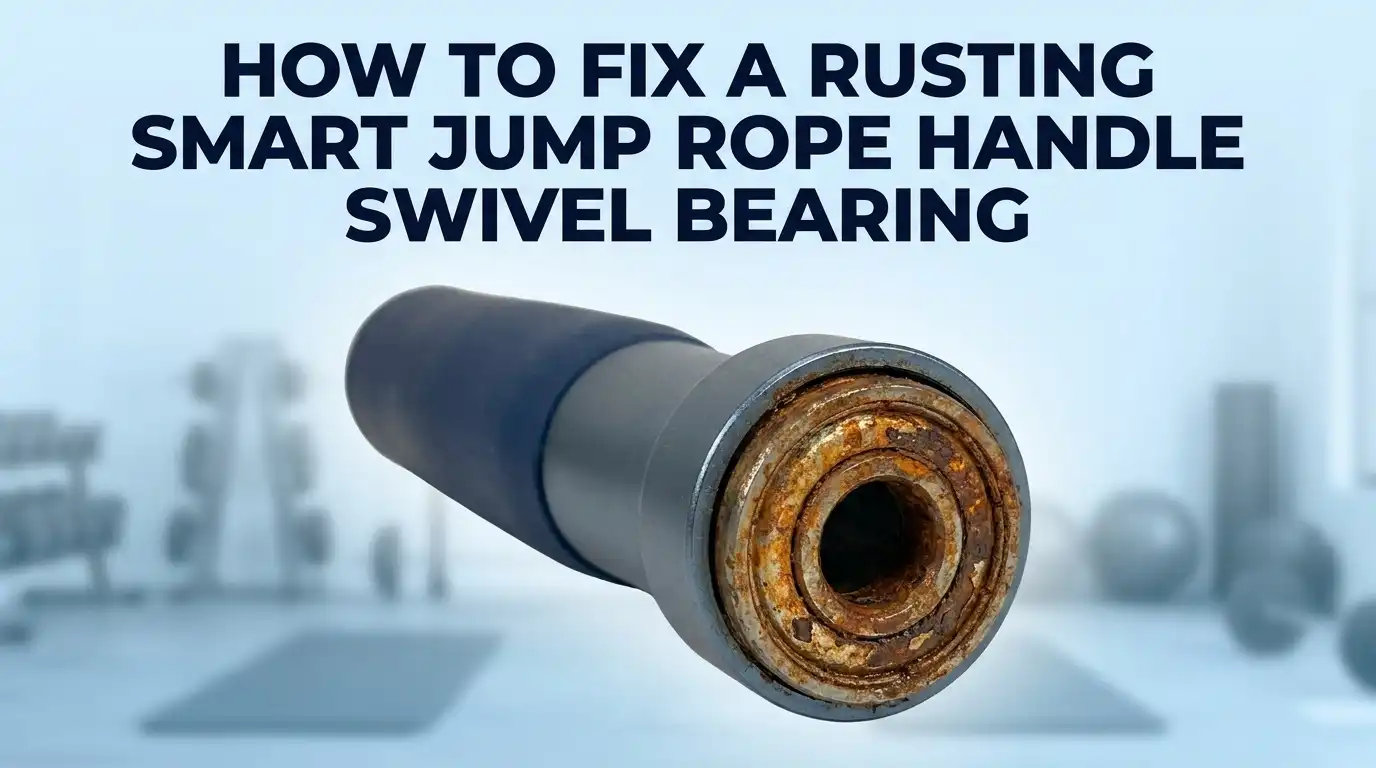
How to Fix a Rusting Smart Jump Rope Handle Swivel Bearing?
Does your smart jump rope handle feel rough or noisy when it spins? That grinding feeling usually points to one problem. Rust has built up on the swivel bearing inside the handle.
This happens to almost every jump rope over time. Manufacturers coat bearings with oil before shipping. But that coating wears off with regular use.
Sweat, humidity, and moisture speed up the rusting process. If you skip maintenance, the bearing can seize up completely. Your smooth spins turn into jerky, uneven rotations.
In a Nutshell
- Rust forms when the protective oil coating on your bearing wears off. Moisture from sweat or humidity speeds this up.
- Disassemble the handle first. You need clear access to the swivel bearing to clean and fix it properly.
- Use WD-40 to break down rust and clear out any trapped water. This step prepares the bearing for fresh lubrication.
- Apply tri-flow lubricant after cleaning. This keeps the bearing spinning smoothly and protects it from future rust.
- Reassemble your handle once the bearing is clean and lubricated. Test the spin to check for smoothness.
- Dry your rope after every workout. This simple habit cuts down moisture exposure and slows rust buildup.
- Maintain regularly. The oil coating degrades over time, so periodic lubrication keeps your jump rope working like new.
Why Swivel Bearings Rust Over Time
Swivel bearings rust because the protective oil coating breaks down over time. Manufacturers apply this initial oil layer to shield the metal from moisture and air exposure. Once that coating degrades, rust begins to form on the bearing surfaces.
Moisture is the main culprit behind bearing rust. Sweat from your hands, humidity in the air, and water from outdoor workouts all create the perfect conditions for oxidation. When moisture sits on the bearing, it reacts with the metal and creates rust spots. This process happens faster in humid climates or if you use your rope near water.
Regular use without proper drying accelerates rust formation. Many people store their jump rope immediately after workouts without wiping down the handle. The sweat and moisture remain trapped around the bearing, speeding up corrosion. Even indoor use exposes bearings to humidity that builds up over weeks and months.
The bearing design itself makes rust more likely. Swivel bearings contain tight spaces where moisture can hide. Water gets trapped in these small areas and stays there longer, giving rust more time to develop. This is why rust often appears even if you use your rope indoors.
Understanding this process helps you prevent future problems. The rust doesn’t appear overnight. It develops gradually as the protective coating wears away and moisture accumulates. Recognizing these causes helps you take action before your handle becomes difficult to spin.
The good news is that rust formation is completely preventable with basic maintenance. Drying your rope after use and applying fresh lubricant periodically keeps your bearings protected. These simple habits stop rust before it starts and extend your rope’s lifespan significantly.
Signs Your Jump Rope Bearing Needs Attention
Your smart jump rope handle will show specific warning signs before rust becomes a serious problem. Learning to spot these signals early helps you fix issues before they get worse.
Listen for grinding or squeaking sounds when you spin the handle. A healthy bearing rotates silently and smoothly. Any noise during rotation indicates rust buildup on the metal surfaces inside the swivel mechanism.
Feel the handle as it spins. A rough or gritty sensation means rust particles are creating friction. Compare this to how smoothly it moved when you first bought it. That difference tells you the bearing needs cleaning.
Check for visible discoloration on the handle exterior. Brown or orange streaks near the swivel point suggest moisture has reached the bearing. Rust stains on the outside almost always mean internal corrosion has started.
Resistance during spinning is another key indicator. The handle should rotate freely with minimal effort. If you need to apply pressure to keep it spinning, rust is likely restricting movement inside.
Pay attention to performance during workouts. Does your rope feel heavier or harder to control? Does the handle stick occasionally during jumps? These changes happen when rust accumulates inside the bearing assembly.
Moisture buildup creates a musty or metallic smell near the handle. Your nose can detect corrosion before your eyes see it.
The handle may feel loose or wobbly if rust has damaged the bearing structure. Proper bearings keep everything tight and stable.
Catching these signs early makes repairs much simpler. You can address minor rust with basic cleaning and lubrication. Ignoring these warnings allows rust to spread deeper into the mechanism, making repairs more difficult later.
Tools and Supplies You’ll Need
You need several basic items to fix your smart jump rope handle swivel bearing rust problem. Gathering everything beforehand makes the repair process faster and smoother.
Start with a small wrench or hex key set. These tools help you disassemble the handle and access the bearing inside. Most smart jump rope handles use standard sizes, so a basic set covers most models.
You’ll want a rust removal product that breaks down oxidation effectively. This product clears away rust buildup and removes trapped moisture from the bearing surfaces. Have clean rags or paper towels nearby to wipe away loosened rust particles and debris.
A lubricant is essential for protecting the bearing after cleaning. This product creates a protective barrier that prevents future rust formation. Apply it sparingly to avoid attracting dirt and dust.
Get a small brush with soft bristles. This tool helps you scrub away rust without damaging the bearing itself. An old toothbrush works well for this purpose.
Prepare a container of clean water for rinsing. You may need to wash away cleaning residue after rust removal. Dry everything completely with fresh towels afterward.
A small flashlight helps you see inside the handle clearly. Bearings sit in tight spaces, so good lighting makes inspection and cleaning easier.
Finally, keep a container handy for small parts. When you disassemble the handle, screws and washers can disappear easily. Storing them safely prevents losing pieces during repair.
These simple tools are likely already in your home. You don’t need expensive equipment to restore your jump rope handle. Most people have everything required for this basic maintenance task.
Step-by-Step: Disassembling the Handle Safely
Start by laying your jump rope on a clean, flat surface. This gives you a stable workspace and prevents losing small parts. Gather all your tools before you begin so you won’t need to stop midway through.
Locate the screws or bolts holding the handle together. Most smart jump rope handles have fasteners on the bottom or sides. Use your flashlight to see inside the handle clearly. Mark where each screw came from if the handle has multiple sections.
Slowly unscrew each fastener by turning counterclockwise. Don’t force anything if a screw feels stuck. Apply gentle pressure and wait a moment for it to loosen naturally. Place each screw in your small container so you don’t lose them.
Gently pull the handle halves apart once all fasteners are removed. Move slowly to avoid damaging internal wires or the bearing itself. You’ll now see the swivel bearing mechanism inside. It typically sits in the center where the rope connects to the handle.
Take photos of the bearing’s position before you proceed further. This reference helps you reassemble everything correctly later. Notice how the bearing sits in its socket and how any washers or spacers are positioned.
If the bearing is held by additional screws or clips, remove those carefully too. Some bearings slide out freely while others require gentle wiggling to release. Never force the bearing out as this can cause additional damage.
Set all components in order on your workspace. Keep the bearing, washers, screws, and handle pieces organized. You’re now ready to clean the rust away. Having everything visible makes the cleaning and reassembly process much smoother and faster.
Cleaning Rust with WD-40
WD-40 works well for removing rust from your smart jump rope handle’s swivel bearing. This product penetrates rust effectively and displaces water that causes further corrosion.
Start by spraying WD-40 directly onto the rusted bearing. Let it sit for about 5 to 10 minutes. This waiting period allows the product to break down the rust layer. You’ll see the rust begin to soften and loosen.
Use your soft bristled brush to gently scrub away the loosened rust. Work in circular motions around the bearing surface. Don’t scrub too hard, as you might damage the bearing underneath. You’re removing the rust layer, not the metal itself.
Spray more WD-40 as needed during cleaning. Keep brushing until most rust disappears. The bearing should look noticeably cleaner and shinier.
After rust removal, use clean water to rinse the bearing thoroughly. WD-40 leaves a residue that you need to remove. Pat the bearing dry with a clean cloth. Make sure no moisture remains in crevices or gaps.
Let the bearing air dry completely for at least 15 to 20 minutes. You can use your flashlight to check for any remaining water droplets inside the handle.
Once dry, the bearing is ready for fresh lubrication. Proper drying prevents new rust from forming immediately. Skipping this step wastes your cleaning effort.
WD-40 alone won’t protect your bearing long term. It’s primarily a cleaning and rust removal product. You’ll need to apply a proper lubricant afterward to prevent rust from returning. This two step process gives your bearing the best protection against future corrosion.
Applying the Right Lubricant and Reassembling
After your bearing is completely dry, you’re ready to apply fresh lubricant. This step protects the metal from future rust and keeps your rope spinning smoothly. Choose a lubricant designed for small mechanical parts and bearings. Light machine oil works well for this purpose. You can also use general purpose lubricants that reduce friction on metal surfaces.
Apply a small amount of lubricant directly to the bearing. You only need a thin coating. Too much lubricant attracts dust and debris, which creates problems over time. A few drops are sufficient for complete protection.
Use your soft brush to spread the lubricant evenly across all bearing surfaces. Make sure the oil reaches into every groove and crevice. Rotate the bearing gently by hand while applying lubricant. This helps distribute the coating uniformly.
Wipe away any excess lubricant with a clean cloth. The bearing should look shiny but not dripping wet. Excess oil will eventually leak out and make your hands greasy during use.
Now you’re ready to reassemble your handle. Line up the handle halves carefully. Insert all fasteners back into their original positions. Tighten each screw or bolt slowly and evenly. Don’t overtighten, as this can crack the handle material.
Test the swivel bearing by rotating it gently with your fingers. It should spin smoothly without resistance. If you hear grinding sounds or feel grinding sensations, disassemble again and check for remaining rust particles.
Once reassembled, let your jump rope sit for 24 hours before heavy use. This allows the lubricant to fully settle into the bearing. Your smart jump rope handle is now protected and ready for action.
Maintenance Tips to Prevent Future Rusting
Preventing rust on your smart jump rope handle’s swivel bearing requires consistent care and attention. The key is stopping moisture from reaching the bearing in the first place. Always dry your jump rope completely after each workout session. Wipe down the entire handle with a clean, dry cloth. Pay special attention to where the handle meets the cable, as water collects there easily.
Store your jump rope in a dry location away from humidity. Avoid leaving it in bathrooms, basements, or outdoor areas where moisture builds up. A cool, dry closet or gym bag works well. Consider using a small pouch or cloth bag to store your rope. This extra layer protects against accidental water exposure.
Regular lubrication is your best defense against rust formation. Apply lubricant to the bearing every few weeks, even if you don’t see rust yet. This maintains the protective coating that manufacturers apply to new bearings. The oil layer acts as a barrier between the bearing and moisture in the air.
After intense workouts or outdoor use, inspect your bearing for early signs of rust. Catching rust early makes removal much easier. Small spots of discoloration mean it’s time to clean and lubricate immediately.
If you use your jump rope near water, at the beach, or in humid climates, increase your maintenance schedule. Check your bearing more frequently in these conditions. Apply lubricant more often to keep the protective coating fresh and strong.
Never store your jump rope while it’s still wet or damp. Always allow complete drying before putting it away. These simple habits prevent most rust problems before they start.
Common Mistakes to Avoid
Many people make simple mistakes when caring for smart jump rope handle swivel bearings. These errors speed up rust formation and damage the rope faster than necessary.
Neglecting regular maintenance is the biggest mistake. Owners often wait until rust appears before they act. By then, the bearing damage is already significant. You should check your bearings every few weeks, even if everything looks fine.
Another common error is leaving your rope wet after use. Water sits on the bearing and corrodes the metal underneath. Always dry your jump rope completely after workouts, especially if you’ve sweated heavily or used it outdoors.
Using the wrong lubricant causes problems too. Some people apply thick oils or greases that trap moisture and dirt. These substances actually make rust worse over time. Lighter lubricants work much better for swivel bearings because they protect without collecting debris.
Storing your rope in humid environments speeds up rust significantly. Bathrooms, basements, and garages with poor ventilation create ideal conditions for corrosion. Keep your jump rope in a cool, dry closet or storage box instead.
Skipping the cleaning step before lubrication is another mistake. Applying fresh lubricant over rust doesn’t solve the problem. You must remove all rust first, then dry the bearing completely before adding new lubricant.
Finally, people often ignore early warning signs. A slightly stiff swivel or minor discoloration means rust is starting. Address these issues immediately rather than waiting for severe damage.
Avoiding these mistakes keeps your smart jump rope working smoothly for years. Consistent care takes just minutes but prevents costly damage and replacement.
Final Thoughts
Fixing a rusty swivel bearing is simple once you know the steps. Clean, dry, and lubricate your bearing, and it will spin smoothly again.
Rust forms when moisture sits on metal for too long. Your smart jump rope handle needs regular care to stay in good shape.
The good news is that most rust problems are easy to fix. You don’t need special tools or expensive products to get results.
A little maintenance goes a long way. Cleaning your bearing with WD-40 removes rust and grime fast. Drying it completely stops new rust from forming right away.
Applying tri-flow lubricant afterward protects the bearing for weeks. This simple routine keeps your jump rope working like new.
Think of bearing care as part of your workout routine. Just like you clean your shoes or wash your gym clothes, your jump rope needs attention too.
Consistency matters more than perfection. You don’t need to check your bearing every single day. Checking it every few weeks is often enough to catch problems early.
If you notice squeaking or stiffness, that’s your sign to act. Don’t wait until the bearing seizes up completely.
Fixing rust early saves you time and effort later. It also helps your jump rope last much longer.
Remember that prevention is easier than repair. Drying your rope after every workout stops most rust problems before they start.
Storing it properly in a dry spot adds extra protection. These small habits make a big difference over time.
Your smart jump rope is an investment in your fitness. Taking care of the swivel bearing keeps that investment working well for years to come.
Frequently Asked Questions
Why does my smart jump rope handle bearing rust?
Your bearing rusts when the protective oil coating wears away over time. Moisture exposure speeds up this process significantly. Water sits on the metal surface and causes oxidation. Even humidity in the air can contribute to rust formation if your rope stays in damp environments.
How do I know if my bearing is rusting?
Listen for squeaking or grinding sounds when you jump. The rope may feel stiff or harder to spin smoothly. You might see visible discoloration or orange spots on the metal bearing. Some ropes feel less responsive than they used to.
What’s the best way to clean rust off the bearing?
Start by taking your handle apart to reach the bearing. Use a penetrating spray cleaner to dissolve rust and remove water residue. Wipe the bearing thoroughly with a dry cloth. This step removes all the rust particles and grime before you apply fresh lubricant.
How often should I lubricate my bearing?
Apply lubricant every few weeks as a general rule. If you jump rope frequently or use it outdoors, increase maintenance to weekly. After beach use or intense workouts, inspect your bearing right away. The key is staying consistent with your maintenance schedule.
Can I prevent rust completely?
Yes, you can prevent most rust problems with proper care. Dry your rope immediately after use, especially after sweating or outdoor sessions. Store it in a dry location away from humidity. Regular lubrication creates a protective barrier that keeps moisture away from the metal.

Welcome to The File Fix. I’m Millie, and I review tech so you don’t have to suffer buyer’s remorse.
Navigating the endless sea of Amazon devices and gadget releases can feel like a full-time job. That’s why I do the heavy lifting. I dig past the unreliable 5-star reviews and shiny spec sheets to test how these devices actually hold up in the real world. Whether you’re looking for the best budget earbuds, a reliable power bank, or the latest smart home gear, you’ll find honest, no-nonsense breakdowns here.