Nikon Z5 II Review: Everything You Need to Know
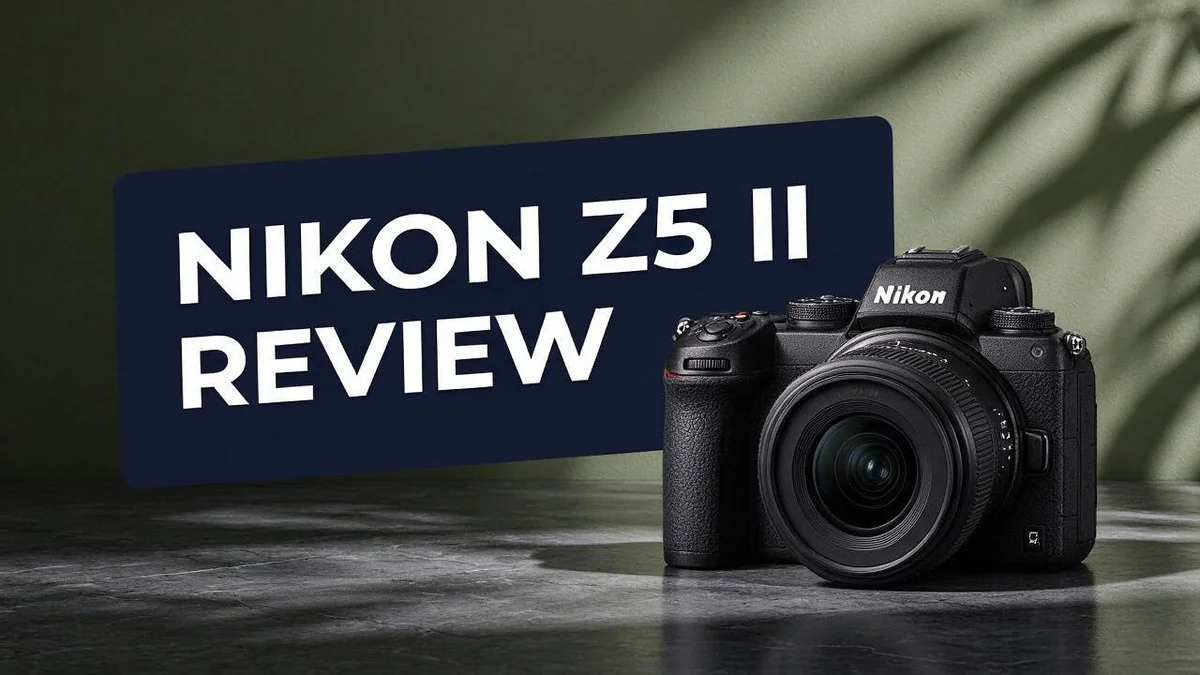
Looking for a camera that handles almost any shot? The Nikon Z5 II could be your next great tool.
It features a 24MP BSI CMOS full frame sensor. The EXPEED 7 processor, the same engine found in Nikon’s flagship models, keeps everything fast and sharp.
Autofocus gets a real boost here. Low light focusing is strong, reaching down to minus 10 EV in some tests. Your images also look clean when the sun goes down.
In a Nutshell
- Engine power: The camera runs on the EXPEED 7 processor. Nikon uses this same engine in its flagship models, so you get fast and reliable performance for everyday shooting and action.
- Video ready: It records 4K UHD video for creators. Filmmakers, vloggers, and hybrid shooters get sharp footage for their projects without carrying extra gear.
- Low light images: Pictures look clean when the lights dim. Night scenes, indoor events, and evening portraits benefit most from this strength.
- Strong rivals: It goes up against the Sony A7C II, Nikon Z6 III, and Sony A7 IV. Each option suits different needs, so compare them side by side.
- Who it suits: Photographers who want a full frame body with modern tools will feel at home. Hands on controls make quick changes easy during a busy shoot.
- Smart next step: Check the specs and test the feel in a store if you can. This helps you find the best fit for your style and workflow.
Sensor and Image Quality

- Full-frame Power: 24.5MP BSI-CMOS FX-format sensor and EXPEED 7 processing engine unlock high-resolution, high-speed shooting up to 30fps.
- Impressive Low-light Performance: Autofocus in near-total darkness with AF detection down to -10EV. Hand-hold shots confidently with up to 7.5 stops of built-in image stabilization.

Some of the links on this website are affiliate links, which means that at no additional cost to you, I earn a commission if you click through and make a purchase. I only recommend products and services that I believe will add value to my readers. Thank you for your support!
Image quality sits at the center of any camera review. The sensor shapes every file you take. A good sensor delivers rich color, smooth tones, and plenty of room for editing.
Dynamic range is another area worth a close look. Full frame sensors generally capture wide tonal range. This means bright skies and deep shadows can share the same frame with less loss of detail.
Noise control matters when light gets low or ISO rises. Many photographers push ISO higher than they expect. In those moments, cleaner files give you more options. Event shooters and indoor sports fans often value this most.
Skin tones deserve attention too. Nikon color science tends to produce natural looking portraits. Many portrait shooters prefer natural colors over heavy editing, so this strength can save time after a shoot.
RAW files give the most freedom. If you plan to edit, shoot in RAW. The extra data lets you recover highlights, lift shadows, and adjust white balance without damaging the image.
Lens choice also changes what the sensor can show. Sharp lenses help the sensor reach its full potential. Pairing the body with quality glass often produces a bigger jump in results than any other upgrade.
Different shooters will notice different things. Landscape and studio photographers tend to spot subtle tonal shifts. Casual users still enjoy clean, colorful images for social media and family albums.
Try a simple test before you decide. View sample files at full size on a large screen. Compare them with images from rivals like the Sony A7C II or Nikon Z6 III to see which look fits your style best.
Autofocus Performance
Autofocus is one of the first things many shooters check. The Nikon Z5 II offers several focus tools for different kinds of shoots.
Focus area modes let you decide how much of the frame the camera uses. A single point works well for still portraits. A wider zone helps when your subject moves around.
Subject detection helps the camera find faces and bodies in busy scenes. It can then hold focus while your subject shifts position.
Tracking is the next step. Once you lock onto a subject, the camera follows it across the frame. This helps with kids, pets, and athletes who rarely stand still.
Eye focus deserves a closer look too. The camera searches for eyes, which helps keep portraits sharp. Many photographers rely on this feature for weddings and headshots.
Autofocus speed also depends on your shooting mode. Burst shooting gives the system more chances to land a sharp frame. Keep an eye on the buffer during long runs.
Try a simple test at home. Ask a friend to walk slowly at you. Watch whether the focus point stays on their face or drifts away.
Notice how quickly the lens reacts. Hunting happens when the lens moves back and forth without locking on. This sign points to weak contrast or poor light.
Test in your real conditions. Check focus in dim rooms, bright sun, and cluttered backgrounds. Each setting reveals different strengths and limits.
Lens choice matters here. Autofocus relies on both the body and the lens motor. Test the exact pairing you plan to use before you commit.
Custom buttons can speed up your workflow. Assign focus modes to a control you can reach fast. This small step saves time when action starts.
Sports and wildlife shooters should focus on tracking performance first. Event and portrait photographers may value face and eye detection more. Your style guides your priorities.
Take notes after each test session. Write down what worked and what missed. Your results will guide your final decision.
Handling and Ergonomics
Handling decides how a camera feels after an hour of shooting. The Nikon Z5 II aims for a body that suits many hand sizes.
Grip shape makes the first impression. A deep front grip lets your fingers wrap around the body. Your hand stays relaxed, even on long shooting days.
Balance matters too. A light body paired with a large lens can feel front heavy. Mount your favorite lens and hold the setup for a few minutes.
Dials and buttons sit where your thumb expects them. The top plate puts key settings within easy reach. You can change exposure without taking your eye away from the viewfinder.
The rear screen adds another layer of control. It tilts, which helps you shoot from low or high angles. You can frame a shot without lying on the ground.
The menu system takes time to learn. Spend twenty minutes in the menus before your first shoot. Move the settings you change most often to easy spots.
Viewfinder comfort counts for eye users. A clear finder shows the full frame with less strain. Glasses wearers should check how far the eyepiece sits from the eye.
Test handling in a store if you can. Hold the camera for several minutes. Turn each dial and press each button. Notice which controls feel natural and which feel awkward.
Handling is personal. A small hand and a large hand will feel different grips. Choose the body that feels right in your hands, because comfort keeps you shooting more often.
Top 3 Alternatives
Canon EOS R6 II

- FULL-FRAME CMOS SENSOR: 24.2 effective megapixels (approx.) lets you capture sharp, detailed images even in low-light conditions indoors and outdoors (compatible with Dual Pixel CMOS AF).
- DIGIC X IMAGE PROCESSOR: Enhances digital camera performance and processes, including image stabilization, image processing, and video functionality, for sharp, high-resolution images and video with minimal noise or grain.
Some of the links on this website are affiliate links, which means that at no additional cost to you, I earn a commission if you click through and make a purchase. I only recommend products and services that I believe will add value to my readers. Thank you for your support!
The Canon EOS R6 II is a strong pick for fast action. It offers a full-frame sensor and a quick autofocus system. Wildlife and sports shooters often love its burst speed. Its grip feels comfortable during long shoots. Video users get clean 4K recording with good color. Its image stabilization helps handheld footage look smooth.
Best for: fast subjects and everyday hybrid shooting.
Sony Alpha a7 IV

- Sony USA Authorized. A7 IV mirrorless camera with 28–70mm lens, 3-piece filter kit, wide and telephoto lenses, tulip hood, NP-FZ100 battery, and more.
- Complete Hybrid Camera Kit – The Sony α7 IV kit includes the versatile 28–70 mm OSS zoom lens, providing a wide-to-standard range ideal for portraits, travel, and everyday shooting. With Optical SteadyShot built into the lens, handheld images and video stay steady, even in challenging conditions. Together with the α7 IV’s advanced sensor and processing power, this kit offers everything needed to capture high-quality photos and 4K video right out of the box.
Some of the links on this website are affiliate links, which means that at no additional cost to you, I earn a commission if you click through and make a purchase. I only recommend products and services that I believe will add value to my readers. Thank you for your support!
The Sony Alpha a7 IV suits creators who want balance. It packs a 33-megapixel sensor that captures sharp detail. Its autofocus tracks people and animals with ease. The screen flips out and rotates, which helps with vlogging. Many filmmakers also like its flexible video features. Its battery lasts long enough for a full day of shooting.
Think of it as a reliable all-rounder.
Panasonic Lumix S5 II

- Fast, Accurate Phase Hybrid Autofocus: Advanced subject detection and metering technologies capture the target subject in focus even in adverse lighting conditions; once locked on the subject, it keeps tracking even with multiple moving objects
- Powerful Image Stabilization: With the S5II and S5IIX LUMIX developed Active I.S., which supports walking shots, to further enhance image stabilization in video recording
Some of the links on this website are affiliate links, which means that at no additional cost to you, I earn a commission if you click through and make a purchase. I only recommend products and services that I believe will add value to my readers. Thank you for your support!
The Panasonic Lumix S5 II focuses on video and stills alike. It uses a full-frame sensor with in-body stabilization. Its phase detection autofocus has improved a lot. Video shooters appreciate its cinema-style recording options. Its compact body keeps travel gear light. Dual card slots give you extra storage for important shoots.
A great choice for hybrid creators on the move.
Video Capabilities
The Nikon Z5 II records 4K UHD video. Many creators need that detail for online clips, family projects, and short films.
The EXPEED 7 processor handles the video work. It is the same engine found in Nikon’s flagship models. That shared design helps the camera process each frame quickly.
Stabilization inside the body makes handheld clips look steadier. You do not need a gimbal for every walk or casual shoot.
Stabilization matters most when you walk, pan, or follow a child. Smooth motion keeps viewers focused on the story. Shaky footage can distract them fast.
A full frame sensor gives video a natural look. The larger sensor area can separate your subject from the background. Many filmmakers choose this size for soft, cinematic depth.
That depth comes with a trade off. Shallow focus demands careful focus control.
Think about your shooting style before you decide. Ask yourself whether you need long takes, vlogging, or interviews. Your answer shapes which features matter most.
Audio deserves attention too. Built in microphones handle simple recordings well. Outdoor or noisy scenes often need an external microphone for clearer sound.
Storage speed matters for video. Fast memory cards keep recording smooth. Slow cards can cause dropped frames or stopped clips. Choose cards that match the video modes you plan to use.
Long takes may run into limits set by heat or card space. Check the official specifications for exact recording times.
Video menus take some time to learn. Start with the basic resolution and frame rate settings. Add more options as your confidence grows.
Record a clip in a room you use every day. Walk, turn, and speak while you film. Then watch the result on a large screen to spot problems.
In-Body Stabilization in Practice
In body stabilization works by moving the sensor. The sensor shifts to cancel out tiny hand movements. This correction happens many times each second.
The effect matters most when you use slow shutter speeds. Think about a quiet street at dusk. A slower speed keeps the scene bright without a tripod. The camera does much of the work for you.
Stabilization cannot freeze fast action. Moving subjects still need a quick shutter speed. Use stabilization for still scenes and gentle light. Switch to a faster speed for sports or running pets.
Night scenes often call for slow speeds. Try a shot of city lights handheld. Brace your elbows against your ribs or lean on a railing. Stabilization and bracing together produce sharp frames.
Longer lenses magnify every tremor. That makes stabilization especially useful when you zoom in. A distant bird or a far off landmark looks sharper when your hands stay calm.
Your body position counts too. Keep your elbows tucked close. Support the lens with your left hand. Breathe out slowly before you press the shutter. These habits help the sensor do its job.
Some Nikon lenses include their own stabilization. When both systems work together, you may gain extra steadiness. Check your lens details before you head out. Knowing how your gear behaves builds confidence.
Review your images at 100 percent. Look at fine details like text on signs or leaves. Sharp edges show whether your technique works. Delete blurry frames quickly and note the speeds that worked.
Every photographer shoots differently. Some prefer a tripod for landscapes. Others love handheld freedom in crowded markets. Stabilization gives you room to move.
Confidence leads to better photos. You spend less time worrying about blur. You spend more time noticing light, color, and composition. That shift often turns good shooters into great ones.
Pros and Cons
Pros
- Strong autofocus in dim light, down to -10 EV
- Good image quality when the light is low
- Grip and controls feel comfortable for many shooters
- The EXPEED 7 processor handles the 4K UHD video
- In body stabilization keeps handheld shots steadier
Cons
- Stabilization cannot freeze fast moving subjects
- The menu system takes time to learn
- Longer lenses magnify every small tremor
- Handling feels personal, so comfort varies by user
Who Should Buy It
This camera suits several types of photographers. It works well for people who want full frame quality and room to grow their skills.
Hobbyists moving up from a basic camera will likely feel the change right away. The camera gives them more control over light, focus, and fine detail. Each photo becomes a chance to learn something new.
Travel photographers may appreciate having one body for many scenes. Landscapes, street shots, and portraits can all share the same camera bag. Fewer bags mean less weight on long trips.
Family photographers often shoot indoors with little light. Dependable focus helps when kids move quickly around a living room or a birthday party. You can capture real smiles without relying on harsh flash.
Event shooters who work in dim venues may also find this model useful. Clean results at higher light sensitivity settings help keep candid moments sharp. Guests stay natural when the flash stays off.
Current Nikon owners have a clear path forward. If they already own Nikon F mount lenses, an adapter may let them keep using those optics. This can protect the money they already spent on glass.
Some shooters should look elsewhere. Professional sports photographers often need extreme burst speed and deep buffers. This body may not match that demand, so they may want a model built around speed.
People who want a tiny camera may prefer a smaller option. A compact model may suit them better for everyday carry. Size matters more than features for some buyers.
Learners who enjoy manual controls will find plenty of room to grow. The camera rewards people who want to understand exposure, focus, and composition. Practice builds confidence over time.
In short, the right buyer wants balance. They want strong image quality, a full frame sensor, and a camera that grows with their skills. If that describes you, this model deserves a close look.
Final Verdict
The Nikon Z5 II makes a solid final choice for many shooters. It gives you full frame results in a body that stays manageable.
Think about how you shoot most often. A camera works best when it fits your habits, not someone else’s list of features.
Ask yourself what you photograph every week. Family portraits, travel scenes, and indoor events all reward a camera that handles mixed light well.
Spend time with the camera before you commit. Visit a local shop and hold it. Check the menus. Take a few test frames in the lighting you use most.
Testing matters more than any review score. A camera that feels right in your hands will keep you shooting. A camera that frustrates you will sit in a drawer.
Our research did not list clear drawbacks for this model. That gap does not mean the camera is flawless. It means you should run your own real shooting tests.
Other cameras may suit you better in some cases. The Sony A7C II and Sony A7 IV offer a different menu layout and lens lineup. The Nikon Z7 II suits shooters who want higher resolution for large prints.
Your next steps matter as much as the camera itself. Pick a shooting project for your first week. Try portraits, street scenes, or short video clips.
Give yourself time to grow into the body. Most photographers improve faster when they use one camera for many months.
Specs tell only part of the story. Real shots tell the rest.
Bring your questions to a store demo. Ask staff to show you the autofocus tracking mode on a moving subject.
Shoot a short clip too if video matters to you. Check how the footage looks in your own space and light.
Make your decision with confidence. The Z5 II rewards photographers who know what they need. It asks you to shoot often and learn from every frame.
Frequently Asked Questions
Is the Nikon Z5 II a good first full frame camera?
It can be a great choice for beginners. The full frame sensor gives clean images, and you can grow into its features as your skills improve. Start with the basic modes, then try manual settings after a few weeks.
How does the Nikon Z5 II compare with the Sony A7C II?
The Sony A7C II is one of the main rivals in this class. Both cameras offer full frame quality in a compact body. Hold each one in a shop to see which feels better in your hands.
Which lenses work with the Nikon Z5 II?
The camera uses the Nikon Z mount, so native Z lenses fit without any adapter. You can also use older Nikon F mount lenses with the FTZ II adapter. This gives you flexibility as you build your kit.
Is the Nikon Z5 II good for portraits?
Portraits look strong on this camera, especially in soft indoor light. The high resolution sensor keeps fine detail in skin and hair. You also get room to crop photos without losing too much quality.
Should I also look at the Nikon Z6 III?
Yes, the Nikon Z6 III is worth a close look. It comes from the same brand and sits near the Z5 II in the lineup. Compare autofocus, handling, and how each camera fits the way you shoot.

Welcome to The File Fix. I’m Millie, and I review tech so you don’t have to suffer buyer’s remorse.
Navigating the endless sea of Amazon devices and gadget releases can feel like a full-time job. That’s why I do the heavy lifting. I dig past the unreliable 5-star reviews and shiny spec sheets to test how these devices actually hold up in the real world. Whether you’re looking for the best budget earbuds, a reliable power bank, or the latest smart home gear, you’ll find honest, no-nonsense breakdowns here.