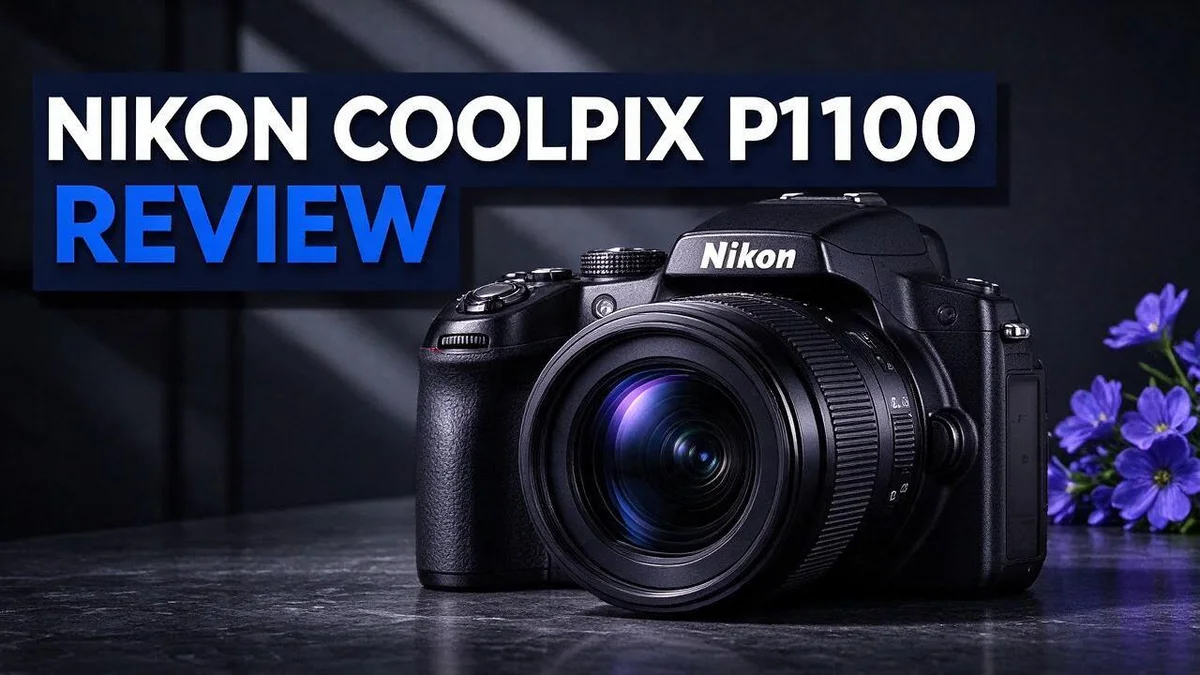
Nikon Coolpix P1100 Review: The Ultimate Guide
Want to see the moon up close without a heavy camera? The Nikon Coolpix P1100 makes that dream real. It packs a huge 125x optical zoom into a compact body. That reach covers 24 to 3000mm in full frame terms.
Bird lovers and wildlife fans will feel right at home. The camera offers dedicated Bird watching, Moon, and Fireworks modes. Point, shoot, and capture distant details with ease.
Travel makes it even better. The body stays compact enough for trips. Its flexible screen helps you shoot from odd angles.
In a Nutshell
- Huge zoom reach: The camera offers 125x optical zoom, which covers 24 to 3000mm equivalent. Dynamic Fine Zoom stretches that to 6000mm equivalent.
- Steady shots at full zoom: Dual Detect Optical VR helps keep images sharp. This feature matters most when you shoot subjects far away.
- Smaller sensor: The camera uses a 1/2.3 inch sensor, not a full frame sensor. It gathers less light, so low light scenes can look grainy.
- Flexible screen: The 3.2 inch vari angle LCD tilts and swivels. You can frame shots from high, low, or awkward positions with ease.
- Quick scene modes: Bird watching, Moon, and Fireworks modes give fast setups. Beginners can get strong results without much fuss.
- Early focus warning: One tester reported back focus problems on easy subjects during a single day test. Try it out before an important shoot.
Zoom Range and Reach

- Bundle Items Include: Nikon COOLPIX P1100 125x Super Zoom Compact Digital Camera, Photography Software, 2 x 64GB Extreme PRO UHS-I SDXC Memory Card, 3 Piece 77mm Filter Kit, Padded Camera Bag, Nikon EN-EL20 Replacement Battery, External Charger, Flexible Tripod, Deluxe Cleaning Kit, HDMI Micro Cable, Camera Hand Strap, Memory Card Wallet, Memory Card Reader, Cap Keeper
- Extreme Zoom for Every Perspective: The Nikon COOLPIX P1100 lets you capture distant subjects with ease, featuring an unparalleled 125x optical zoom that spans an impressive 24-3000mm focal length (35mm equivalent). Push the boundaries even further with 250x Dynamic Fine digital zoom, extending your reach to a staggering 6000mm. Whether photographing wildlife from afar, Dual Detect Optical Vibration Reduction ensures steady, sharp images.
Some of the links on this website are affiliate links, which means that at no additional cost to you, I earn a commission if you click through and make a purchase. I only recommend products and services that I believe will add value to my readers. Thank you for your support!
Zoom is the headline feature of the Nikon Coolpix P1100. Few compact cameras reach this far, so it stands out fast.
Dynamic Fine Zoom pushes the reach even further. It stretches the view to 6000mm equivalent.
Extra reach brings less detail. Image softness is the main catch at the top of that range.
Use this setting when your subject is far away and you have no closer option. A slightly wider frame often looks cleaner.
Think about a hawk perched on a distant pine tree. At full zoom, the bird fills much more of the frame.
That framing matters for wildlife photographers. You crop less later and keep more detail in your final image.
Long reach also helps with landscapes. A distant lighthouse or mountain peak looks closer and more defined.
Zoom also helps when you cannot get closer. Crowded stadiums, rivers, and nature reserves often keep you far from the action.
Many photographers shoot a few frames at a wide setting first. Then they zoom in to check focus and framing.
Bright daylight gives the cleanest results at long focal lengths. Shade or dusk makes fine detail harder to capture.
Pro tip: Rest the camera on a tripod or a sturdy railing. Even small movements show up at extreme zoom.
Shutter speed matters too. Aim for a fast setting when your subject moves.
Compare this with a bigger setup. The Sony A6700 paired with a 200 to 600mm lens offers serious reach, but it adds bulk and weight to your bag.
The Nikon wins on portability. One compact body covers a wide range without extra lenses.
Other zoom compacts like the Panasonic ZS80, Sony HX99, and Canon SX740 HS also offer long reach in small bodies. Compare their zoom ranges before you decide.
Choose the P1100 when distant subjects matter most. Its reach handles birds, wildlife, and the moon with one simple camera.
Image Quality and Low-Light Performance
Image quality depends heavily on light. Bright scenes produce colors that look clean and natural. Dim scenes tell a very different story.
The sensor gathers less light than larger sensors do. As a result, dark areas often look grainy. Tiny speckles, called noise, appear in shadows and flat colors.
The lens also lets in less light as you zoom in. The maximum opening narrows at long focal lengths. Dim scenes become harder to capture at full reach.
Noise reduction smooths the grain. The camera cleans up speckles automatically. However, this process can also soften fine textures. Feathers and tree bark may lose sharp detail.
Keep the ISO low when you can. A higher ISO brightens the image but adds more noise. Use the exposure compensation dial when a scene looks too dark. A little extra brightness can preserve detail in the shadows.
Evening walks near streetlights can still produce pleasing photos. Position your subject under a light source. This adds brightness and reduces grain. Simple framing choices make a big difference after sunset.
The moon is very bright, so it shows clean detail even at night. City lights look sharp, but they may show color fringing around their edges. Fireworks shots depend on timing and steady hands more than on the sensor.
Colors look best in good light. Warm sunsets and green forests appear rich and lively. Indoor shots often look flat or yellowish. White balance presets help correct these color shifts.
Shooting in RAW gives you more room to fix mistakes later. Editing software can recover brightness and color in dim photos. This extra step helps most when light is limited.
Set expectations before you shoot. This camera shines outdoors on sunny days. Low light photos work well for web sharing and small prints. Large prints from dark scenes will show the sensor limits more clearly.
Autofocus and Stabilization
Autofocus decides whether your shot looks sharp or soft. With a lens this long, small focus errors show up fast. Good habits make focusing much easier.
Start by pressing the shutter button halfway. This lets the camera lock onto your subject before you take the photo. Wait for the focus signal, then press all the way down.
Check the focus on the screen before you trust a shot. Use the playback view and zoom in on fine details. Look at the eyes of a bird or the edge of the moon.
Focus lock helps when your subject sits off center. Aim at the main subject, press halfway, and hold the button. Then move the frame to your planned composition and press fully.
Your stance also affects how steady the image feels. Hold the camera firmly with both hands. Tuck your elbows against your body to limit shake.
Breathe out slowly before each shot. Pause for a moment, then press the shutter. This small step reduces movement at long zoom levels, where even tiny motion blurs the image.
Lighting changes how fast focus locks. Bright scenes help the camera find edges quickly. Dim scenes slow the process, so take extra time before you press the button.
Take a short burst for moving subjects. Birds rarely stay still for long. Several frames give you a better chance at one sharp shot, and you can delete the rest later.
Practice makes these steps feel natural. Try focusing on a fence post or a tree branch at different distances. You will learn how quickly the lens responds in your own setting.
Stabilization and focus work as a team. Good technique gives the camera the best chance to lock on and hold steady. Practice these steps during daylight before you head out on a serious shoot.
Top 3 Alternatives
Long zoom cameras give you reach without a heavy lens. These three options each offer a different mix of zoom power, image quality, and features.
Sony RX10 IV

- World's Fastest AF acquisition speed of 0.03 sec. Optical image stabilisation technology developed by Sony is valuable for handheld still and movie shooting, especially in low light or at the ultra-telephoto end of the zoom range up to 600 mm
- 315 phase-detection AF points covering Approx. 65% of the frame. Light Metering Mode- Multi Pattern, Centre Weighted, Spot (Standard/Large), Entire Screen Avg, Highlight
Some of the links on this website are affiliate links, which means that at no additional cost to you, I earn a commission if you click through and make a purchase. I only recommend products and services that I believe will add value to my readers. Thank you for your support!
The Sony RX10 IV has a large 1-inch sensor. This sensor helps produce sharp, clean photos, especially in lower light. It offers a 24-600mm equivalent zoom with a bright f/2.4 aperture at the wide end. Its fast autofocus works well for wildlife and sports. Photographers who care most about image quality will like this model.
Canon PowerShot SX70 HS

Some of the links on this website are affiliate links, which means that at no additional cost to you, I earn a commission if you click through and make a purchase. I only recommend products and services that I believe will add value to my readers. Thank you for your support!
The Canon PowerShot SX70 HS packs a 65x optical zoom. That range reaches an equivalent of 1365mm. It also has a tilting electronic viewfinder, so you can frame shots in bright sunlight. The controls feel simple, so you can start shooting quickly. Beginners often find this camera easy to learn.
Panasonic Lumix FZ80D

- Bundle Includes: Panasonic Lumix DC-FZ85D / FZ80DK Digital Camera + Cleaning Kit + USB Card Reader, SD/microSD + Memory Card Wallet + 64GB Memory Card
- Ultra-Wide to Super Telephoto Zoom Versatility: The Lumix FZ85D / FZ80D features a built-in 60x optical zoom lens covering a 20–1200mm full-frame equivalent range, allowing seamless transitions from wide landscapes to distant subjects. This broad focal range supports travel, wildlife, sports, and everyday photography without changing lenses. A maximum aperture of f/2.8–5.9 balances light control with reach, making the camera adaptable to diverse shooting scenarios.
Some of the links on this website are affiliate links, which means that at no additional cost to you, I earn a commission if you click through and make a purchase. I only recommend products and services that I believe will add value to my readers. Thank you for your support!
The Panasonic Lumix FZ80D offers a 60x zoom range. It records 4K video, which gives you smooth and detailed clips. The body feels comfortable in the hand, so it suits long days outdoors. It is a strong choice for travelers and everyday shooters. You get a lot of versatility in one camera.
Each camera fits a different need. Choose the Sony for the best image quality, the Canon for the longest reach, or the Panasonic for a balanced all-round option.
Build, Handling and Rear Screen
The Nikon Coolpix P1100 feels solid from the first touch. Its body has a deep grip that fits comfortably in your right hand. Your fingers rest where the controls sit, so you rarely search for buttons.
The camera weighs more than a typical compact. That extra mass helps steady the body when the lens extends. Still, it stays light enough for a long day of walking.
Your index finger does most of the work. The zoom lever sits right beside the shutter button. Your finger can zoom in and fire without shifting your grip.
The rear screen tilts and swivels. You can lift it above your head or lower it near the ground. This freedom helps when you shoot from odd angles. Each angle feels natural once you try it.
The 3.2 inch display shows a clear preview of your framing. It also helps you review shots right after you take them.
Low and high shots become much easier. Flip the screen down to frame a flower at ground level. Raise it over a crowd without losing sight of your subject.
Bright sunlight can make any screen harder to read. Shade your display with your hand or your body when needed. Tilting the screen away from the sun often fixes the problem.
Outdoor trips put the body to the test. Field users describe the body as durable, so it suits trips into nature. Each trip tests the build in real conditions.
A strap keeps the camera secure. Attach the neck strap before each hike.
Quick changes keep you in the moment. Changing modes or zoom takes just seconds once your fingers learn the layout. Practice helps your hands remember each control.
Watch the screen during long shoots. Battery drains faster when the display stays on for hours, so turn it off between shots. Plan your shots before you power up.
Specialized Shooting Modes
The Nikon Coolpix P1100 includes several dedicated modes for special scenes. Each preset sets key options for you, so you can focus on framing the shot.
Bird watching mode suits distant birds in open areas. It prepares the camera for quick movement and helps keep your focus on the subject. Pan slowly as the bird moves, and keep it inside the frame.
The Moon mode works best when the sky is dark and the moon fills the frame. Choose it for clear, sharp views of the lunar surface. Start with the moon near the center, then zoom in little by little to find the best composition.
The Fireworks mode holds the shutter open to record bright bursts and trails of light. Stand back from the display and leave some space above the sky for the colors. Rest the camera on a railing or a sturdy table so the long exposure stays steady.
Dynamic Fine Zoom extends your reach to a 6000mm equivalent. Detail softens at this range, so test a few frames before you commit to a full set of shots. Use it when your subject sits far away and you cannot move closer.
Scene modes work best after a short practice session. Try each one in your backyard at dusk. Review the results on the screen and note which settings suit your style. This simple routine builds confidence before a big trip.
Special modes cannot replace good light, though. Plan your sessions for early morning or late afternoon when possible. Soft light gives cleaner, more pleasing results in every mode, so timing matters as much as the preset you choose.
Specialized shooting modes make tricky scenes easier. Pick the right preset, then enjoy the moment and the photos you create.
Pros and Cons
Pros
– Long reach lets you frame distant subjects without moving closer.
– One lens covers wide scenes and far away details.
– You can skip carrying extra lenses on a trip.
– The long zoom suits birds and the moon.
Cons
– The small sensor struggles in low light.
– One user saw focus misses on easy subjects during a single day test.
– Results may vary for other shooters, since the test was short.
Who Should Buy It
Not every photographer needs this camera, but the right shooter can get great results from it. Here is who should consider buying it.
Beginners who want one camera can learn the basics without buying extra gear. You point, choose a mode, and start shooting right away.
Parents at sports fields gain a lot from this camera. The zoom brings players and coaches into view from the sideline. Daytime games give the best results.
Daytime explorers who plan sunny hikes, beach days, or city walks will feel at home. Bright light lets the small sensor show its best side.
Shooters who want a simple backup can keep this camera in a bag for days when a heavier setup feels like too much work. It fills the gap between a phone and a big kit.
This camera may not fit everyone. Indoor event shooters and people who photograph dim restaurants or evening parties will struggle. The small sensor needs good light to perform well.
Professionals who need large prints or heavy editing flexibility should look elsewhere. Some buyers compare it with the Sony A6700 paired with a 200 to 600mm lens, which offers a different route to long reach. Others check the Panasonic ZS80 or the Canon SX740 HS for zoom compacts.
Test the camera before you commit. Shoot for a few days in your own setting. Watch closely for focus misses on easy subjects, since one user reported that problem during a single day test.
Your needs make the final call. If you want reach and simplicity in daylight, this camera makes good sense.
Final Verdict
The Nikon Coolpix P1100 suits people who want one camera for many different days. It reaches far, and it fits in a bag. The real question is whether its trade offs match your style.
Think about the photos you take most often. If you shoot wildlife, sports, or the night sky, the long lens opens new doors. If you mostly take portraits or indoor shots, another camera may serve you better. Match the camera to your habits, not to a wish list.
Larger camera systems play a different game. A setup like the Sony A6700 with a long lens can offer more control and sharper files. That route also means more gear, more weight, and more lens changes to manage.
Zoom compacts such as the Panasonic ZS80, Sony HX99, and Canon SX740 HS offer a similar pocket style. Compare their zoom ranges, screens, and handling side by side. Check the official product pages, since specs can change between model versions.
Handling matters more than many buyers expect. If you can, hold the camera in a store. Try the zoom control, the screen movement, and the menu layout. A camera you enjoy using gets used more often.
Finally, review your own test shots on a large screen before you decide. Look closely at sharpness, focus, and color in the conditions you face most. If the reach excites you and the light limits feel manageable, this camera can become a reliable companion. It rewards patient shooters who love exploring new views.
Frequently Asked Questions
Is the Nikon Coolpix P1100 good for beginners?
Yes, it suits beginners who want one camera. Scene modes like Bird watching and Moon guide new shooters. A few days of practice helps you learn the basics.
Can it take good photos in dim light?
The small sensor struggles in dim rooms and at night. Bright daylight gives the best results. Try to shoot during the golden hour before sunset.
Does this camera work well for travel?
Yes, it fits in a bag and travels light. You can skip carrying extra lenses on a trip. Pack a spare battery for long days out.
Is the autofocus reliable on everyday subjects?
Some shooters report focus misses on easy subjects. Try a simple target like a street sign before a big trip. This quick check shows how the camera handles your style.
Do I need a tripod for the long zoom?
At full reach, even a small hand movement blurs the image. A tripod gives you the sharpest results for moon shots and distant wildlife. Rest your elbows on a wall if you forget it.
Welcome to The File Fix. I’m Millie, and I review tech so you don’t have to suffer buyer’s remorse.
Navigating the endless sea of Amazon devices and gadget releases can feel like a full-time job. That’s why I do the heavy lifting. I dig past the unreliable 5-star reviews and shiny spec sheets to test how these devices actually hold up in the real world. Whether you’re looking for the best budget earbuds, a reliable power bank, or the latest smart home gear, you’ll find honest, no-nonsense breakdowns here.