Fujifilm X-E5 Review: Real-World Performance
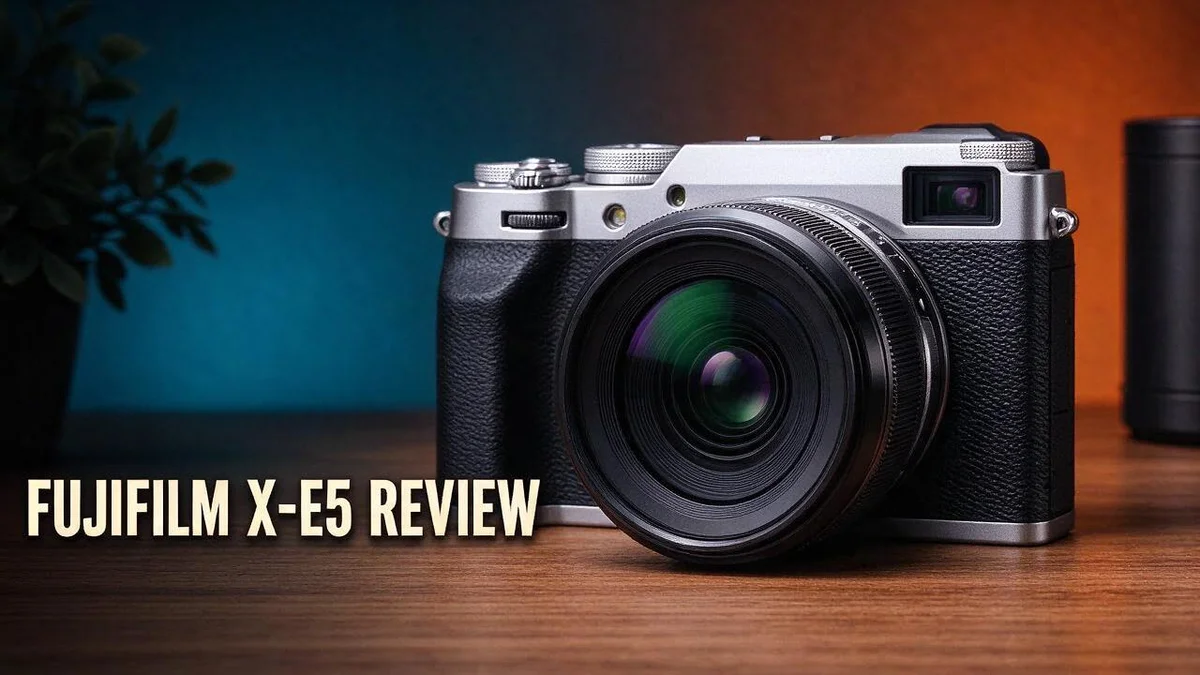
Are you searching for a camera that feels fun to use? The Fujifilm X-E5 could be your next favorite. It blends classic rangefinder styling with modern power.
Its film simulation dial sits right on top of the body. Turn it to change your color look in seconds. Simple controls make shooting feel natural.
Inside, you find a 40.2MP APS-C sensor and 14-bit RAW capture. Photos show rich detail and smooth tones across many scenes.
In a Nutshell
- Who it suits: This camera fits street and travel photographers who love a classic look. Its rangefinder style body feels nice in the hand and draws attention in a good way.
- Steady handheld shots: Five axis stabilization sits inside the body, so every lens you attach benefits. You can shoot at slower shutter speeds without a tripod. Some sources even claim up to seven stops of correction.
- Smart focus: AI powered autofocus handles everyday scenes with ease. It helps you get sharp images without much fuss.
- Video skills: You can record 6.2K footage at up to 29.97fps. This gives you plenty of detail for crisp clips.
- Built to last: Weather sealing keeps dust and light moisture out, so you can shoot outdoors more often. A fast UHS II card slot also keeps your files moving quickly.
- Room to grow: Reviewers hope for quicker subject tracking, better eye detection, and stronger low light performance. These are the main areas where the camera could improve.
Image Quality and Sensor
This camera uses a high resolution crop sensor that captures rich, fine detail. Fine detail helps when you crop tightly. Wildlife and street shots keep sharp edges after a big crop. You can frame distant subjects without losing quality.
Color science gives images a pleasing look right out of the camera. Skin tones appear warm and natural. Many people skip editing because the colors already feel balanced.
Dynamic range matters in bright sunlight and deep shadows. The sensor holds detail in both bright skies and dark corners. You can recover shadows later during editing.
Noise control matters when light fades. At base and moderate ISO values, grain stays fine and easy to clean up. Higher settings add more texture, so lower settings work best when possible.
Large prints also benefit from this detail. Posters and gallery prints keep crisp edges and smooth gradients. Photographers who sell prints will value this quality.
Raw files open up many editing options. You can adjust white balance, exposure, and color without losing quality. This flexibility suits anyone who enjoys post processing.
Portrait and landscape shooters often gain the most. The sensor records subtle shifts in tone and smooth skin transitions. Soft light looks gentle and lifelike in final images.
Sharpness depends on both lens and sensor. A sharp lens paired with this sensor produces clean, crisp files. Good technique still matters most.
Shooting in raw gives the best results. JPEG files work well for quick sharing. Choose the format that fits your workflow and goals.
Image quality also depends on your settings. Clean exposure and steady shutter speeds make a clear difference. Practice builds the skill to get the best from this sensor.
Overall, the sensor delivers strong results for daily shooting and creative projects. Pixel peepers will spot fine texture. Casual viewers will simply enjoy natural colors and clean files.
Autofocus and Stabilization
Sharp focus decides whether a photo feels alive or flat. The X-E5 aims to keep your subject sharp, so you can focus on composition.
Choosing the focus area takes up much of your time. You can pick a small point for precise targeting. A wider zone works better when your subject moves around.
The compact body sits light in your hands. This makes quick movement easy during street walks, and you can change angles without fuss.
Stabilization opens up a new kind of freedom. Slow shutter speeds become practical for handheld shots in dim cafes, markets, and evening streets.
Some sources cite a seven stop rating. Other listings show a different figure, so your own tests will reveal the real benefit.
Manual lenses gain the most from this system. Older glass often lacks its own stabilization, yet the body still steadies every frame you shoot.
Longer focal lengths show small shakes more clearly. Use a steady stance and let the stabilization do the rest.
Learn how the camera confirms focus. Watch for the focus indicator before you press the shutter all the way down.
A half press gives you time to check the frame. This quick habit saves many soft images.
Moving subjects need a different approach. Switch to continuous focus when a child runs or a cyclist rides past.
Plan your moving shots with some extra space. Reviewers note room for faster tracking, so leave a little margin around the subject.
Low light slows down the focus search. Aim at a contrast edge, such as a window frame or a sign, to help the camera lock on.
Combine both features for the best results. Steady stabilization and dependable focus let you shoot handheld at dusk without a flash, and your photos keep their detail and mood.
Design and Handling
The Fujifilm X-E5 takes a classic rangefinder look and gives it a modern feel. Its clean lines and metal finish make it feel calm and simple in your hands.
The top dial is the star of the show. A film simulation dial sits right on top, so you change looks without opening a menu.
Shutter and exposure controls sit where your eye expects them. You can adjust settings quickly while your eye stays on the scene.
Button placement matters. The main controls fall under your thumb and fingers, so you rarely shift your grip. This keeps your eye on the viewfinder and your settings close at hand.
The body is small and flat. It slips into a compact bag with ease, which makes it a good choice for everyday carry.
The lack of a deep grip changes how you hold it. Photographers with larger hands may want a wrist strap or a small grip accessory for longer sessions.
The electronic viewfinder is large and bright. You can frame shots with less squinting, and it helps when the sun is high overhead.
The shutter is almost silent. This helps at weddings, quiet streets, and wildlife spots where noise can scare people away.
The control layout takes a little time to learn. Once you know where each dial sits, your hands work without thinking.
After a few hours, your fingers may feel the small body. Take short breaks and adjust your hold to stay relaxed.
Overall, the handling feels rewarding for people who enjoy tactile controls. Those who want a deep grip may need an extra accessory to feel fully secure.
Top 3 Alternatives
Looking for a camera like the Fujifilm X-E5? Here are three strong options worth a closer look.
Fujifilm X-M5

- Pro-Quality Image Sensor: Equipped with a 26.1MP APS-C X-Trans 4 CMOS sensor (same as the X100V) for stunning image clarity, rich colors, and superior low-light performance.
- High-Speed Performance: Features the latest X-Processor 5 for lightning-fast image processing, improved autofocus, and smoother operation.

Some of the links on this website are affiliate links, which means that at no additional cost to you, I earn a commission if you click through and make a purchase. I only recommend products and services that I believe will add value to my readers. Thank you for your support!
The Fujifilm X-M5 gives you the same great image quality in a smaller body. It uses a sensor family similar to its larger siblings. It feels light in your hands, which makes it a great partner for travel and daily walks. Beginners will enjoy the simple controls and clear menus. Fujifilm fans will also feel right at home with the familiar dials and menus.
Canon EOS R50

- High Image Quality: Canon EOS R50 4K digital camera features a 24.2 Megapixel CMOS (APS-C) sensor and DIGIC X processor for stunning image clarity and level of detail
- High-Speed Continuous Shooting: Capture fast action with up to 12 fps with Electronic First Curtain shutter and up tp 15 fps with Electronic Shutter for a superior vlogging camera
Some of the links on this website are affiliate links, which means that at no additional cost to you, I earn a commission if you click through and make a purchase. I only recommend products and services that I believe will add value to my readers. Thank you for your support!
The Canon EOS R50 is a friendly camera for people new to mirrorless models. It has a bright, clear screen and quick autofocus. Its face and eye tracking helps you capture people and pets sharply. Vloggers and families often choose it for its easy handling and solid photo results. It keeps things simple, so you can focus on taking photos.
Sony ZV-E10 II

- The Sony ZVE-10 II with the 16-50mm lens is your ideal travel companion, delivering high-quality photos and 4K videos in a portable package.Boasting a 26MP APS-C Exmor R CMOS sensor and a powerful BIONZ XR image processor, this camera ensures exceptional image and video quality, even in low light conditions. Equipped with a flip-out LCD screen and built-in microphone, it's designed for vloggers and content creators, offering convenience and professional audio capture.
- Capture stunning photos and videos with the 26MP APS-C Exmor R CMOS sensor and a powerful BIONZ XR image processor, delivering impressive image quality even in low light conditions.Real-time Eye Autofocus and Tracking technology keeps your subjects in focus, making it effortless to capture sharp, professional shots.Share your content wirelessly with Wi-Fi and Bluetooth, and control your camera remotely, simplifying your workflow and enhancing your creative capabilities.
Some of the links on this website are affiliate links, which means that at no additional cost to you, I earn a commission if you click through and make a purchase. I only recommend products and services that I believe will add value to my readers. Thank you for your support!
The Sony ZV-E10 II is made with content creators in mind. It offers a fold out screen that helps you frame selfies and talking head videos. It records clean 4K video, which makes it a great pick for online tutorials. The onboard microphone captures clear voices, and you can add an external mic for even better sound. Its large lens selection lets you grow your gear over time.
Each of these cameras offers a great mix of features and easy handling. Pick the one that matches your style and start shooting today.
Video Performance
Video is a strong side of the Fujifilm X-E5. The camera records 6.2K footage at up to 29.97 frames per second. That gives you plenty of detail for cropping and reframing later. Most casual creators will find this resolution more than enough.
The frame rate tops out at 29.97 fps. That suits everyday clips and standard online video. However, slow motion fans may feel limited. Fast sports action at high speed needs a camera with more frame rate options.
Large sensors often produce clean detail in daylight clips. Cropping into a shot still keeps good sharpness. Editors also get flexible files for social posts and longer edits.
Bitrate matters a lot for video files. The UHS-II card slot handles high data rates well. Use a fast card with a strong write speed. Slow cards can drop frames or stop recording early.
Compact cameras can warm up during long clips, so plan breaks. Check the screen for any temperature warning before a big shoot. Recording may stop when heat builds up too much.
Audio depends on your setup. The built in microphone captures room sound well. For interviews, connect an external microphone. A small shotgun mic keeps voices clear and crisp.
Low light video shows the limits of any sensor. Noise grows as you raise the ISO. Add light to your scene when possible. A brighter frame gives cleaner footage.
Focus during video needs care too. Tracking a moving face can lose focus in busy scenes. Set your focus area before you hit record. Smooth focus transitions help keep clips watchable.
In short, the video features suit vloggers, travel makers, and hobby filmmakers. Serious cinema teams may want more frame rate choices. The camera offers a simple way to shoot quality clips.
Film Simulations and Creative Control
Film simulations shape the mood of every photo. Each look changes color, contrast, and tone. You can match the feel to the scene before you press the shutter.
Try a simulation in the viewfinder first. The electronic viewfinder shows the look live. What you see is close to the final image. This saves time later in the edit.
Pick a look based on your subject. Warm tones often suit portraits and street scenes with people. Cooler, flatter tones can suit landscapes with strong light. Test a few options and keep the one that fits.
Shoot one scene in several looks. Walk around a single subject and change the simulation at each stop. Your eye learns how each style reacts to light. This builds a sense of taste that grows over time.
Grain and sharpness settings add another layer. Grain can give a gritty, documentary feel. Light grain keeps things clean. Small changes often make a big difference in the final file.
Save your favorite recipes for quick access. Custom settings store your preferred simulation, white balance, and tone. Recall them when you need the same look again. This keeps a series consistent from start to finish.
White balance can shift the mood too. A slight warm push adds comfort to evening shots. A cool push can make winter scenes feel crisp and quiet. Many photographers adjust this step first.
Black and white looks deserve special attention. Strong light and bold shapes shine in monochrome. Look for contrast between light and dark areas before you shoot.
Shoot RAW to keep your options open. The RAW file keeps more data from the sensor. You can apply a different simulation later with the camera or software. This gives you room to experiment after the moment has passed.
Creative control rewards patience. Spend a weekend with one simulation and a single lens. You will notice how each choice guides the viewer’s eye. Your photos will start to show a clear personal style.
Pros and Cons
Pros
– The 40.2MP sensor captures fine detail for large prints and tight crops.
– In body stabilization helps you shoot handheld in dim rooms.
– Weather sealing lets you shoot in light rain or dusty places.
– The UHS II card slot keeps fast bursts flowing to the card.
– The camera stays light enough to carry all day on a strap.
Cons
– Subject tracking can lag behind fast moving targets.
– Eye detection may struggle when faces turn away from the lens.
– Low light focus needs more work in very dark scenes.
– You may need to lift the ISO more than you would like after sunset.
Who Should Buy It
The Fujifilm X-E5 suits people who like to slow down. It rewards careful framing and thoughtful shooting. Fast action fans may want something else.
If you are moving up from a smartphone, this camera offers a real step forward. You get physical dials and a clear way to control exposure.
Learning the basics feels more fun on a camera like this. Every setting teaches you something new.
Hobbyists who love the process will feel at home. Turning dials and seeing the result builds skill. The camera can make you want to head out and shoot. Every shot feels like a small decision.
Eye level shooting fans should take a close look. The large electronic viewfinder feels like a window onto the scene.
People who dislike staring at a rear screen often prefer it. Holding the camera to your eye also keeps your stance steady.
Travelers who want one camera for everything may like the X-E5. It handles landscapes, city walks, cafes, and portraits well. Pack light and still come home with strong pictures.
The included 23mm lens suits everyday street and travel scenes. It gives a natural field of view for people and places.
Sports and fast action photographers should look elsewhere. The camera works best at a relaxed pace.
Those who chase racing cars or kids on a soccer field need quicker focus systems. Large hands may also find the flat body less comfortable for long sessions.
Beginners who want to learn photography should consider it. Manual controls teach how light works.
Many people find that learning sticks when the camera feels like a tool, not a computer.
In short, the X-E5 fits thoughtful creators. Choose it if you enjoy the craft more than raw speed. You will love the slower pace. Pick it if you want photos that feel personal and earned.
Final Verdict
Our final verdict is simple: the Fujifilm X-E5 is a joy to own. It feels good in the hand and looks great on a desk.
It is not the fastest camera for action fans. Sports and wildlife shooters may look elsewhere for that kind of speed.
Still, most everyday photographers will find it highly capable. Landscapes, portraits, street scenes, and family moments all look natural and pleasing.
The colors are the real highlight. Skin tones look pleasing, and the film looks give images a fresh character straight from the camera.
Some buyers may miss a deep grip. The small body asks for a light touch, so a small hand strap or grip extension can help.
Compare it with the X-T50 before you decide. The X-T50 gives you a deeper grip and a bit more heft.
The X100VI suits shooters who want a fixed lens and a more focused experience. Its look may tempt people who love a classic street camera.
The older X-E4 may also appeal to shoppers who want a similar feel. Check what features matter most to you before you choose.
Think about your shooting style first. A slow, thoughtful approach will bring out the best in this camera.
Our top advice is to visit a shop and handle the camera first. Rotate the dials, check the viewfinder, and hold it for a few minutes.
Take a few test shots in your own lighting. This quick test shows whether the size and controls suit your hands.
In short, the X-E5 suits photographers who enjoy the craft. It offers a calm, focused way to make pictures.
The camera rewards patience, and that patience shows in the final images.
If you want the fastest autofocus above all, look at other models. But if you love the process, this camera will make you want to pick it up every day.
Frequently Asked Questions
Can the Fujifilm X-E5 shoot good video?
Yes, it records 6.2K video at up to 29.97fps. That gives you sharp footage for family clips, short films, and social posts. You can also crop or reframe your clips later without losing much quality.
How does the film simulation dial help?
The dial on top lets you switch looks in seconds. You do not need to dig through menus to change the style. Try a black and white mode for street scenes or a warm film look for portraits. This makes experimenting fast and fun.
Can I add more lenses later?
Yes, the camera uses the Fujifilm X mount. You can add prime, zoom, and macro lenses as your interests grow. Many photographers start with the included lens and expand slowly over time.
Should I shoot RAW or JPEG files?
Shoot 14-bit RAW if you plan to edit your photos. RAW files keep more detail in the shadows and highlights. JPEGs work well for quick sharing, so many people shoot both formats at once.
Who gets the most from this camera?
Creators who enjoy a hands-on approach will get the most value from it. You will adjust settings often and learn how light works. If you want a camera that feels like a tool you control, this model fits well.

Welcome to The File Fix. I’m Millie, and I review tech so you don’t have to suffer buyer’s remorse.
Navigating the endless sea of Amazon devices and gadget releases can feel like a full-time job. That’s why I do the heavy lifting. I dig past the unreliable 5-star reviews and shiny spec sheets to test how these devices actually hold up in the real world. Whether you’re looking for the best budget earbuds, a reliable power bank, or the latest smart home gear, you’ll find honest, no-nonsense breakdowns here.