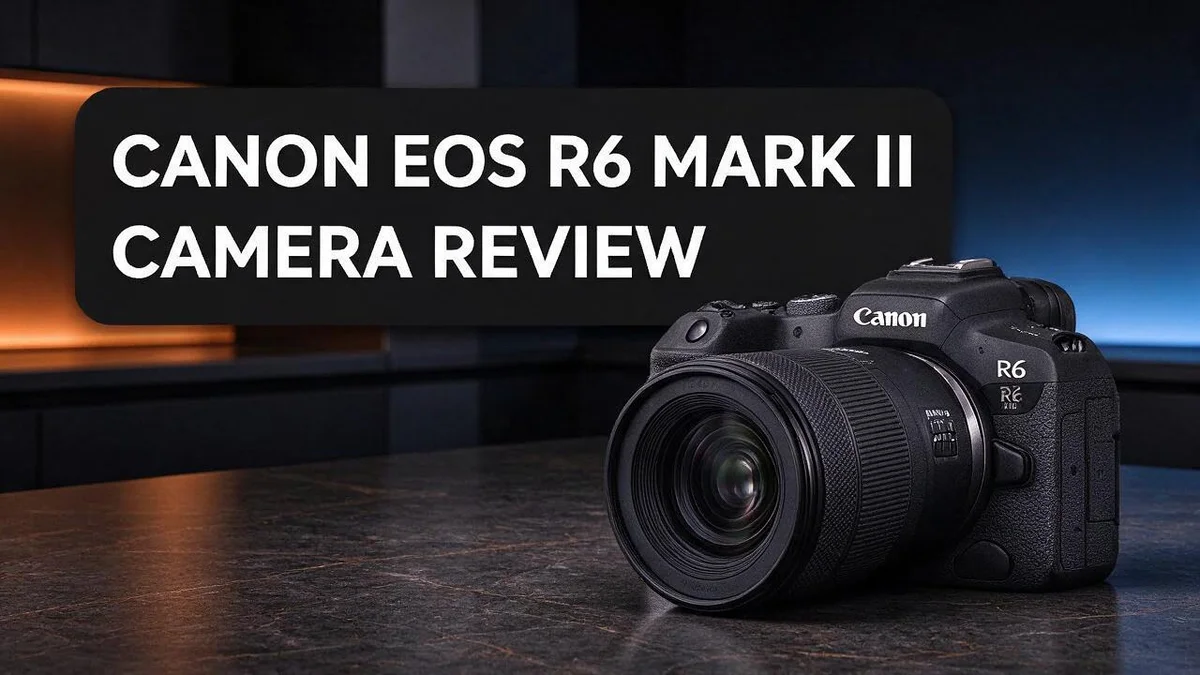
Canon EOS R6 Mark II Camera Review: Should You Buy It?
Looking for a camera that does it all? The Canon EOS R6 Mark II might be the one you need.
Photographers and filmmakers often search for a body that handles both stills and video with ease. This camera fits that need well.
It packs a 24MP full frame sensor. Its burst mode reaches up to 40 fps. You get sharp images even when action moves fast.
Reviewers praise the mix of image quality, performance, and versatility. The body is also moderate in size. That makes it a great travel camera. Its rugged and comfortable build feels good in your hands.
Keep reading to see how the R6 Mark II performs in real shoots.
In a Nutshell
-
Who it suits: Enthusiast photographers and video creators can use this camera for almost every project. It works well for daily shoots and creative work alike.
-
Easy to carry: Its moderate size makes it a strong travel camera. You can pack it for long days out without feeling weighed down.
-
Comfortable in hand: The rugged body feels comfortable during long sessions. Your hands stay fresh even when you shoot for hours.
-
Strong rivals: The Sony Alpha a7C II, Nikon Z7 II, and Sony a7 IV all compete closely. Each one offers a different feel, so compare them side by side.
-
Smart alternative: The Canon R8 shares many specs with this model. It suits shoppers who want a simpler path with similar core features.
-
Keep in mind: The research lists no cons, so hands on testing matters most. Visit a store and try the controls before you decide.
Image Quality from the 24MP Full-Frame Sensor

- Items Included: Canon EOS R6 Mark II Mirrorless Camera,Canon RF 24-105mm f/4-7.1 IS STM Lens,Canon LP-E6NH Lithium-Ion Battery,Canon LC-E6 Charger,Canon R-F-5 Camera Cover,Camera Strap,Shoe Cover,Canon E-67 II Lens Cap,Canon Lens Dust Cap RF, Shoulder Bag,64GB Memory Card
- Advanced Full-Frame Performance: Capture next-level detail and dynamic range with the Canon EOS R6 Mark II, featuring a newly developed 24.2MP full-frame CMOS sensor powered by the high-speed DIGIC X processor. This mirrorless system offers professional-grade stills and cinematic video with exceptional low-light capabilities, extended dynamic range, and fast continuous shooting at up to 40fps with the electronic shutter—perfect for wildlife, weddings, sports, and more.
Some of the links on this website are affiliate links, which means that at no additional cost to you, I earn a commission if you click through and make a purchase. I only recommend products and services that I believe will add value to my readers. Thank you for your support!
Image quality is where any camera proves its real value. The sensor size shapes how every frame looks. A full frame sensor gathers plenty of light.
Dim scenes show the sensor at work. Many shooters head out at dusk or work indoors without flash. Good files usually show less noise in shadows.
Test high ISO results yourself before you rely on it for events. Shoot a few frames at the settings you use most.
Colors matter just as much as detail. Skin tones often look natural straight out of the camera. Portrait fans may enjoy the results with minimal editing.
Dynamic range decides how much light and shadow a photo can hold. Wide range keeps sunsets from looking flat. You can expose for a bright sky and still see faces in shade.
Raw files give you the most room to work. They hold extra data in bright areas and deep shadows. You can recover highlights without losing much quality.
Cropping tight also keeps fine detail intact. This helps when you cannot get close to your subject. Wildlife and sports shooters often find this useful.
Sharpness depends on the lens as much as the body. Pick glass that matches your subjects. Even focus across the frame helps every image look polished.
Large prints reveal the true quality of a sensor. Fine lines and textures stay sharp at big sizes. Video makers benefit too, since clean stills help with frame grabs.
Judge the results yourself. Shoot landscapes, faces, and night scenes on the same day. Compare the files on a large monitor. This simple test shows whether the image quality fits your style.
Autofocus and 40fps Burst Shooting
Fast moving subjects demand focus that keeps up. Sports, wildlife, and kids at play can change direction in a blink. A strong autofocus system helps you catch the moment.
Think beyond the frame count. A high frame rate only helps when focus stays locked. Shoot a test run with a moving subject. Then count how many frames stay sharp.
Tracking focus works best when you match the mode to the subject. Pick a single focus point for slow or still subjects. Switch to a wider area when the subject changes direction often.
Burst shooting creates a large pile of files. Sort them soon after each session. Delete the blurry frames first to save time and storage.
Use bursts with care. Start the burst when the action begins, not before. Short bursts often give you cleaner keepers than long runs. Pause between bursts to reset your timing.
Light also shapes how well autofocus works. Dim rooms make the system search longer for contrast. Test indoor sports under the same lights you plan to use on the day.
Try a simple walk test. Walk toward the camera while you shoot. Watch whether focus follows your path. This quick check tells you more than any list of features.
Keep an eye on battery life too. Continuous shooting and autofocus both draw power. Carry a spare battery for big days out. You will not want to miss a peak moment.
Practice makes the difference. Set up a sports or pet session at home. Run through your burst and focus settings. Repeat the drill until the moves feel automatic.
Fast action rewards patience too. Wait for the subject to reach a clear moment. Then press the shutter for a short, controlled burst. Your keeper rate should climb quickly with each outing.
Sharp focus and fast frames work as a team. Together they help you capture the decisive moment. Use them well and your gallery will show it. Enjoy the process along the way.
Video Recording for Enthusiast Creators
Video is a key part of what this camera offers. The Canon EOS R6 Mark II suits enthusiast creators who shoot both photos and clips. Many creators switch between stills and motion on the same day, and this body makes that easy.
Stabilization matters more than most people expect. Handheld clips can look shaky fast. Pair the body with a stabilized lens or a gimbal for smoother footage.
Audio often gets forgotten. Built in microphones pick up wind and motor noise. An external microphone gives cleaner voices and sharper speech.
Heat is worth watching during long recordings. Extended clips can warm up any camera. Run a short test before an important shoot so you know your limits.
Memory cards need enough speed for video. Check the card rating before you start. Slow cards can drop frames and ruin a take.
Lighting shapes the final look. Soft window light flatters faces. Mixed indoor lights can cause odd colors, so set white balance with care.
Manual focus helps when you film a talking subject. Practice pulling focus slowly. Smooth moves look more polished than fast ones.
Try a short test film. Shoot a walk, a close up of hands, and a wide shot of a room. Review the footage on a large screen to spot problems.
Color grading gives your videos a consistent style. Pick one look and use it across every clip. Viewers notice a steady color palette.
Microphones and wind also need a plan. Use a foam cover outdoors. Record a short sample before the main take.
Frame rates change the feel of motion. Higher rates suit slow motion, while standard rates suit everyday scenes. Test both before you commit.
Storage fills up quickly with video. Keep a backup drive ready. Copy files each evening after a shoot.
Edit with a clear goal. Trim dead space and keep clips short. Viewers stay longer when each shot has a purpose.
Viewers forgive a simple story. They rarely forgive poor sound.
Top 3 Alternatives
Looking for a different camera? These three options make strong alternatives to the Canon EOS R6 Mark II. Each one offers sharp images and useful video features.
Sony Alpha a7 IV

- 33MP1 full-frame Exmor R back-illuminated CMOS sensor
- 8x more powerful2, next generation BIONZ XR image processing engine

Some of the links on this website are affiliate links, which means that at no additional cost to you, I earn a commission if you click through and make a purchase. I only recommend products and services that I believe will add value to my readers. Thank you for your support!
The Sony Alpha a7 IV offers a 33 megapixel sensor. It delivers sharp images in many lighting conditions.
Its autofocus tracks subjects quickly. Photographers who shoot portraits and landscapes often choose this model. Video shooters also like it for its clear 4K recording and flexible screen.
Nikon Z6 III

- Bundle Includes: Nikon Z6 III Mirrorless Camera with 24-120mm lens + Camera Bag + 128GB Memory Card
- 24.5MP PARTIALLY STACKED FULL FRAME SENSOR: The Nikon Z6 III features a newly developed 24.5MP FX-format partially stacked CMOS sensor paired with the powerful EXPEED 7 image processor for faster readout speeds, improved rolling shutter performance, and enhanced responsiveness. Designed for photographers and content creators, this advanced sensor system supports exceptional image quality, strong low-light performance, and fast operation across a wide range of photography applications.
Some of the links on this website are affiliate links, which means that at no additional cost to you, I earn a commission if you click through and make a purchase. I only recommend products and services that I believe will add value to my readers. Thank you for your support!
The Nikon Z6 III brings a fast sensor to the table. Quick readout helps with action shots and bursts.
Many event photographers value its low light performance. The body feels comfortable during long shoots. Nikon menus are also easy to learn, even for new users.
Panasonic Lumix S5 II

- Key Upgrades to a Compact Hybrid Powerhouse: Panasonic S5II with Phase Hybrid Autofocus, Improved I.S., Unlimited Video, with 24.2-MP 35mm full-frame CMOS Sensor for high resolution, natural description, and approximately 2x higher-speed signal processing
- Fast, Accurate Phase Hybrid Autofocus: This full frame mirrorless camera uses advanced subject detection & metering technologies capture the target subject in focus even in adverse lighting; once locked on, it keeps tracking even with many moving objects
Some of the links on this website are affiliate links, which means that at no additional cost to you, I earn a commission if you click through and make a purchase. I only recommend products and services that I believe will add value to my readers. Thank you for your support!
The Panasonic Lumix S5 II uses phase detection autofocus in a compact body. It works well for hybrid shooters who switch between photos and video.
Its image stabilization helps with handheld footage. Creators often like the flip screen and clean HDMI output. This camera suits travelers who want a lighter kit.
Compare these three cameras to find the best fit for your shooting style.
Body Size, Build Quality, and Travel Portability
The body of the Canon EOS R6 Mark II feels right in your hands. It sits at a moderate size for a full frame camera. That balance matters when you carry gear all day.
Size makes a real difference on the road. A compact body means less strain on your neck and shoulders. You can keep it on a strap for hours without fatigue.
Pack it with a single zoom lens and you still have room for spare batteries. Many photographers find that a small kit encourages them to shoot more.
Grip matters more than many people think. The R6 Mark II offers a comfortable grip that suits most hands. Your fingers rest in a natural position, so the camera feels secure even during long shoots.
Build quality gives you confidence outdoors. The body feels rugged and well made. Reviewers describe it as comfortable to hold for long periods. You can focus on the scene, not your gear.
Controls sit where your hands expect them. Dials and buttons fall within easy reach. You can change settings quickly without taking your eye from the viewfinder.
Travel is where portability really shines. Think about airport security, mountain trails, and busy city streets. The camera slips into a medium sized bag without much effort.
Packing tip: Place the body in a padded insert. Keep the lens cap on and store the strap in a side pocket. This simple habit protects the camera from bumps.
A snug insert keeps everything stable. Loose gear shifts around and picks up knocks. Choose a bag that fits the body well.
Compact travel also means you shoot more often. Carry it on a morning walk or a day hike without a second thought.
Overall, this body suits photographers who move a lot. It feels comfortable on long days and slides into most travel setups. Its size and solid build make it a dependable partner for trips near and far.
Pros and Cons
Pros
- Strong image quality for portraits, landscapes, and street shots.
- Works well for family events and everyday moments.
- Holds its own against rivals like the Sony a7 IV and Nikon Z7 II.
- Gives enthusiasts room to grow their skills.
- Pairs well with a small set of lenses for a mixed kit.
Cons
- The research does not list clear downsides yet.
- Beginners may want the simpler Canon R8 instead.
- New mirrorless users may need time to learn the menus.
- Owners of another brand’s lenses may need adapters.
Who Should Buy It
The Canon EOS R6 Mark II suits enthusiast photographers and video creators best. People who have outgrown their phone or a compact camera often feel ready for this step.
Sports and wildlife fans may also find a good fit. The fast burst rate of up to 40 frames per second helps you catch brief moments.
Event shooters form another group. Weddings, birthday parties, and school concerts often move quickly. A camera that keeps up with changing light helps you avoid missed shots.
Hybrid creators sit at the center of its audience. If you shoot photos one day and film short clips the next, one body handles both jobs. You do not need two separate systems to cover each task.
Owners who want to step up to full frame will find a smooth path. A larger sensor than most entry models gives you more room for creative control.
Small business owners may also benefit. Shop owners who photograph products for their websites need sharp, clean files. Shooting in good light with the right lens helps those images look professional.
Content creators who post on several platforms need flexible tools. The camera supports both stills and video, so you can make images for each channel.
Students in photography courses may find it useful for practice. Its many settings let you test ideas and learn from each shot.
Casual snapshooters should look elsewhere. If you rarely edit photos or share only quick social posts, a smartphone may do the job. Someone who wants a tiny pocket camera will also find this body too large.
Shooters who only want automatic modes may feel the controls are too much.
Ask yourself one simple question before you decide. Do you plan to shoot often and learn new skills over time? If so, this camera can grow with you for years. A single zoom lens often covers most early needs, so start there.
Final Verdict
The final verdict is easy to summarize. The Canon EOS R6 Mark II offers a strong mix of image quality, speed, and everyday versatility. Few cameras in this class feel so balanced.
Burst shooting is the standout feature. With bursts up to 40 frames per second, fast moments stay in view. Sports, pets, and kids rarely hold still for long.
The camera also suits people who want room to grow. Its hybrid strengths make it a practical choice for photo and video work. You can move between both without changing systems.
Casual users may not use every feature. Someone who only snaps photos on weekends may find the camera more than they need. Simpler options can feel more relaxed for light use.
Competition is tough, so compare carefully. The Sony Alpha a7C II, Nikon Z7 II, and Sony a7 IV all compete closely. Take time to handle each one in a store before you decide.
The research shows no clear cons. That is a strong sign, but no camera is perfect. Read recent hands-on reviews and check your lens needs before you buy.
Ask yourself three quick questions. Do you shoot fast action? Do you switch between photos and video? Do you want a clear path to full frame? If you answered yes to most of these, this camera fits well.
Take your time with the decision. Rent the camera for a weekend if possible. Real use tells you more than any spec sheet ever could.
Test it with your own lenses, your favorite subjects, and your usual lighting. This small test often settles the question.
Overall, the Canon EOS R6 Mark II is a dependable choice. It rewards anyone who shoots often and wants results they can count on.
Bottom line: if you want speed, sharp files, and a camera you enjoy carrying, this model deserves a close look.
Frequently Asked Questions
Is the Canon EOS R6 Mark II good for travel?
Yes, it works well on trips. Its moderate size for a full frame body makes it easy to carry all day. Many reviewers call it an excellent travel camera, so it fits well in a daypack or shoulder bag.
Can it handle rough outdoor use?
Yes, the camera has a rugged build that suits hikes, beaches, and dusty trails. You can take it into tough places with less worry about wear.
Is it comfortable for long shoots?
Yes, reviewers describe the body as comfortable to hold. This matters during full day events or long photo walks. Comfort helps you stay focused on your subject instead of your hands.
Should I wait for a newer model before buying?
Waiting only makes sense if you need features that do not exist yet. The current model already offers strong image quality and speed. If it meets your needs today, you can start shooting now and upgrade later if your goals change.

Welcome to The File Fix. I’m Millie, and I review tech so you don’t have to suffer buyer’s remorse.
Navigating the endless sea of Amazon devices and gadget releases can feel like a full-time job. That’s why I do the heavy lifting. I dig past the unreliable 5-star reviews and shiny spec sheets to test how these devices actually hold up in the real world. Whether you’re looking for the best budget earbuds, a reliable power bank, or the latest smart home gear, you’ll find honest, no-nonsense breakdowns here.