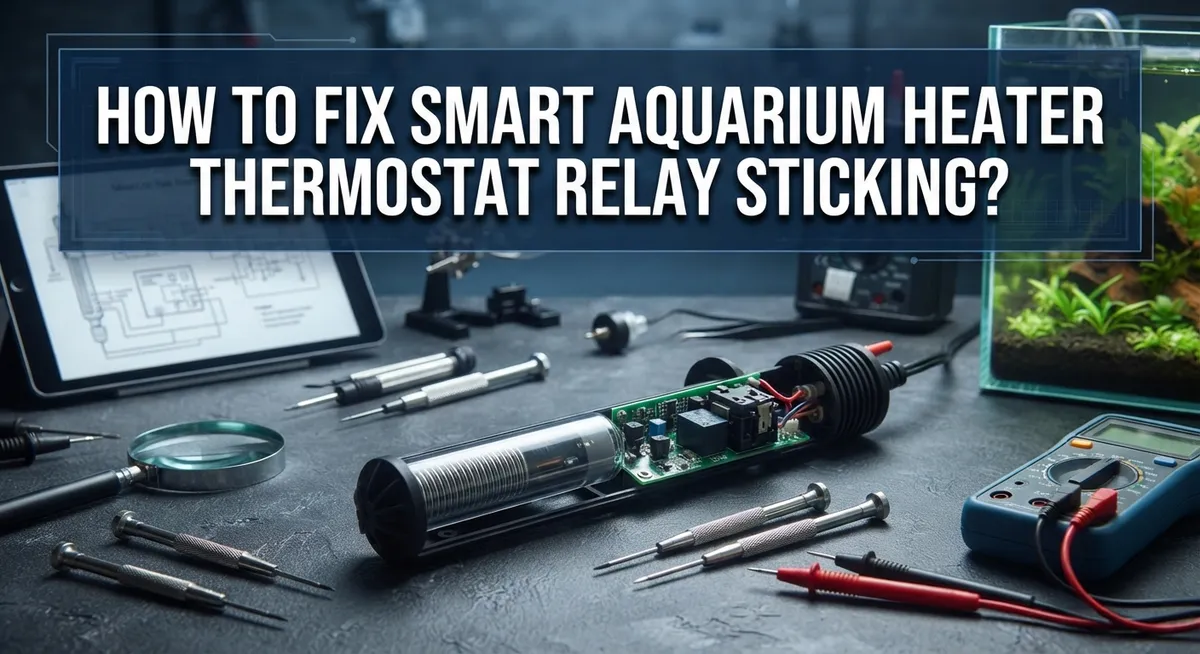
How To Fix Smart Aquarium Heater Thermostat Relay Sticking?
Your fish tank feels warmer than usual. You check the display and something seems off. This could mean your smart aquarium heater has a stuck thermostat relay.
A stuck relay keeps your heater running non-stop. It cannot turn off like it should. This tiny problem can quickly turn into a big one for your fish.
Overheating puts your aquatic pets at serious risk. Fish need stable water temperatures to stay healthy. A relay stuck in the “on” position can raise tank heat to dangerous levels within hours.
In a Nutshell
- Check for constant heat. If your tank stays hot no matter the setting, your relay is likely stuck. This is the clearest sign of a problem.
- Test the thermostat first. Plug the heater in and set it to a high temperature. Submerge the probe fully in the water to get an accurate reading.
- Let the controller do its job. A good controller can override a stuck relay. It manages heating cycles even when the mechanical part fails.
- Add a backup controller. An external thermostat gives you extra safety. It shuts off power if the main relay sticks again.
- Fix water flow issues. Poor circulation stops the sensor from reading temperature correctly. Good movement helps the whole system work properly.
- Match heater size to your tank. An undersized heater struggles to regulate heat well. This strain can lead to relay problems over time.
- Watch your tank daily. Continuous monitoring helps you catch problems early. This protects your fish from sudden temperature spikes.
Understanding Relay Sticking and Why It Happens
A relay is an electrical switch inside your heater that turns the heating element on and off. When this switch gets stuck, it stays in the “on” position permanently. Your heater keeps running even when your tank reaches the target temperature.
Why does a relay get stuck? Several factors cause this problem. Mineral deposits build up inside the relay over time. Hard water accelerates this process significantly. Corrosion eats away at the metal contacts. Dust and debris settle on the switching mechanism. Mechanical wear from repeated on and off cycles weakens the components.
Age plays a big role too. Older heaters have relays that fail more often. The constant electrical current passing through the relay generates heat. This heat stresses the metal parts year after year.
What happens when it sticks? Your tank temperature climbs higher and higher. The thermostat probe sends signals, but the relay ignores them. Heat keeps flowing into the water without stopping. Fish become stressed from the extreme warmth. Some species cannot survive temperatures above their normal range.
Why is this dangerous? Overheated water holds less oxygen. Your fish gasp for air at the surface. Beneficial bacteria in your filter die off. The tank ecosystem collapses quickly. Algae blooms spread rapidly in hot water.
Understanding how relays work helps you spot problems early. A healthy relay clicks on and off as needed. A stuck relay hums or buzzes continuously. The tank temperature rises steadily without stopping. Your heater feels hot to the touch even when it should be off.
Recognizing these signs saves your fish’s life. Early detection means you catch the issue before serious damage occurs.
Warning Signs Your Heater Relay Is Stuck
Your aquarium may send you clear signals before a relay completely fails. Watch for these specific warning signs that tell you something is wrong.
Temperature climbing without reason is the first red flag. Your tank feels noticeably warmer even though you did not change any settings. The thermometer reading keeps going up hour after hour. This steady heat increase means your heater is not turning off when it should.
The heater runs constantly without cycling on and off. A healthy heater takes breaks. It heats, reaches the target temperature, then pauses. A stuck relay skips this pause phase entirely. Your heater stays active continuously.
Fish show stress behaviors. They gasp at the water surface or hide in plants and decorations. Overheated water cannot hold enough oxygen. Your fish struggle to breathe properly in these conditions.
The controller display acts strangely. It may show incorrect temperature readings. The display might freeze or fail to respond to button presses. These glitches often come before complete relay failure.
Unusual sounds from the heater signal trouble too. You might hear clicking, buzzing, or humming that sounds different than normal. These noises mean the relay is fighting against its stuck position.
Condensation builds up inside the tank hood. Excess heat causes rapid water evaporation. This creates visible moisture on the inside surfaces.
The heater feels extremely hot to the touch. A normal heater warms but stays manageable. An overheating unit becomes almost too hot to handle safely.
Catch these signs early. Quick action prevents fish death and tank damage. Check your aquarium daily for these warning signals.
Step-by-Step Guide to Diagnosing and Fixing a Stuck Relay
When your relay sticks, you need a clear plan to diagnose and fix it. Start by confirming the problem exists. Plug your heater in and set the thermostat to maximum temperature. Submerge the thermostat probe fully into your tank water. Now watch what happens over the next 15 minutes.
A working relay cycles on and off as the water reaches the target temperature. Your controller should stop sending power to the heating element once the desired heat is reached. If the heater stays on continuously without cycling, your relay is stuck.
Next, test your controller’s ability to override the stuck relay. Most modern controllers have built in safety features that can cut power to a stuck mechanical relay. Let the controller manage the heating cycles for 30 minutes. Monitor the temperature closely during this time. If the temperature stabilizes and stops climbing, your controller is doing its job.
Check your water circulation around the heater. Poor flow can cause the thermostat probe to read incorrectly. Move your heater to a spot with better water movement. Ensure the probe sits in open water, not against tank walls or decorations.
If your controller cannot override the stuck relay, you have two options. First, you can replace the heater entirely. Second, you can add an external thermostat that controls power to the heater unit itself. An external controller sits between your outlet and the heater, giving you complete temperature control regardless of internal relay problems.
Keep monitoring your tank temperature throughout this process. Record readings every 10 minutes to track patterns. This data helps you understand if the fix is working or if you need professional help.
Setting Up Your Controller for Reliable Temperature Regulation
Your controller is the brain that manages your heater’s temperature cycles. Setting it up correctly prevents relay sticking problems from spiraling out of control.
Start by plugging your heater into a power outlet. Turn the controller dial or digital display to the maximum temperature setting. This step forces the heating element to stay active so you can test everything properly.
Next, fully submerge your thermostat probe into the tank water. The sensor must touch water, not air. Position it away from the heater itself and in an area with good water movement. A probe sitting in dead water gives false readings.
Allow your controller to run for several minutes in this maximum mode. Watch the temperature climb steadily. This tells you the relay is responding to commands. If temperature stops rising or acts erratically, your relay may already be stuck.
Now lower the controller setting to your target temperature, usually 76 to 78 degrees for most fish. The heater should turn off once water reaches that point. Listen for the clicking sound that indicates the relay switching off.
Your controller should cycle the heater on and off automatically after this setup. The temperature should stay within one or two degrees of your target. If the heater stays on continuously, your relay is stuck and needs replacement.
Check that water flows freely around the heater and probe. Stagnant areas prevent accurate temperature sensing. Good circulation helps your controller make better decisions about when to heat.
Test your setup daily for the first week. Consistent, predictable temperature swings mean your controller is working properly and managing that relay correctly.
Best Practices for Heater Placement and Water Circulation
Proper heater placement makes a huge difference in how well your temperature control works. Your heater should sit in an area where water moves freely around it. This helps your thermostat probe read the true tank temperature accurately.
Place your heater in a spot that gets good water circulation from your filter or air pump. Avoid corners or dead zones where water sits still. When water doesn’t move, your probe may sense cooler or warmer readings than the rest of your tank. This confuses your controller and causes temperature swings.
Distance matters too. Keep your heater at least 2 to 3 inches away from tank walls and decorations. This spacing allows water to flow on all sides of the heating element. Better circulation means your controller responds faster to temperature changes.
Your thermostat probe needs special attention. Make sure it sits in the main water column, not touching the heater itself or the tank bottom. The probe should float freely or attach to a secure spot where water passes by it constantly. This position gives your controller the most accurate readings.
Consider tank layout when deciding placement. Heaters work best in areas where your filter return or powerhead creates steady water movement. In larger tanks, you might place the heater where the main water current flows directly across it.
Monitor your results daily. Check if your temperature stays stable throughout the day. If you see big swings, adjust your heater position slightly. Sometimes moving it just a few inches improves circulation dramatically.
Good placement prevents your relay from working overtime. When your controller gets accurate readings from proper water circulation, it cycles normally and avoids the stress that causes relay failure.
Common Mistakes That Worsen Relay Sticking Issues
Many aquarium owners make mistakes that actually make relay sticking problems worse. Understanding these errors helps you avoid them and protect your fish.
Ignoring early warning signs is the biggest mistake. When your heater runs constantly or your tank temperature climbs slowly, these are red flags. Many people wait too long before investigating. By then, your fish may already be stressed or harmed by unstable temperatures.
Poor heater sizing creates serious problems. Using a heater that’s too small for your tank means it works overtime to reach target temperatures. This overwork stresses the relay and makes sticking more likely. An undersized heater also fails to maintain consistent heat, causing temperature swings that confuse your controller.
Another common error is neglecting your controller settings. Some people set their heater to maximum temperature and forget about it. Your controller needs proper calibration to work correctly. Without correct settings, the relay cannot cycle properly even if it’s not stuck.
Blocking water flow around your heater worsens relay issues significantly. When plants, decorations, or tank walls block circulation, your thermostat probe gets false readings. The controller then sends incorrect signals to your relay, causing it to stick or malfunction.
Failing to use a backup system is risky too. If your main controller fails and your relay gets stuck, your tank has no protection. A simple external thermostat provides redundancy and catches problems before they become dangerous.
Finally, never ignore condensation or unusual sounds from your equipment. These signs tell you something is wrong. Catching problems early prevents your relay from sticking in the first place and keeps your aquarium safe for your fish.
Troubleshooting Persistent Overheating Problems
When your smart aquarium heater thermostat relay sticks, persistent overheating becomes your main problem. The relay gets trapped in the “on” position, causing your heater to run continuously without stopping. This drives tank temperatures dangerously high and puts your fish at serious risk.
You’ll notice this problem quickly. Your tank water becomes noticeably warmer than your controller setting. The heater runs constantly even when the target temperature is reached. Temperature readings climb steadily throughout the day.
The root cause matters for your fix. A stuck relay happens when mechanical contacts inside the controller fuse together or corrode. Mineral buildup from hard water accelerates this problem. Electrical surges can also damage relay contacts permanently.
Start by turning off your heater immediately. Let your tank cool to safe levels naturally. This protects your fish while you work on solutions.
Next, test your controller’s override function. Most modern controllers have a manual switch that forces the heater off. Use this feature to break the heating cycle and confirm the relay is actually stuck.
If the relay remains stuck even with manual override, your controller needs replacement. The mechanical relay inside has failed and cannot be repaired. Order a new controller unit to restore proper temperature management.
Meanwhile, use a temporary backup heater with a separate timer or controller. This prevents tank temperature from dropping too low while you wait for your replacement.
Prevention stops future problems. Choose controllers with redundancy features that monitor relay function. These systems detect stuck relays before overheating occurs. Regular maintenance and water quality checks also reduce relay corrosion risks significantly.
Preventing Future Relay Failures
Preventing future relay failures starts with understanding what causes them. Moisture and debris are the main culprits that damage relay contacts over time. Keep your controller unit dry and away from direct water spray. Place it on a shelf or mount above your tank so water cannot splash onto it.
Regular maintenance stops small problems from becoming big ones. Check your heater and controller monthly for dust buildup. Gently wipe the exterior with a dry cloth. This simple step keeps moisture from settling on electrical components.
Water quality matters more than you might think. Hard water deposits can corrode relay contacts and cause sticking. If your water is very hard, consider using distilled water for your initial setup test. This helps you identify if mineral buildup is your issue.
Proper sizing of your heater prevents relay stress. An undersized heater works constantly and strains the relay. An oversized heater cycles too frequently. Match your heater wattage to your tank volume for balanced operation.
Redundancy is your best defense against future failures. Install a backup temperature monitoring system separate from your main controller. This catches problems before they harm your fish. Many aquarium owners use two independent temperature gauges to cross check readings.
Protect your electrical connections from corrosion. Use waterproof covers over any exposed terminals or connections. Check these covers every few months to ensure they stay secure.
Finally, keep detailed records of your temperature readings and heater performance. Note any unusual behavior immediately. This helps you spot relay issues early before your relay gets stuck again.
Final Thoughts
A stuck relay is a serious problem for any aquarium. It puts your fish at risk and disrupts your tank’s balance.
The good news is you can fix this issue with the right approach. Start by unplugging your heater right away. This stops the overheating cycle immediately.
Next, test your controller’s override feature. A good controller should shut off power even when the mechanical relay fails. This safety feature protects your tank while you sort out the real problem.
Your fish depend on stable temperatures to stay healthy. Sudden heat spikes stress their systems and weaken their immune response. Quick action on your part makes a real difference.
Remember that prevention beats repair every time. Choose a heater that matches your tank size correctly. Place it where water circulates freely around the sensor.
Regular monitoring catches problems early. Check your temperature readings daily. Watch for patterns that signal trouble ahead.
A backup controller adds an extra layer of safety. This device works independently from your main heater’s relay. If one system fails, the other still protects your fish.
Think of redundancy as cheap insurance for your tank. The small cost of a backup controller is nothing compared to losing your fish collection.
Clean your equipment regularly to prevent corrosion buildup. Mineral deposits and rust often cause relays to stick in the first place.
Fixing a stuck relay takes patience and the right steps. But once you understand the process, you can handle it with confidence. Your tank will stay safer and your fish will thank you for the extra care you provide.
Frequently Asked Questions
What exactly happens when a smart aquarium heater relay gets stuck?
A stuck relay means your heater stays “on” continuously. The mechanical switch inside fails to open and close properly. Your tank temperature rises dangerously high. Fish become stressed and may die from overheating. The relay should cycle on and off to maintain your set temperature. When it sticks, this safety cycle breaks down completely.
How do I know if my heater relay is actually stuck?
Watch for these clear signs. Your tank temperature climbs higher than your controller’s setting. The heater runs without stopping, even when the water reaches the correct temperature. You feel unusually hot water when you touch the tank. Your temperature monitor shows readings 5 to 10 degrees above normal. These symptoms appear quickly and are hard to miss.
Can my smart controller override a stuck relay automatically?
Yes, most modern controllers have override functions. Your controller should detect the stuck relay and stop sending power to the heater. However, some mechanical relays fail so badly that the controller cannot help. The stuck relay may bypass the controller’s commands entirely. This is why backup systems matter so much.
What should I do right now if I suspect a stuck relay?
Turn off your heater immediately. Unplug it from the wall outlet. Test your controller’s manual override button if available. Check if the heater stops running when you use override mode. If the heater continues heating, your relay is definitely stuck. Set up a temporary backup heater with a separate timer right away. Monitor your tank temperature closely every 30 minutes.
Why does water quality affect relay sticking problems?
Hard water deposits build up on relay contacts over time. These mineral deposits corrode the metal surfaces. Corrosion causes the relay to stick or move slowly. Poor water circulation around your heater worsens this problem. Clean water with proper filtration reduces deposit buildup. Regular maintenance prevents these deposits from forming in the first place.