DJI Mini 4 Pro Drone Camera Review 2026: Worth Buying?
The DJI Mini 4 Pro landed in 2023, yet it still shows up in shopping carts in 2026. That says something. Most tech gadgets fade after two years.
This one keeps selling because it solved a real problem: it packs flagship features into a body that weighs under 249 grams. No FAA registration for recreational flights. No training exam in most regions. Just unfold, launch, and shoot.
But 2026 brings fresh competition, including DJI’s own Mini 5 Pro with its bigger sensor. So the question changes. Is the Mini 4 Pro a smart buy now, or a leftover from a past generation?
In a Nutshell:
- The camera still competes. A 1/1.3 inch CMOS sensor with an f/1.7 aperture captures 48MP stills and 4K video at 60fps in HDR. Dual native ISO keeps noise low. Daylight footage looks genuinely professional.
- Safety is the standout feature. Omnidirectional binocular vision plus a 3D infrared sensor gives this drone obstacle sensing in every direction. No other sub 249 gram drone from its era matched this.
- Flight time is honest. You get 34 minutes with the standard battery and 45 minutes with the Intelligent Flight Battery Plus. Real world numbers land closer to 26 and 36 minutes with wind and camera use.
- O4 transmission changes everything. The video feed reaches 20km under FCC rules and stays locked at 1080p/60fps. Signal dropouts became rare in my testing.
- It has real weaknesses. Low light footage gets grainy fast. Wind above 24mph pushes it around. The 2GB internal storage fills in under two minutes of 4K.
- Price matters most. With the Mini 5 Pro now shipping, the Mini 4 Pro often sells at a steep discount. That discount is the strongest reason to buy it in 2026.
DJI Mini 4 Pro: Quick Product Overview

- 𝗨𝗻𝗱𝗲𝗿 𝟮𝟰𝟵 𝗴, 𝗡𝗼 𝗥𝗲𝗴𝗶𝘀𝘁𝗿𝗮𝘁𝗶𝗼𝗻 𝗜𝘀 𝗥𝗲𝗾𝘂𝗶𝗿𝗲𝗱[1] - Travel light and skip registration for a user-friendly, easy-to-carry experience on all your journeys. Enjoy the fun of flying without the tedious application process and waiting time.
- For the latest aircraft firmware, 𝘁𝗵𝗲 𝗥𝗲𝗺𝗼𝘁𝗲 𝗜𝗗 𝘄𝗶𝗹𝗹 𝗼𝗻𝗹𝘆 𝗯𝗲 𝗮𝗰𝘁𝗶𝘃𝗮𝘁𝗲𝗱 𝘄𝗵𝗲𝗻 𝘁𝗵𝗲 𝗜𝗻𝘁𝗲𝗹𝗹𝗶𝗴𝗲𝗻𝘁 𝗙𝗹𝗶𝗴𝗵𝘁 𝗕𝗮𝘁𝘁𝗲𝗿𝘆 𝗣𝗹𝘂𝘀 𝗶𝘀 𝘂𝘀𝗲𝗱. If your drone needs to be registered, such as 𝗳𝗹𝗶𝗴𝗵𝘁𝘀 𝗳𝗼𝗿 𝗰𝗼𝗺𝗺𝗲𝗿𝗰𝗶𝗮𝗹 𝗽𝘂𝗿𝗽𝗼𝘀𝗲𝘀, 𝗽𝗹𝗲𝗮𝘀𝗲 𝗳𝗹𝘆 𝘄𝗶𝘁𝗵 𝘁𝗵𝗲 𝗜𝗻𝘁𝗲𝗹𝗹𝗶𝗴𝗲𝗻𝘁 𝗙𝗹𝗶𝗴𝗵𝘁 𝗕𝗮𝘁𝘁𝗲𝗿𝘆 𝗣𝗹𝘂𝘀.
Some of the links on this website are affiliate links, which means that at no additional cost to you, I earn a commission if you click through and make a purchase. I only recommend products and services that I believe will add value to my readers. Thank you for your support!
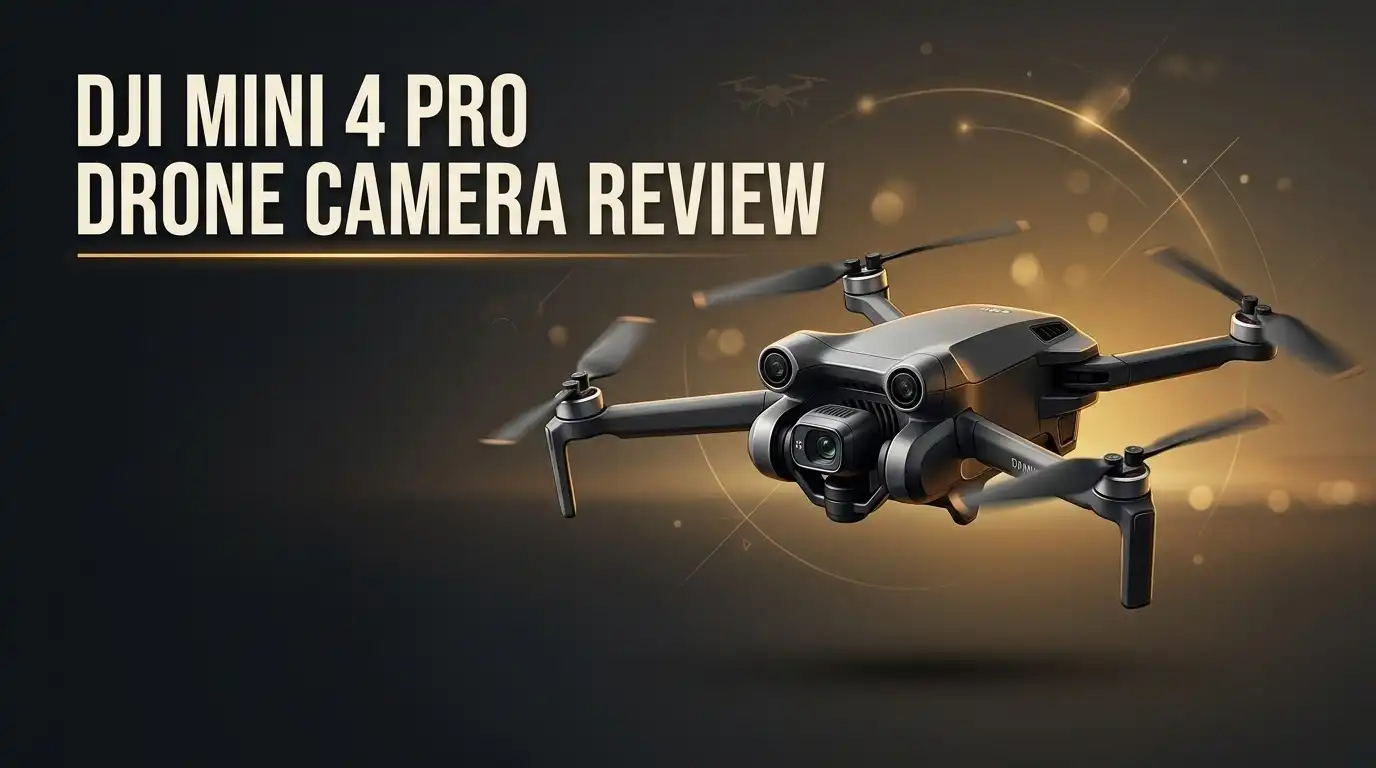
The DJI Mini 4 Pro is a folding camera drone built for travel, vlogging, and landscape work. It weighs under 249 grams with battery, propellers, and a microSD card installed. Folded, it measures 148 by 94 by 64 millimetres, so it slides into a jacket pocket.
DJI positions it as the most capable mini drone they built before the Mini 5 Pro arrived. The headline specs back that up: a 1/1.3 inch sensor, a 3 axis mechanical gimbal, omnidirectional obstacle sensing, and the O4 video transmission system.
You also get true vertical shooting, where the gimbal physically rotates 90 degrees for portrait video. That matters for anyone posting to Reels or TikTok. The build feels light but not cheap, and the arms click into place with a reassuring snap.
The Unboxing Experience
Opening the Fly More Combo box feels like opening a well packed camera kit. The shoulder bag sits on top, grey and understated, with a zip that runs smoothly. Inside the bag, the drone sits in a moulded slot with the gimbal cover already attached.
The gimbal cover is the first small annoyance. It clips tightly over the camera housing, and removing it in cold weather with gloves on takes patience. You will fumble it at least once.
Below the drone, you find the DJI RC 2 controller with its built in screen, three batteries, the two way charging hub, spare propellers, a screwdriver, and cables.
Nothing feels like filler. The whole setup takes about fifteen minutes, mostly waiting for firmware to update. The first launch happens in under a minute after that.
Design and Build Quality
The folded shape is compact enough to hold in one hand. Unfolded with propellers, it stretches to 298 by 373 millimetres. The plastic shell uses a grey matte finish that hides fingerprints well but scuffs if you drop it on gravel.
The weight limit drives every design decision here. DJI shaved grams everywhere, which means the frame flexes slightly if you squeeze it. That is normal for this class, not a defect.
The propeller arms unfold in a fixed order: front arms first, then rear. Get it wrong and the props collide. You learn the order after the second flight.
The battery slides into the rear and locks with a firm click. One genuine complaint: the microSD slot sits in a tight recess, and swapping cards in the field is fiddly.
Camera and Image Quality Performance
This is where the Mini 4 Pro earns its price. The 1/1.3 inch CMOS sensor delivers 48MP stills at a maximum image size of 8064 by 6048 pixels. The f/1.7 aperture pulls in more light than most competing mini drones.
In daylight, images show clean detail, accurate colour, and controlled highlights. The 12MP binned mode produces the cleanest files for most users. The 48MP mode helps when you plan to crop hard.
RAW DNG support is included, which gives you real editing latitude. Shadows recover well at base ISO. Push past ISO 1600 and grain appears quickly.
That is the physical limit of a small sensor, not a software fault. Dynamic range sits around 11 stops in practice. Sunset and sunrise shots look excellent. Midday shots can look flat without grading.
Top 3 Alternatives for DJI Mini 4 Pro

- Enhanced Camera for Travel Shots - Air 3S's 1" CMOS primary camera delivers breathtaking shots with enriched detail in low-light scenarios like sunsets and nightscapes.
- Capture Footage with Vibrant Detail - Record cinematic 4K/60fps HDR video with up to 14 stops of dynamic range [4] to see intricate cloud textures and other details during sunrise and sunset.
Some of the links on this website are affiliate links, which means that at no additional cost to you, I earn a commission if you click through and make a purchase. I only recommend products and services that I believe will add value to my readers. Thank you for your support!
DJI Air 3S Fly More Combo

- Fly Fearlessly – This drone with camera for adults 4k features full-coverage propeller guards made from lightweight carbon fiber, providing comprehensive protection for you. Enjoy your time with the drone!
- Lightweight and Regulation Friendly - Weighing under 249 g, [1] this drone with camera doesn't need FAA registration or Remote ID in America. It's compact, convenient, and ideal for your travels!
Some of the links on this website are affiliate links, which means that at no additional cost to you, I earn a commission if you click through and make a purchase. I only recommend products and services that I believe will add value to my readers. Thank you for your support!
DJI Flip

- Due to platform compatibility issue, the DJI Fly app has been removed from Google Play. DJI Neo must be activated in the DJI Fly App, to ensure a better product usage experience, please go to the DJI official website to download the App before use.
- Lightweight and Regulation Friendly - At just 135g, this drone with camera for adults 4K may be even lighter than your phone and does not require FAA registration and Remote ID. Throw Neo in your backpack or even your pocket. Just grab and go!
Some of the links on this website are affiliate links, which means that at no additional cost to you, I earn a commission if you click through and make a purchase. I only recommend products and services that I believe will add value to my readers. Thank you for your support!
DJI Neo Three Battery Combo
Video Modes and True Vertical Shooting
The Mini 4 Pro records 4K at 24, 25, 30, 48, 50, and 60fps. It also shoots 4K at 100fps for slow motion, and 1080p at up to 200fps. Bitrate maxes out at 150 Mbps using H.264 or H.265.
D Log M and HLG both record in 10 bit colour, which gives you far more grading room than the standard 8 bit profile. Colourists will appreciate that.
True vertical shooting is the feature people underestimate. The gimbal rotates so the sensor captures full resolution portrait video with no cropping.
Social media creators save a full editing step. Night mode records 4K at 30fps with noise reduction applied, though the result looks soft. Use it for city lights, not for client work.
Omnidirectional Obstacle Sensing and Safety
The sensing system uses binocular vision cameras facing forward, backward, left, right, up, and down. A 3D infrared sensor sits underneath. Forward detection reaches 200 metres, and measurement range extends to 18 metres.
APAS 4.0 handles avoidance. You can set the drone to brake, bypass, or ignore obstacles. Bypass mode works surprisingly well around tree branches and lamp posts.
This system saved my drone twice. Once near a power line I did not see on the screen, and once during a tracking shot through a wooded path.
Advanced Return to Home plots a route around known obstacles instead of flying blind. The limits are real though. Sensors need light above 15 lux and surfaces with visible texture. Thin wires and glass still fool it.
O4 Video Transmission and Range
O4 is the fourth generation of OcuSync, and it is a serious upgrade over the Mini 3 Pro. Maximum transmission distance reaches 20km under FCC standards and 10km under CE. Latency drops to roughly 120 milliseconds.
The feed holds 1080p at 60fps, which makes framing shots far easier than older 720p systems. Four antennas in a 2T4R setup handle signal diversity.
Real world range depends on interference. In a city, expect 1.5 to 4km. In suburbs, 4 to 10km. Near open coastline, 10 to 20km becomes possible. I never flew past 6km, and the image stayed crisp the entire time. Download speeds hit 10 MB/s to the controller, or 30 MB/s over Wi Fi 5 direct to a phone.
Flight Time and Battery Performance
DJI rates the standard 2590 mAh battery at 34 minutes of flight and 30 minutes of hovering. The Intelligent Flight Battery Plus, at 3850 mAh, raises that to 45 minutes of flight. That bigger battery pushes the drone above 249 grams, so check your local rules before using it.
Lab numbers never match real flying. With wind, climbing, and active recording, I averaged 24 to 27 minutes per standard pack.
Three batteries is the sweet spot, which is why the Fly More Combo makes sense. Charging takes 58 minutes per battery in the hub, and the hub charges packs in sequence rather than together. Plan around 90 minutes for a full set. Cold weather below 5 degrees Celsius cuts runtime noticeably.
Wind Resistance and Flight Stability
Maximum wind resistance is rated at 10.7 metres per second, roughly 24mph or Level 5. Top horizontal speed reaches 16 m/s in Sport mode.
The drone handles moderate wind better than its weight suggests. The gimbal keeps footage steady even when the airframe tilts to hold position. Angular vibration stays within 0.01 degrees.
Push past the rating and problems start. At the coast with gusts near 30mph, the drone drifted, the app warned repeatedly, and battery drain accelerated.
Returning home against headwind ate 20 percent of the pack. This is the honest trade for a sub 249 gram design. If you regularly fly in windy coastal or mountain conditions, a heavier drone like the Air 3S serves you better.
Intelligent Flight Modes and Tracking
FocusTrack includes Spotlight 2.0, Point of Interest 3.0, and ActiveTrack 360. The last one is the interesting addition. ActiveTrack 360 uses a circular dial on screen that lets you set the exact angle and path the drone takes around your subject.
Tracking a person walking along a trail works smoothly. Tracking a cyclist at speed works until the trees get dense.
MasterShots and QuickShots handle the automated clips. Dronie, Rocket, Circle, Helix, Boomerang, and Asteroid all appear. Waypoint Flight and Cruise Control arrived through firmware updates, which adds repeatable camera moves.
Hyperlapse supports Free, Circle, Course Lock, and Waypoint modes. Panorama options cover Sphere, 180 degree, Wide Angle, and Vertical.
DJI RC 2 Controller and App Experience
The DJI RC 2 ships with a 5.5 inch screen rated at 700 nits. That brightness level works in most daylight, though harsh midday sun still washes it out a little. The built in screen removes phone pairing hassle completely, and startup takes about 15 seconds.
The RC N2 option costs less but requires your phone. Battery drain on your phone becomes the hidden cost there.
The DJI Fly app remains clean and readable. Menus sit where you expect them. New pilots can find settings without a manual.
One recurring frustration appears across owner forums: firmware updates occasionally reset custom camera settings and briefly degrade tracking performance. Updates usually fix this within weeks, but it still irritates people mid shoot.
What the DJI Mini 4 Pro Does Not Do Well
Honest reviews list the failures. Here are the real ones.
Low light video is the biggest weakness. Anything after dusk shows visible noise and smeared detail once you pass ISO 1600. Night mode helps, but it softens the image heavily.
There is no telephoto lens. Digital zoom up to 3x crops the sensor and loses quality. Competitors at higher price points now include a second camera.
Internal storage sits at just 2 GB, which holds roughly 100 seconds of 4K footage. You must buy a microSD card. The gimbal cover is slow to remove under pressure. The drone is also noisier than its size suggests, so discreet filming near people is not realistic.
Pros and Cons of the DJI Mini 4 Pro
Here is the balanced summary.
Pros
- Weighs under 249 grams, so no FAA registration is needed for recreational flying in the United States
- Omnidirectional obstacle sensing in all directions with APAS 4.0 bypass
- Excellent 1/1.3 inch sensor with f/1.7 aperture and 48MP stills
- 4K at 60fps HDR plus 4K at 100fps slow motion
- True vertical shooting with a rotating gimbal for social content
- O4 transmission with a stable 1080p/60fps feed and long range
- Up to 45 minutes of flight with the larger battery option
- Folds small enough for a jacket pocket or day bag
Cons
- Low light performance falls behind larger sensor drones
- Only 2 GB internal storage, so a microSD card is mandatory
- Wind above 24mph causes drift and faster battery drain
- No optical zoom or secondary camera
- Firmware updates have occasionally reset settings for owners
- The Mini 5 Pro now offers a 1 inch sensor for more money
DJI Mini 4 Pro vs DJI Mini 5 Pro in 2026
The Mini 5 Pro arrived with a 1 inch CMOS sensor, which is the headline upgrade. That larger sensor captures cleaner shadows and roughly one extra stop of dynamic range. It also records 4K at 120fps and adds a LiDAR sensor for better night obstacle detection.
So the Mini 5 Pro wins on paper. It should, since it is newer and costs more.
The Mini 4 Pro still makes sense on value. In good light, the gap between the two in finished, graded footage is smaller than spec sheets suggest.
Most viewers cannot tell them apart on a phone screen. If you shoot mainly in daylight and want to save several hundred dollars, the Mini 4 Pro remains the practical pick.
Who Should Buy the DJI Mini 4 Pro
- 𝗨𝗻𝗱𝗲𝗿 𝟮𝟰𝟵 𝗴, 𝗡𝗼 𝗥𝗲𝗴𝗶𝘀𝘁𝗿𝗮𝘁𝗶𝗼𝗻 𝗜𝘀 𝗥𝗲𝗾𝘂𝗶𝗿𝗲𝗱[1] - Travel light and skip registration for a user-friendly, easy-to-carry experience on all your journeys. Enjoy the fun of flying without the tedious application process and waiting time.
- For the latest aircraft firmware, 𝘁𝗵𝗲 𝗥𝗲𝗺𝗼𝘁𝗲 𝗜𝗗 𝘄𝗶𝗹𝗹 𝗼𝗻𝗹𝘆 𝗯𝗲 𝗮𝗰𝘁𝗶𝘃𝗮𝘁𝗲𝗱 𝘄𝗵𝗲𝗻 𝘁𝗵𝗲 𝗜𝗻𝘁𝗲𝗹𝗹𝗶𝗴𝗲𝗻𝘁 𝗙𝗹𝗶𝗴𝗵𝘁 𝗕𝗮𝘁𝘁𝗲𝗿𝘆 𝗣𝗹𝘂𝘀 𝗶𝘀 𝘂𝘀𝗲𝗱. If your drone needs to be registered, such as 𝗳𝗹𝗶𝗴𝗵𝘁𝘀 𝗳𝗼𝗿 𝗰𝗼𝗺𝗺𝗲𝗿𝗰𝗶𝗮𝗹 𝗽𝘂𝗿𝗽𝗼𝘀𝗲𝘀, 𝗽𝗹𝗲𝗮𝘀𝗲 𝗳𝗹𝘆 𝘄𝗶𝘁𝗵 𝘁𝗵𝗲 𝗜𝗻𝘁𝗲𝗹𝗹𝗶𝗴𝗲𝗻𝘁 𝗙𝗹𝗶𝗴𝗵𝘁 𝗕𝗮𝘁𝘁𝗲𝗿𝘆 𝗣𝗹𝘂𝘀.
Some of the links on this website are affiliate links, which means that at no additional cost to you, I earn a commission if you click through and make a purchase. I only recommend products and services that I believe will add value to my readers. Thank you for your support!
This drone fits travellers, hobbyist filmmakers, real estate agents, and social content creators. The weight class removes paperwork in most countries, which matters enormously when you cross borders.
Beginners benefit most from the obstacle sensing. It forgives the mistakes new pilots make in their first ten flights.
Skip it if you shoot professionally at night, need optical zoom, or fly regularly in strong coastal wind. The Air 3S or Mavic 4 Pro serve those needs better.
Also skip it if you want the absolute best image quality available in a mini body, because that title belongs to the Mini 5 Pro now. Everyone else gets a capable, pocketable camera drone at a price that keeps improving.
Final Verdict
The DJI Mini 4 Pro holds its value as a tool, not just as a gadget. Three years after launch, the combination of omnidirectional sensing, O4 transmission, 10 bit colour profiles, and true vertical shooting still covers what most creators actually need.
It is not the best camera drone you can buy in 2026. It was never meant to be. It is the best balance of size, safety, legality, and image quality at its current street price.
My rating sits at 4.5 out of 5. The missing half point goes to low light noise and wind handling. If you find it discounted below the Mini 5 Pro by a meaningful margin, buy it without hesitation. You will fly it more than you expect.
Frequently Asked Questions
Does the DJI Mini 4 Pro need FAA registration?
No, not for recreational flying in the United States. It weighs under 249 grams with the standard battery, propellers, and a microSD card. Remote ID is also not required for recreational use at that weight. If you fly commercially, you still need a Part 107 certificate. Using the Intelligent Flight Battery Plus pushes the weight above 249 grams, which changes the rules.
How long does the DJI Mini 4 Pro actually fly?
DJI rates it at 34 minutes with the standard battery. Expect 24 to 27 minutes in real conditions with wind and active recording. The Intelligent Flight Battery Plus is rated at 45 minutes, which translates to roughly 34 to 36 minutes of practical flying.
Is the DJI Mini 4 Pro good for beginners?
Yes. The omnidirectional obstacle sensing, Advanced Return to Home, and Cine mode make it forgiving for new pilots. The DJI Fly app explains settings clearly. Start in Cine mode, keep the drone in sight, and build confidence over several short flights.
Can the DJI Mini 4 Pro shoot vertical video?
Yes. The gimbal physically rotates 90 degrees for true vertical capture at full sensor resolution. There is no cropping involved, so footage looks sharp on Instagram Reels, TikTok, and YouTube Shorts.
Does the DJI Mini 4 Pro work well at night?
It works, but with limits. Night mode records 4K at 30fps with noise reduction. Images get grainy past ISO 1600 and detail softens. City light shots look acceptable. Dark landscapes do not.
Will DJI keep updating the Mini 4 Pro?
DJI guarantees software updates for this model until the end of December 2026. After that date, new feature updates are unlikely, though the drone continues to function normally.

Welcome to The File Fix. I’m Millie, and I review tech so you don’t have to suffer buyer’s remorse.
Navigating the endless sea of Amazon devices and gadget releases can feel like a full-time job. That’s why I do the heavy lifting. I dig past the unreliable 5-star reviews and shiny spec sheets to test how these devices actually hold up in the real world. Whether you’re looking for the best budget earbuds, a reliable power bank, or the latest smart home gear, you’ll find honest, no-nonsense breakdowns here.