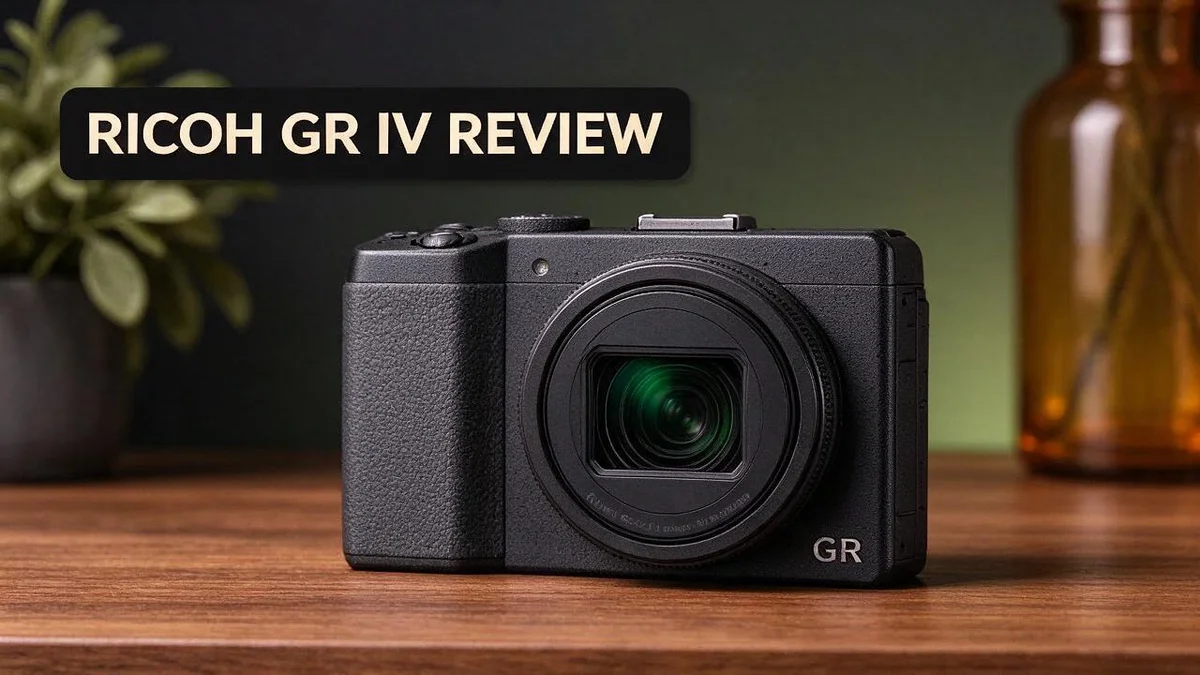
Ricoh GR IV Review: Sensor, Autofocus, Battery Life and Verdict
Looking for a pocket camera that feels fun to shoot with? The Ricoh GR IV might be the one you need. It packs a large image sensor of about 26MP into a body you can slip into a jacket pocket.
Ricoh fans have waited a long time for this update. The fixed 28mm lens gives you a classic view for street and travel shots. Autofocus feels quicker, and low light scenes look cleaner.
Battery life also got a boost. You can shoot more before reaching for the charger. Many photographers see this as a clear step forward from the GR III.
Still, the GR IV is not built for video. If you want rich footage, look elsewhere. But for pure photography, this camera keeps things simple and focused.
In a Nutshell
-
Best for street shooting: The compact body slips into a coat pocket, so you can carry it everywhere and catch moments as they happen.
-
Classic wide view: The fixed 28mm lens gives a natural perspective that suits everyday scenes, portraits with context, and travel shots.
-
Sharp, flexible files: The 25.74MP sensor captures plenty of detail, so you can crop tight without losing quality.
-
Smart processing: The GR ENGINE 7 processor works with the sensor to keep colors clean and images consistent in changing light.
-
Quick control: The 3 inch touchscreen lets you tap to set focus points, which speeds up your workflow on the go.
-
Plenty of room: With 53GB of built in storage plus a microSD slot, you can shoot long days without stopping to swap cards.
-
Main rival: The Fujifilm X100VI is the closest competitor, so compare both cameras before you decide which one fits your style.
Sensor and Image Quality

- Built-in HDF (Highlight Diffusion Filter): Diffuses highlights for softer light, creating more expressive images with a sense of depth and emotion
- Ultra Compact Design: Smallest GR to date, easily fits in your pocket for convenient portability

Some of the links on this website are affiliate links, which means that at no additional cost to you, I earn a commission if you click through and make a purchase. I only recommend products and services that I believe will add value to my readers. Thank you for your support!
Image quality is where the Ricoh GR IV earns its reputation. Good files start with a large sensor that gathers more light. This camera uses that idea well.
Low light shooting is a real test for any compact camera. The updated autofocus helps here, since sharp focus matters more when light runs low. Evening streets and dim cafes become easier to capture.
Dynamic range gives highlights and shadows room to breathe. Bright skies keep their detail, while dark corners still show texture. This helps during harsh midday sun.
Skin tones deserve attention too. Portraits look natural without heavy editing. Warm light from cafes or sunsets renders pleasantly.
Raw files give you the most control. Editing software can recover shadows and adjust white balance without losing much quality. Photographers who enjoy post processing will appreciate this flexibility.
Depth of field works differently on a fixed wide lens. Background blur stays subtle, so the subject and surroundings both stay readable. This suits street scenes where context matters.
Sharpness also depends on how you hold the camera. Pair steady hands with a fast shutter speed. Your photos will look crisp across the frame.
Consistent results come from good habits. Shoot in raw when lighting changes quickly. Check exposure with the histogram before moving on.
Color tones also help when you edit. Subtle tones hold up well during grading. Landscapes, city walls, and street signs all gain punch without looking harsh.
Overall, the sensor and processing deliver files that feel clean and flexible. Many photographers will find these results satisfying day after day. The image quality earns trust for serious everyday shooting.
Test the camera before a trip. Take sample shots at different times of day. Compare them on a large screen to judge detail and tone. This quick check shows how the files behave in your own light.
Fixed 28mm Lens and Handling
A fixed lens changes how you shoot. You cannot swap glass, so you learn to move your feet instead. This simple habit sharpens your eye over time, and your framing gets better with each outing.
The updated optics also bring a clear gain in focusing. The lens and autofocus system work together, so the camera locks on faster in dim rooms. Night scenes feel less frustrating than they did on the older model.
Handling matters just as much as image quality. The body is small, so your hand needs a short time to settle around it. A firm grip keeps the frame steady when light gets low.
The controls sit where your thumb expects them. Dials and buttons let you change settings without digging through menus. Fast access keeps you shooting instead of searching.
Street photographers often shoot from the hip with a wide lens. Set your focus distance once, then fire quickly as people walk past. Timing matters more than perfect aim.
Your stance also affects the final shot. Keep your elbows close to your body and breathe out before you press the shutter. These small habits reduce shake, especially at slower speeds.
Many photographers carry the camera on a strap across the body. That position keeps it ready without slowing you down. Ready means fewer missed moments.
The lens also suits close subjects with a tight frame. Get near your subject and let the background show the story. A short distance creates a clear mood in every frame.
Practice with one lens for a full month. You will notice patterns in your photos. Those lessons stick longer than any spec sheet.
In short, the fixed lens and compact body work as one unit. They reward patience, steady hands, and a clear plan. Learn their habits, and the GR IV will reward you.
Autofocus and Low-Light Performance
Focus speed often decides whether a shot works. When the light drops, many cameras hunt back and forth. You can miss the moment while the lens searches. The GR IV reduces that delay, so you can spend more time framing and less time waiting.
Dim places like cafes, bars, and night streets test any compact camera. The updated lens helps the GR IV find edges more quickly in these scenes. Focus locks feel steady, even when the room looks dark to your eye.
Choose your focus point with care. Place the point over an eye, a sign, or a sharp edge. Small focus areas work well in low light because the camera has clear detail to grab. Large zones can confuse the system when the background is empty or plain.
Try the half press trick. Hold the shutter halfway to lock focus, then move the frame. This habit helps when your subject sits off center. It also saves time during fast street moments.
Contrast gives autofocus something to grab. Flat walls, fog, and smooth surfaces offer little detail. Look for a lit edge, a painted line, or a face nearby. Aim there, and the lens locks faster.
Focus and noise also work together. At high ISO, grain can soften fine texture, even when focus is perfect. Let the camera lock at a moderate ISO first. Then raise the ISO only when the scene truly needs it.
Shutter speed matters too. Even sharp focus can look soft if your hands move. Start near one over the focal length as a simple guide. The wide 28mm view forgives small movements better than a long lens would.
Practice after sunset. Spend an evening with the camera once the light fades. Test focus on doorways, shop signs, and people walking past. You will learn how the GR IV reacts and where it struggles. Confidence grows quickly with repetition.
Good low light focus comes from calm habits. Let the camera do its work, then press the shutter with a gentle touch. Your night photos will feel sharper, cleaner, and more natural.
Top 3 Alternatives
Fujifilm X100VI

- Bundle Includes: FUJIFILM X100VI Digital Camera (Silver), 64GB Card, Memory Card Reader, Deluxe Soft Case, Memory Card Wallet, Diginerds Cleaning Kit
- Introducing the Fujifilm 6th-gen X100VI, with its timeless dial-based design that ensures an indulgent and tactile shooting experience. Capture unforgettable moments with each click and experience the essence of photography with Fujis X100 Series.
Some of the links on this website are affiliate links, which means that at no additional cost to you, I earn a commission if you click through and make a purchase. I only recommend products and services that I believe will add value to my readers. Thank you for your support!
A compact camera with a classic look appeals to many photographers. The Fujifilm X100VI packs a large sensor into a small body. Its fixed lens delivers sharp images with soft, creamy backgrounds. Street photographers often enjoy its quick handling and simple dials. The camera also feels good in the hand, so it invites you to shoot more often.
Leica Q3

- Leica Q3: A groundbreaking digital camera renowned for its innovative features and performance, making it a top choice among photographers.
- Triple Resolution Sensor: Featuring a first-ever 60MP BSI CMOS sensor with Triple Resolution Technology, delivering exceptional image quality and lifelike colors.
Some of the links on this website are affiliate links, which means that at no additional cost to you, I earn a commission if you click through and make a purchase. I only recommend products and services that I believe will add value to my readers. Thank you for your support!
The Leica Q3 brings premium build quality to the table. It uses a full frame sensor paired with a fixed wide lens. Many people love its bright viewfinder and rich, natural colors. The camera handles low light well, so night scenes look clean and detailed. It suits travel photography, portraits, and everyday shooting alike.
Sony RX100 VII
No products found.
The Sony RX100 VII is a very small camera with a zoom lens. It fits easily into a jacket pocket, so you can carry it anywhere. Its fast autofocus tracks moving subjects with ease. The flip screen helps you shoot selfies and vlogs. This model works well for travel, family events, and casual photo walks.
Video Capabilities
Video plays a smaller role on the Ricoh GR IV. The camera stays focused on still images. Still, a few short clips can add a nice layer to your day.
Think of video as a bonus feature. It helps you capture a moment you would otherwise miss. It does not replace a dedicated video camera.
Quick clips work well for travel days. A short walk through a market can show sounds and movement. Your photos then tell the rest of the story.
Battery life needs attention when you record. Clips use more power than stills. Pack a spare charge if you plan a long session.
Storage fills up faster with video files. Keep an eye on free space in the internal memory. A microSD card gives you extra room for longer days.
Use the touchscreen to frame your shot. Tap the screen to pick a focus area before you press record. This small step keeps your subject sharp from start to finish.
Hold the camera with both hands while recording. Keep your elbows close to your body. Smooth movement looks better than quick turns and sudden stops.
Audio is another limit to remember. The internal microphone picks up everything nearby. Wind and traffic noise can drown out your subject. Find a quiet spot when you can.
Editing helps a basic clip shine. Trim the start and end on your phone or computer. Add a simple music track if the scene needs a mood.
Mix stills and clips in one outing. Shoot a photo, then record a short moment nearby. This pairing gives you a fuller record of the day.
Sharing works best with short files. Social feeds favor quick scenes with clear subjects. Keep each clip focused on one idea.
Set clear expectations before you shoot. Video suits notes, memories, and short social posts. Serious filmmaking needs more features than this camera offers.
Battery Life and Storage
Battery life shapes how you plan a day with this camera. The Ricoh GR IV lasts longer than its predecessor, so you can shoot more between charges.
Plan for about 200 shots per charge. That number gives you a clear starting point. Cold weather, bright screen use, and flash all shorten real results.
Carry a spare battery on every trip. A second battery takes little space in a bag and saves you from missing a late street scene.
Charging happens through the USB port on the body. You can top up from a power bank during a long walk or a lunch break.
Charge the battery overnight before a big shoot. Start each morning with a full battery. This simple habit removes most surprises.
Sleep mode helps too. The camera rests when you lower it, so the battery lasts longer on a long walk. Set a short auto power off time in the menu for quiet moments between frames.
Storage works differently from battery life. The camera offers 53GB of internal storage, which suits a short outing with a few days of light use.
Add a microSD card for more room. The slot lets you expand storage as your library grows. Choose a card with fast write speeds for smooth shooting in bursts.
Format the card in the camera before each shoot. This step keeps files clean and reduces errors. Format it again only after you back up your images.
Keep a card reader in your bag. Copy files to a laptop or cloud drive each evening. This routine protects your photos if a card fails.
Good habits save both power and space. Review shots briefly instead of scrolling for long periods. Turn the screen off when you walk between locations.
Plan your power and storage together. A charged battery and open card space keep you ready for the next great frame.
Pros and Cons
Pros
- The updated lens focuses more reliably than the GR III in low light.
- The fixed 28mm lens suits street and travel shots.
- The GR ENGINE 7 processor handles the 25.74MP sensor files well.
- It fixes many of the issues people had with the GR III.
- Battery life improves on the previous model.
Cons
- The fixed lens offers no zoom for distant subjects.
- Video is basic, so serious filmmakers may want more.
- Shooters who need telephoto reach should look elsewhere.
- The Fujifilm X100VI is a strong rival in the same class.
Who Should Buy It
The Ricoh GR IV fits photographers who love simple gear. A fixed lens asks you to move your feet instead of turning a zoom ring. Many shooters find that habit sharpens their eye.
Street photographers are a natural match. The small body slips into a jacket pocket, so you can carry it all day. People also relax around a compact camera, which helps you catch honest moments.
Travelers who pack light will also appreciate it. You get a capable camera without a heavy bag of lenses. Every frame feels deliberate because you cannot swap glass in the field.
If you already own a GR III, the learning curve is gentle. Your muscle memory carries over, so you can focus on creative choices. Upgrading feels like a natural step rather than a big leap.
Beginners who want to learn composition benefit too. One focal length teaches framing without endless menu choices. The habits you build here transfer to any future camera you own.
Photographers who prize sharp, clean files and simple handling will feel right at home. Each shot becomes a personal study of one view.
Some buyers should look elsewhere. Portrait fans who want creamy backgrounds may feel limited. Event shooters who work in dim rooms with many people may prefer a different setup.
Think about your shooting habits before you decide. Ask yourself whether you enjoy walking with one lens all day. If the answer feels natural, this camera could become your favorite companion.
Consider your comfort too. You may feel more confident with a camera that fits your hand and your pace. Test the grip in a store when you can, and see how the buttons feel.
Your answer to one simple question often settles the decision. Do you want a camera that stays with you every day? If so, the Ricoh GR IV deserves a place on your list.
Final Verdict
The Ricoh GR IV earns a top spot in its class. It keeps the compact charm that fans love. It also fixes the issues that held back the GR III.
Ricoh kept the layout you already know. Muscle memory carries over, so you can start shooting right away. Few cameras feel this familiar from day one.
For GR III owners, the upgrade question is simple. If missed focus has slowed you down, this model answers that complaint. If your current camera still feels fast and fun, you can wait without regret.
Think about the photos you take most often. Street, travel, and everyday documentary work suit this camera well. Weddings, sports, and wildlife shooters will need different tools.
Hands-on time tells you more than any spec sheet. Pick up both cameras if you can. Notice how the dials feel under your fingers. Check whether the menus make sense to you. Trust that first impression.
A fixed focal length also builds skill. It pushes you to move your feet and frame with care. Many photographers find this habit sharpens their eye over time.
Plan a short trial shoot before you commit. Use it for one week of daily life. Review the files on a large screen. Notice which images you keep and which you delete. Those choices reveal how well the camera fits your eye.
If you want a sharp, simple camera that goes everywhere with you, the Ricoh GR IV is an excellent pick. It rewards patience and practice. Carry it daily and it will soon feel like part of your hand. Ricoh has delivered a camera that feels ready for real life. Your best photos will come from consistency, not gear alone.
Frequently Asked Questions
Can I charge the Ricoh GR IV while traveling?
Yes, you can. The camera charges through a standard USB port. A compact power bank keeps it running on long days away from home.
How does the touchscreen help during a shoot?
The 3-inch touchscreen responds to taps. You can tap the screen to pick a focus point. Many shooters find this faster than using buttons, especially when they move quickly.
Is the internal storage enough for a trip?
The camera holds 53GB of internal storage. That space fits many days of shooting. A microSD card adds even more room for longer trips.
What accessories are worth buying first?
A spare battery is a smart first purchase. It helps you keep shooting on busy days. A comfortable strap also makes the camera easier to carry all day.
Welcome to The File Fix. I’m Millie, and I review tech so you don’t have to suffer buyer’s remorse.
Navigating the endless sea of Amazon devices and gadget releases can feel like a full-time job. That’s why I do the heavy lifting. I dig past the unreliable 5-star reviews and shiny spec sheets to test how these devices actually hold up in the real world. Whether you’re looking for the best budget earbuds, a reliable power bank, or the latest smart home gear, you’ll find honest, no-nonsense breakdowns here.