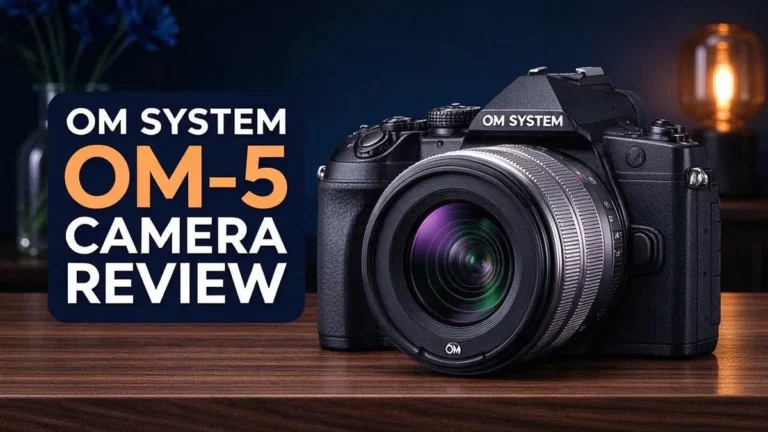

OM System OM-5 Mark II Review: The Only Guide You’ll Need
Are you searching for a small camera that packs serious power? The OM System OM-5 Mark II might be your answer. It brings advanced features into a compact body.
Olympus fans have waited a long time for this model. The camera was announced on June 20, 2025. It keeps things light and simple to carry.
At its heart sits a 20MP Live MOS sensor and a TruePic IX processor. Together, they deliver sharp images with fast, reliable results.
In a Nutshell
- Compact and tough body: The camera slides easily into a bag. Its solid build suits travel, hiking, and shooting outdoors in changing weather.
- Sharp, detailed photos: Pictures look crisp in many lighting conditions. Fine textures stay clear, even when you crop closer to the subject.
- Strong focus tracking: Moving subjects stay sharp thanks to the fast autofocus. Wildlife and sports shooters will likely appreciate this most.
- Bursts up to 30 frames per second: You can capture quick action without missing key moments. This speed helps with fast-changing scenes.
- Pro features in a small package: You get 4K video and a dedicated computational photography button. These tools make creative shooting easier, even for beginners.
- Missing 10 bit recording: Neither video nor stills support 10 bit output. Reviewers see this as a clear gap for serious creators who edit heavily.
Image Quality and Sensor

- EXCEPTIONAL IMAGE QUALITY & ADVANCED IMAGE STABILIZATION: Capture sharp, detailed, and vibrant images with the 20.4MP Live MOS sensor and TruePic IX image processor. Featuring advanced 5-axis in-body image stabilization with up to 7.5 stops of compensation when paired with a compatible Sync IS lens, the OM-5 Mark II helps deliver crisp, steady images even when shooting handheld in challenging conditions.
- COMPACT, LIGHTWEIGHT & RUGGED DESIGN: Designed for outdoor enthusiasts and adventure photographers, the OM-5 Mark II weighs just 0.82lbs (body only) and features a compact, portable design that is easy to carry wherever your journey takes you. With IP53-rated dustproof and splashproof protection and freezeproof performance down to -10°C (14°F), it is ready for demanding outdoor environments.

Some of the links on this website are affiliate links, which means that at no additional cost to you, I earn a commission if you click through and make a purchase. I only recommend products and services that I believe will add value to my readers. Thank you for your support!
Good photos start with how a camera captures light, and this model handles light with confidence. Its Micro Four Thirds frame keeps the body small while still delivering solid detail for everyday shooting.
Detail gives you room to crop. The high resolution lets you trim a frame tightly without losing much sharpness. Wildlife and sports fans will appreciate that extra reach.
Low light is where this camera shines. The top sensitivity reaches ISO 25,600 on paper, so dim rooms and evening streets are within reach.
Higher settings bring more grain, though. Expect noise to climb as you push the sensitivity higher. Keeping the setting as low as the scene allows keeps files clean.
Dynamic range needs smart exposure. Bright skies and deep shadows can compete in harsh sunlight. Use exposure compensation or the histogram to protect your highlights.
Colors feel natural for portraits. Many shooters find that skin tones look pleasant straight from the camera. Small edits often finish the shot nicely.
Shooting in RAW gives you more control later. The file holds extra data for recovering shadows and fine-tuning white balance.
Prints look crisp at common sizes. Screens show clean edges when you zoom in on fine textures like hair, leaves, or fabric.
Lens choice also shapes the final look. Sharp glass paired with this sensor produces clear edges and pleasing background blur.
Overall, image quality suits hobbyists and travel photographers well. Professionals chasing the cleanest possible files may still want a larger sensor.
Think about your subjects before you pick settings. Good light and steady technique matter more than any spec sheet.
Autofocus and Burst Shooting
Autofocus decides whether your shot lands sharp or soft. Set the right focus area first, and your results improve fast.
Pick the focus area that fits your subject. Use a single point for still subjects like portraits or product shots. Switch to a wider zone when movement is unpredictable.
Subject tracking helps when people or animals run around. Keep the subject inside the frame and hold the shutter. The camera follows the target and adjusts focus as the distance changes.
Framing also affects focus accuracy. Center your subject when you can, then recompose. Off-center subjects can confuse the focus point, especially in busy scenes.
Burst shooting works best with a plan. Start a burst just before the peak moment. A short burst often beats a long one, because you have fewer weak frames to sort through.
Buffer speed matters too. Long bursts fill memory quickly. Shoot in short sequences when you can, and the camera will recover faster between shots.
Watch for distortion in fast scenes. Electronic shutter modes can make moving objects look slanted or wobbly. Test the setting before a big event, so you know how your subject will look.
Low light tests autofocus as well. Dim scenes slow down focus, so give the camera more contrast to work with. A bright edge or a lighter background can help it lock on.
Practice makes the difference. Spend an afternoon with moving objects like pets, bikes, or kids. You will learn how the camera reacts and when to trust its focus lock.
Check your results after each session. Zoom into the image on your screen and look at the eyes or edges. This quick check shows whether your settings suit your style.
Video Capabilities
Video shooters will find plenty to like here. The OM System OM-5 Mark II records 4K footage, so you can capture sharp clips for trips, family events, or short social posts.
Plan your shoot before you press record. Decide what story you want to tell. Think about the opening shot, the main action, and the final frame. A simple plan keeps your footage focused.
Test a few clips first. Record short tests before the real event. Watch them on a larger screen and check the framing, brightness, and focus. This quick step saves time later.
Video uses storage space quickly. A 4K clip can fill a memory card in minutes. Pack a spare card and choose one with a fast write speed. Your footage will record more smoothly.
Battery life matters too. Longer recordings drain power faster than photos do. Carry a second battery and charge both before you leave home.
Sound often matters as much as the picture. The built in microphone works for quick notes, but it picks up wind and handling noise. Pairing an external mic gives cleaner dialogue and voices.
Movement can make clips look shaky. Move slowly and keep your elbows close to your body. A small tripod or gimbal creates smooth pans and steady tracking shots.
Frame rate changes the mood of your footage. Standard rates suit everyday recording. Higher rates create smooth slow motion when you edit later. Match your frame rate to how you plan to share the video.
Editing takes time, so prepare your workflow early. Most modern editing software handles 4K files well. Older computers may stutter, so proxy files can help. Keep your project folders organized from day one.
Practice makes video feel natural. Spend time with each setting until you can change it quickly. Your next clip will look better because you know your camera well.
Top 3 Alternatives
Looking for a different camera? These three options deliver strong photo and video performance. Each one suits a different shooting style.
Fujifilm X-T50

- Dedicated Film Simulation dial offering fast access to 20 Film Simulations (including REALA ACE mode)
- 40.2-megapixel X-Trans CMOS 5 HR sensor
Some of the links on this website are affiliate links, which means that at no additional cost to you, I earn a commission if you click through and make a purchase. I only recommend products and services that I believe will add value to my readers. Thank you for your support!
Fujifilm X-T50 offers a compact body with a classic dial design. Its 40-megapixel sensor captures sharp, detailed images.
Photographers who love manual control will enjoy the physical dials. The film simulation modes create beautiful colors straight from the camera.
Video shooters also benefit from 6.2K recording. It fits creative projects with ease.
Sony Alpha a6700

- Sony USA Authorized. Bundle Includes: Sony a6700 Mirrorless Vlogger Camera With 16-50mm Lens, 64GB Memory Card, NP-FZ100 Replacement battery, External Charger, Deluxe Soft Case, 12 inch Flexible Tripod, Micro HDMI Cable, Lens Cap Keeper, Cleaning Kit, Memory Card Wallet, Memory Card Reader, Hand Grip Strap
- Outstanding Image Quality: Achieve breathtaking images with the 24.2MP APS-C Exmor CMOS sensor, designed for remarkable detail and clarity. With an impressive ISO range of up to 102,400, it's ideal for low-light situations. Whether you're capturing landscapes or portraits, this sensor guarantees vibrant colors and sharp results. Perfect for both aspiring photographers looking to enhance their skills and professionals seeking dependable performance across various environments.
Some of the links on this website are affiliate links, which means that at no additional cost to you, I earn a commission if you click through and make a purchase. I only recommend products and services that I believe will add value to my readers. Thank you for your support!
The Sony Alpha a6700 brings advanced autofocus into a small frame. Its subject recognition tracks people, animals, and vehicles with ease.
The 26-megapixel sensor handles both photos and video well. Vloggers will appreciate the flip screen and the microphone input.
Fast burst shooting helps capture action scenes. Many creators choose this model for travel and everyday content.
Canon EOS R7

- DIGIC X IMAGE PROCESSOR: Enhances performance for sharp photos and ultra-high definition videos
- CMOS SENSOR: Canon’s 32.5 mp APS-C CMOS sensor ensures images appear crisp
Some of the links on this website are affiliate links, which means that at no additional cost to you, I earn a commission if you click through and make a purchase. I only recommend products and services that I believe will add value to my readers. Thank you for your support!
The Canon EOS R7 focuses on speed and reach. Its 32-megapixel sensor delivers plenty of detail for cropping.
Wildlife and sports photographers often choose it for long telephoto lenses. Built in image stabilization keeps handheld shots steady.
The camera also records 4K video with rich, natural color. It makes a strong choice for hybrid shooters.
Pick the option that matches your style and gear needs. Each camera gives you reliable results for years.
Compact Design and Handling
The OM System OM-5 Mark II feels small in the hand. Its compact body fits easily into a daypack or a coat pocket. This makes it a good partner for long walks and travel days.
Weight matters more than most people think. A light camera rests easily on your neck strap. You can carry it all day without feeling worn out.
The grip gives your fingers a secure place to rest. Pair the body with a small lens for the best balance. A large lens can make the setup feel front heavy.
Button placement takes a little time to learn. Controls sit where your thumb and fingers can reach them. Spend a few minutes with the menus before a big shoot.
Handling gets easier with practice. Many photographers change settings without lifting their eye from the viewfinder. Muscle memory builds quickly with regular use.
The body feels durable in daily life. It can handle bumps inside a bag and light rain on a hike. That gives you confidence to shoot in real conditions.
Grip texture matters on wet or cold days. Gloves can make small buttons harder to press. Test the controls with gloves on if you shoot in winter.
Think about how the camera feels after hours of use. A small body can feel cramped for people with large hands. Try it in a shop before you decide.
The screen helps you frame shots from low or high angles. You can hold the camera at waist level or over a crowd. Simple touches like this make street and travel shooting more fun.
Overall, the handling suits people who want portability. It lets you carry capable gear without the strain. Small size and a solid feel work well together.
Computational Photography Tools
Computational photography asks the camera to do some of the hard work. The OM System OM-5 Mark II offers several tools that combine multiple frames into one better image. Many of these modes work well with simple shooting habits.
The camera includes a dedicated computational photography button. Pressing it opens quick access to these modes. You can switch between options without digging through long menus.
Handheld High Res Shot is one of the most useful modes. The camera captures several frames in a row. It then merges them, so the final image gains extra detail and smoother color.
Live Composite shows your picture building up on the screen. You can watch light trails or star paths grow over time. Stop the capture when the image looks right.
Focus stacking blends several focus points into one image. This helps with small subjects where only a thin slice stays sharp. The camera takes a series of frames, then keeps the sharp parts from each one.
Live ND simulates a neutral density filter on the screen. Long exposures in bright daylight become possible. You see the effect before you press the shutter, which saves guesswork.
These tools need some patience. Several modes take extra seconds to process. Keep the camera steady on a tripod or rest it on a wall for best results.
Scene choice matters too. Good light gives cleaner merges. Moving subjects can cause ghosting, so pick still scenes for stacking and high res modes. Landscapes, waterfalls, city lights, and product shots all suit these tools well.
Test each mode at home before a trip. Learn which settings suit each scene. Try one new tool per outing to build your skills. Over time, these computational features expand your creative options.
Pros and Cons
Pros
- Compact body with sturdy, weather-minded build quality
- Sharp 20MP Live MOS sensor delivers detailed images
- On chip phase detection gives quick, reliable focus
- TruePic IX processor helps with clean color and noise control
- Records 4K video for versatile everyday clips
Cons
- Lacks 10-bit video and stills
- Reviewers now treat 10-bit capture as a basic expectation
- Video shooters who want deeper color grading may feel limited
- Spec sheet details can be hard to confirm before a purchase
Who Should Buy It
This camera suits people who are ready to leave their phone behind. Phone photos look fine on screens. A dedicated camera gives more control over light and depth. Many people feel ready after a few trips.
Existing Micro Four Thirds owners will feel at home. If you already own Olympus or OM System lenses, this body slots right in. You keep your lenses and gain modern features.
Weekend hobbyists also benefit. Hiking trips, family events, and city walks often bring surprises. This camera handles changing light without fuss.
Street photographers may appreciate the quiet presence. A small body draws less attention. People relax around it, which helps candid moments feel natural.
Travelers who pack light will like the balance. Long days with a bag on your shoulder add up. A lighter kit leaves room for snacks, water, and a spare battery.
Buyers who want one system for many subjects should look closer. The camera covers landscapes, portraits, and macro shots with one body. You can switch lenses as your interests change.
Enthusiasts who want room to grow will enjoy it. Learning new settings takes time. This body grows with your skills.
Some people should look elsewhere. Those who need top low light performance or full frame depth may prefer a larger sensor. Professional video editors who need the deepest files might want another option.
Rival models offer useful alternatives. Cameras from Fujifilm, Olympus, and Leica each serve different tastes. Each one has a different feel and lens range.
Ask yourself a few simple questions. Do you shoot often? Do you carry gear for hours? Do you want a camera that feels fun to use? Honest answers make the choice easier.
Handle the camera before you buy. Hold it in a store if possible. Feel the grip and check the controls. Your hands will tell you a lot.
Final Verdict
Our final thoughts land in a clear place. The OM System OM-5 Mark II is a capable camera with a sensible set of features. It suits people who value small size and sharp stills.
Video is the main compromise. The camera records 4K, but it skips the higher bit depth options that many reviewers now expect. Shooters who plan heavy color grading should look at other options first.
Competitors offer useful alternatives. The Fujifilm X-E2S appeals to people who enjoy a retro dial layout.
The Olympus OM-D E-M1 Mark II gives you a larger body with a different grip feel. The Leica TL brings its own lens lineup and a distinct design.
Check the source dates before you decide. Some criticisms about autofocus and 4K came from reviews of the original OM-D E-M5 Mark II. Read recent tests written for the OM-5 Mark II itself.
The camera arrived on June 20, 2025, so it sits among newer models. Newer bodies often receive firmware updates that improve performance over time. Check for updates after you buy.
Handling a camera in person tells you more than any chart. Visit a local shop and hold the body. Feel the dials, menus, and grip before you commit.
Battery life and grip comfort matter on long shoots. Test both during a full day of shooting.
Some readers should skip this model. Anyone who needs top video specs or a large body for big telephoto lenses may want a different choice.
Bottom line: the OM-5 Mark II earns a spot on your shortlist. It delivers sharp results in a small package. Test it, compare it, and pick the option that fits your daily shooting. Your needs decide the final answer.
Frequently Asked Questions
Is this camera a good first choice for beginners?
Yes, it can suit new photographers. The auto modes give quick results while you learn. As your confidence grows, you can move into manual settings at your own pace.
Can it handle fast action like sports or wildlife?
The spec table lists up to 30 frames per second, but that table is partly unclear. Test continuous shooting on a moving subject before you rely on it. Tracking results will show you how it handles quick movement.
How does it perform in dim light?
The spec sheet lists a maximum ISO of 25,600. Higher settings often add visible grain, so shoot a few test frames at each ISO level. Choose the lowest ISO that still gives a clean result.
What does the computational photography button do?
This button opens shooting modes that blend several frames into one image. Results can include sharper high resolution files and cleaner detail in tricky light. Use these modes when your subject stays still for a short moment.

Welcome to The File Fix. I’m Millie, and I review tech so you don’t have to suffer buyer’s remorse.
Navigating the endless sea of Amazon devices and gadget releases can feel like a full-time job. That’s why I do the heavy lifting. I dig past the unreliable 5-star reviews and shiny spec sheets to test how these devices actually hold up in the real world. Whether you’re looking for the best budget earbuds, a reliable power bank, or the latest smart home gear, you’ll find honest, no-nonsense breakdowns here.