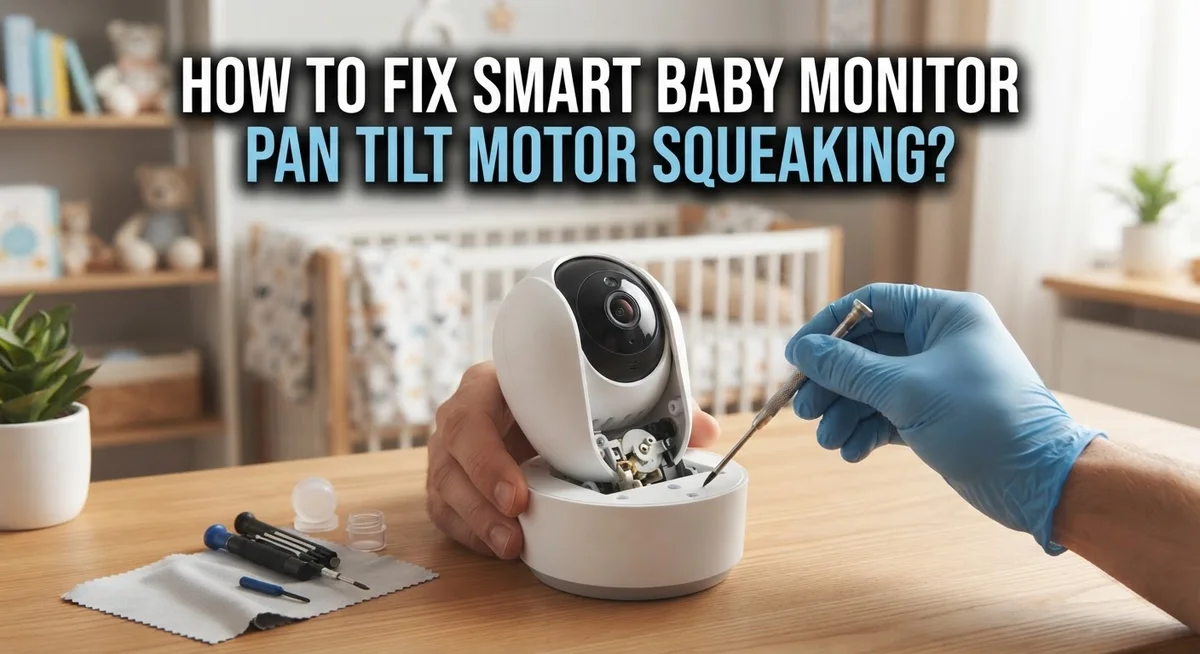
How To Fix Smart Baby Monitor Pan Tilt Motor Squeaking?
That squeaky sound from your baby monitor’s pan tilt motor can feel alarming. You just want peace and quiet, not a noisy gadget adding stress to nap time.
The good news is that most squeaking issues are fixable. You do not need to buy a new device right away.
Many parents face this exact problem. The squeak often comes from simple things like leftover plastic wrapping or motor strain during movement.
Sometimes the noise points to bigger issues like interference or hardware wear. Knowing the difference helps you pick the right fix fast.
In a Nutshell
- Check for plastic first. Many squeaks come from leftover protective sheets on the parent or baby unit. Peel them off before you troubleshoot anything else.
- Adjust the distance between units. Placing the baby unit too close or too far from the parent unit can cause motor strain and odd noises.
- Test different power outlets. Some squeaking links to electrical interference. Try flipping the plug or using another outlet entirely.
- Look at unit placement. The parent unit sometimes sits in a spot that creates signal issues, which can affect motor sound.
- Consider hardware wear. If the noise continues, the motor itself might have a mechanical defect. This happens more in certain models.
- Check your model number. Support steps vary by brand and model. Look up your specific device for targeted fixes.
Why Pan Tilt Motors Squeak: Common Causes
Pan tilt motors squeak for several clear reasons. Understanding what causes the noise helps you fix it faster.
Protective plastic sheets are the number one culprit. Manufacturers leave thin plastic coverings on both parent and baby units to prevent damage during shipping. These sheets vibrate when the motor moves, creating that annoying squeaking sound. Many parents miss this simple detail because the plastic is thin and easy to overlook.
Electrical interference causes squeaking too. When the baby unit sits too close to the parent unit, they can interfere with each other’s signals. This interference makes the motor work harder and produce noise. Distance matters more than you might think.
Power outlet problems create static and squeaking sounds. Some outlets deliver unstable electrical current. When your monitor plugs into a poor outlet, the motor receives inconsistent power. This causes the motor to stutter and squeak during movement.
Motor wear and friction happen over time. The gears inside the pan tilt mechanism need lubrication. Without proper lubrication, metal parts rub together and create squeaking. This is especially true if your monitor is several months or years old.
Electromagnetic interference from nearby devices also plays a role. Routers, cordless phones, and microwaves emit signals that disrupt your monitor. These signals can make the motor behave erratically and produce noise.
Hardware defects are less common but possible. Some motors arrive from the factory with manufacturing issues. A defective motor might squeak from the very first use.
The key is identifying which cause applies to your situation. Start with the simplest fixes like removing plastic sheets. Then move to electrical and placement adjustments. If squeaking persists after these steps, the motor itself likely needs attention. Each cause has a specific solution that works quickly and effectively.
Initial Setup Checks Before Troubleshooting
Before you start taking apart your baby monitor or assume the motor is broken, run through these basic checks first. These steps catch the most common causes of squeaking and often fix the problem without any real troubleshooting.
Start by removing all protective plastic sheets. Check both the parent unit and the baby unit carefully. Manufacturers wrap these devices in plastic during shipping to prevent damage. Many parents forget to peel off these coverings before turning on the monitor. Plastic touching moving motor parts creates squeaking and screeching sounds that sound alarming but disappear once you remove the plastic.
Next, check your electrical outlet. Plug the parent unit into a different outlet in your home. Some outlets carry electrical noise that interferes with the monitor’s signal. This interference can make the pan tilt motor squeak or stutter. Try flipping the plug orientation too. Outlets work both ways, and the direction sometimes affects how much interference reaches your device.
Measure the distance between units. The baby unit should sit at a reasonable distance from the parent unit. If they are too close together, the signal becomes too strong and causes problems. If they are too far apart, the weak signal creates motor stuttering and noise. Check your monitor’s manual for the recommended distance range.
Look at where your parent unit sits. Placing it near microwaves, routers, or cordless phones causes electromagnetic interference. Move the parent unit to a different room or location away from these devices. This simple change often eliminates squeaking completely.
Write down your monitor’s model number. You will need this if problems continue. Different brands and models have different solutions. Your model number appears on the back of the device or in your documentation.
Step-by-Step Guide to Fixing the Squeaking Motor
Now that you’ve completed the initial setup checks, it’s time to focus on the motor itself. Start by powering off both units completely. Wait at least 30 seconds before turning them back on. This simple reset often stops squeaking caused by temporary glitches in the motor’s control system.
Next, gently inspect the pan tilt mechanism for visible debris. Dust and small particles can lodge in the motor housing and cause friction sounds. Use a soft, dry cloth to carefully wipe around the motor area. Never use liquids or compressed air, as moisture can damage internal components.
Check if the motor moves smoothly through its full range. Manually move the camera head left and right if your model allows it. The motion should feel fluid without grinding or catching. If you notice resistance, the motor shaft may need attention.
Listen carefully to identify the squeak’s exact location. Does it come from the pan mechanism, the tilt mechanism, or both? This helps determine if one motor needs focus or if the issue affects the entire unit. Sometimes only one direction produces noise.
Test the motor at different speeds if your monitor offers speed settings. Slower speeds often reveal problems that faster speeds mask. If squeaking only happens at certain speeds, this points to a specific mechanical issue rather than general wear.
If squeaking persists after these checks, the motor bearings may have worn out or the gears inside may have misaligned. At this point, you’ll need to contact the manufacturer’s support team with your model number. They can advise whether repair or replacement is the best option for your situation.
Addressing Electromagnetic Interference and Static Noise
Electromagnetic interference happens when electrical devices near your baby monitor send out signals that disrupt the monitor’s operation. These signals can cause static noise, squeaking, or crackling sounds from the pan tilt motor.
Identify nearby interference sources first. Microwaves, cordless phones, wireless routers, and cell phone chargers all emit electromagnetic waves. Move your parent unit away from these devices by at least 3 to 6 feet. Even small distances help reduce interference significantly.
Test different electrical outlets in your home. Some outlets sit closer to high interference sources than others. Try plugging your parent unit into outlets in different rooms. You may notice the squeaking reduces or disappears completely with a different outlet location.
Check the outlet’s ground connection too. A faulty ground can amplify electromagnetic interference. If you have access to a grounded outlet tester, use it to verify the outlet works properly. Outlets in kitchens and laundry rooms often have more electromagnetic activity due to appliances nearby.
Reposition your parent unit away from walls and metal objects. Metal shelves, filing cabinets, and radiators can reflect or amplify electromagnetic signals. Place the parent unit in an open area of your home instead.
If squeaking continues after these steps, try using a power strip with built in surge protection. Surge protectors sometimes include shielding that reduces electromagnetic noise. Plug only your monitor into this strip, not multiple devices.
Distance matters between your units too. Keep the baby unit and parent unit within the recommended range specified in your monitor’s manual. Units placed too far apart can cause the system to work harder, which increases motor strain and noise.
Static noise that sounds like white noise or crackling usually indicates electromagnetic interference more than mechanical problems. Focus on outlet placement and device positioning before assuming the motor itself needs repair.
Common Mistakes That Worsen Motor Noise
Many people accidentally make mistakes that make motor squeaking worse. Understanding these errors helps you avoid them.
Leaving protective plastic on the equipment is the most common mistake. Manufacturers ship baby monitors with plastic sheets covering the speakers and sensors. Parents often forget to remove these before turning on the device. The plastic traps sound and creates additional noise that mimics motor squeaking. Always check both units carefully before first use.
Placing units too close together causes problems. When the parent unit sits right next to the baby unit, they interfere with each other’s signals. This interference creates static and squeaking sounds that seem like motor failure. The units need proper distance to communicate clearly. Check your manual for recommended spacing.
Using the wrong electrical outlet makes noise worse. Some outlets in your home sit near high interference sources. Plugging the parent unit into these outlets increases electromagnetic interference. The motor sounds worse because the device struggles to operate properly. Try different outlets throughout your home to find a cleaner power source.
Ignoring electromagnetic interference sources is another major mistake. Keeping the parent unit near microwaves, routers, or cordless phones amplifies squeaking. These devices emit signals that disrupt your monitor’s operation. Moving the parent unit away from these sources often solves the problem completely.
Adjusting motor speed too quickly can worsen squeaking. If your monitor has speed settings, changing them rapidly puts stress on the motor. Gradual adjustments work better. Always let the motor complete its movement before changing direction.
Not checking the outlet’s ground connection matters too. A faulty ground increases electrical noise. Inspect the outlet physically and consider testing it with another device first.
These mistakes compound each other. Fix one issue at a time and test between each change. This approach helps you identify which mistake actually caused your squeaking problem.
Advanced Troubleshooting for Persistent Squeaking
When squeaking persists despite your initial troubleshooting efforts, you need to dig deeper into the motor’s mechanical condition. Start by powering off the monitor completely and let it rest for at least 30 minutes. Sometimes motors need a cool down period to reset their internal components.
Next, examine the pan tilt mechanism very carefully under good lighting. Look for any visible cracks, bent parts, or loose screws around the motor housing. Use a flashlight to inspect corners and crevices where debris might hide. Even tiny particles can cause persistent squeaking sounds.
Test the motor’s movement manually if your monitor allows this function. Gently move the pan tilt head through its full range of motion without power. Feel for any grinding, resistance, or rough spots. Smooth movement indicates healthy mechanics. Rough or jerky movement suggests internal wear.
Check your monitor’s settings menu for motor speed adjustments. Try running the motor at its lowest speed setting for several hours. Sometimes high speed operation aggravates squeaking. Lower speeds reduce stress on worn components and may reveal whether the noise is speed related.
Listen closely to identify exactly where the sound originates. Does it come from the pan axis or the tilt axis? Front of the unit or back? This information helps pinpoint the problem area. Write down when the squeaking occurs: during continuous movement, at direction changes, or only at certain angles.
If squeaking happens only during specific movements, the issue likely involves misaligned gears or worn bearings in that particular axis. This suggests internal mechanical problems rather than simple interference issues.
Consider whether the squeaking changed in volume or intensity since you first noticed it. Gradually worsening noise indicates progressive wear. Stable noise levels suggest the problem stabilized or involves external factors you haven’t addressed yet.
Document these observations carefully. They provide essential information if you need to contact manufacturer support or explore repair options.
When to Contact Manufacturer Support
Your baby monitor’s squeaking might need professional help. Knowing when to reach out to the manufacturer saves time and frustration.
Contact manufacturer support if squeaking persists after basic troubleshooting. You’ve already tried repositioning units, testing outlets, and removing protective plastic. If the noise continues, the problem likely involves internal motor components. The manufacturer has access to your specific model’s technical details and can provide accurate guidance.
Reach out when squeaking happens consistently during normal operation. This suggests a mechanical issue rather than interference. Document when the noise started and what movements trigger it. Write down your monitor’s model number before calling support. You’ll find this number on the back of the unit or in your product manual.
Gather this information before contacting support. Have your purchase date and proof of purchase available. Describe the squeaking sound as clearly as you can. Is it a high pitched squeal or a grinding noise? Does it happen during panning, tilting, or both? Tell them exactly which motor functions cause problems.
Many manufacturers offer warranty coverage for defective motors. Your monitor might qualify for repair or replacement if the issue stems from manufacturing defects. Support staff can determine whether your unit needs service without voiding the warranty.
Email support typically provides faster responses than phone calls. Include photos or videos showing the motor movement if possible. Some manufacturers request recordings of the squeaking sound itself. This helps them diagnose the problem more accurately.
Request a replacement unit if the manufacturer confirms a defect. Don’t attempt to disassemble the motor yourself. This voids warranties and risks damaging other components. Professional technicians have the proper tools and expertise to fix internal motor issues safely.
Final Thoughts
Fixing a squeaky pan tilt motor does not need to feel overwhelming. Most squeaking comes from simple issues like leftover plastic covers or poor unit placement. You can solve many problems within minutes.
Start with the easy fixes first. Remove all protective plastic from both units. Check that your baby unit sits close enough to the parent unit. These small steps solve most squeaking problems immediately.
If squeaking continues, look closer at the mechanical parts. Watch how the motor moves during pan and tilt actions. Note any specific angles where the noise gets louder. This information helps you understand what is happening inside the unit.
Interference from other electronics often makes squeaking worse. Try a different outlet if you suspect this problem. Move other devices away from your monitor to test this theory.
Persistent squeaking often points to a hardware issue. Worn bearings or misaligned gears cannot fix themselves. These mechanical problems need professional attention rather than more troubleshooting.
Do not wait too long if basic fixes fail. Contact manufacturer support once you have tried repositioning and checking outlets. Have your purchase details ready before you reach out.
Manufacturers often replace units under warranty when motors show defects. This process moves faster with photos or videos of the actual squeaking. Support teams need clear evidence to approve replacements.
Your baby’s sleep depends on a quiet, reliable monitor. Take squeaking seriously rather than ignoring it. A working monitor gives you peace of mind during nap times and nighttime hours.
Remember that most squeaking has a clear cause and solution. Work through each step methodically rather than skipping ahead. Patience during troubleshooting saves you time and frustration later.
With the right approach, you can restore your monitor to smooth, quiet operation. Trust the process and reach out for help when needed.
Frequently Asked Questions
Why does my baby monitor’s pan tilt motor squeak?
Squeaking happens for several reasons. Protective plastic sheets left on the units cause static noise. Electromagnetic interference from nearby devices like routers or microwaves triggers squeaking too. Worn bearings or misaligned gears inside the motor create mechanical squeaking sounds.
Sometimes the issue is signal related, not mechanical. Poor outlet placement or inadequate distance between parent and baby units increases interference.
How do I stop the squeaking noise?
Start with simple fixes first. Remove all protective plastic coverings from both units completely.
Reposition your baby unit closer to the parent unit. Try plugging into a different electrical outlet or flip the plug orientation. Move your parent unit away from other electronics that might cause interference.
Check your monitor’s settings menu for motor speed adjustments. Slower speeds sometimes reduce squeaking.
When should I contact the manufacturer?
Reach out if squeaking persists after trying these basic steps. Contact support when squeaking happens consistently during normal operation.
Have your purchase date and model number ready. Many manufacturers offer warranty coverage for defective motors. Email support typically responds faster than phone calls.
Can I fix the motor myself?
Most squeaking issues resolve through troubleshooting, not repairs. Worn bearings or misaligned gears require professional replacement.
Do not attempt to open the motor housing yourself. This may void your warranty. Request a replacement unit if the manufacturer confirms a defect.
What information should I gather before contacting support?
Prepare your purchase date and proof of purchase. Note exactly when the squeaking started and how often it occurs.
Record whether squeaking happens during all movements or just specific directions. Take photos or videos showing the motor movement. Describe the sound clearly: is it squeaking, grinding, or static noise?