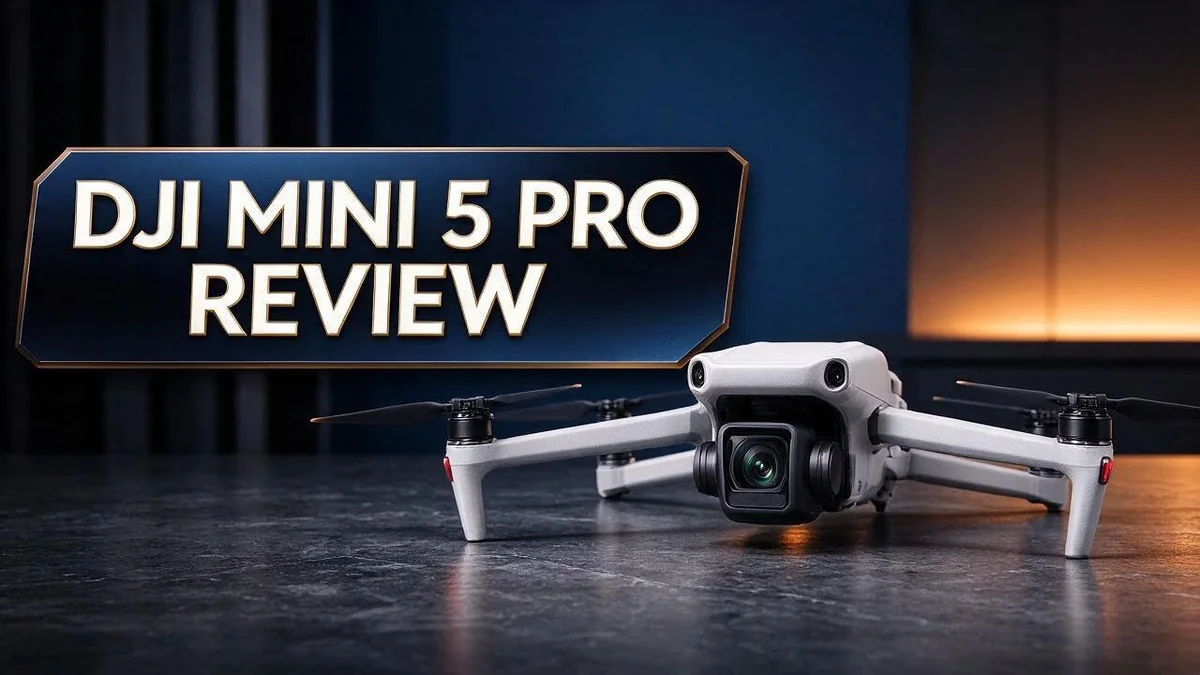
DJI Mini 5 Pro Review: 1-Inch Sensor, 50MP Photos and Real-World Flight Test
Looking for a small drone that takes stunning photos? The DJI Mini 5 Pro could be your next pick. It packs a larger one inch sensor into a compact body.
Photographers will notice the difference fast. The 50MP photos look sharp, and the colours feel more true to life. Low light shots also look cleaner.
Flight time is another highlight. You can fly for up to 34 minutes on one battery. The O4 transmission reaches up to 20 km, and front LiDAR helps the drone spot obstacles ahead.
Some buyers worry about weight, though. Several reviews say this model may pass 250 g. That change can affect where you fly under local rules. In this guide, we explore what the Mini 5 Pro offers and how it compares to rivals.
In a Nutshell
-
Smart obstacle sensing: The front LiDAR sensor detects objects from 0.5 m to 200 m away. Pilots can fly with more confidence near trees, walls, and other obstacles.
-
Long range control: The O4 transmission system reaches up to 20 km. Your live video feed stays clear, even when the drone flies far from you.
-
Large sensor size: The 1 inch CMOS sensor is the first of its kind in this class. It handles dim scenes better, so evening and indoor shots look cleaner.
-
Plenty of onboard space: The drone includes 42 GB of internal storage. You can save many clips before you need to offload files.
-
Flexible digital zoom: Zoom works from 1x to 3x for 12MP photos and 4K video. Full HD footage can zoom up to 4x, which helps you frame distant subjects.
-
Strong competition: Shoppers can compare the DJI Mini 4 Pro, Mini 3 Pro, Mini SE, HoverAir X1 Pro, EXO Mini Pro, and Potensic before they decide.
Camera and Image Quality

- Ultra-Light, Palm-Sized Foldable Design - Compact and foldable, this palm-sized drone slips easily into a pocket and offers 42GB of internal storage for uninterrupted flying [7].
- 1-Inch CMOS With 4K/60fps HDR Video - 1-inch CMOS sensor captures 4K/60fps HDR video with sharp detail and vibrant colors for stunning high-quality footage.
Some of the links on this website are affiliate links, which means that at no additional cost to you, I earn a commission if you click through and make a purchase. I only recommend products and services that I believe will add value to my readers. Thank you for your support!
Image quality is where the DJI Mini 5 Pro shows its real progress. Every frame carries more detail than most buyers expect from a drone this light.
The sensor also handles tricky lighting with ease. Indoor shots and dusk scenes keep their texture instead of turning muddy.
Low light performance is a major win here. A larger sensor gathers more light, so evening photos look cleaner. Night flights over parks or city streets show clearer detail. Noise appears under control in dim settings.
Colour is another strong point. Skin tones, greens, and skies appear true to life across most scenes. Reds and blues also look balanced.
The 50MP photo mode adds extra room for editing. You can crop a shot closer and still keep plenty of detail. Extra pixels also give you room to adjust brightness later in editing software.
The Quad Bayer design helps the sensor capture these large, detailed files.
Creators who share photos online or print them at home will appreciate the extra resolution.
Video quality benefits from the larger sensor too. Footage keeps more shadow detail, which helps in high contrast scenes. Dynamic range matters when a scene has bright skies and dark ground. A larger sensor tends to handle this balance well.
Still, buyers should test shots in their own setting. Lighting, weather, and distance all shape the final result.
For best results, shoot during the golden hours after sunrise and before sunset. Soft light brings out texture and warm tones. Keep the lens clean before every flight. A smudge can soften details and reduce contrast in photos.
Shooting in steady conditions also helps. Calm air keeps the gimbal stable and images sharp. Practice with different angles to learn what the camera handles best.
Overall, the camera delivers reliable results for everyday shooting. It suits trips, family moments, and landscape scenes. Good light always makes the biggest difference.
Flight Time and Portability
The DJI Mini 5 Pro can stay airborne for up to 34 minutes. That gives you extra time to frame each shot.
Real flight time depends on conditions. Wind, cold air, and fast maneuvers drain the battery quicker. Plan for less than the headline number.
Pack at least one spare battery for every outing. Swapping batteries keeps your shoot moving without long waits. Charge them fully before you leave home.
Portability matters most when you hike to a location. A compact body fits easily into a backpack. Check that your bag has room for the drone and accessories.
Weight also affects where you can fly. Some local areas set rules for drones based on size and weight. Read the regulations for each country before you travel.
Carry a simple kit for every trip. Add spare propellers, a microfiber cloth, and a fast memory card. Small items prevent big delays in the field.
Cold temperatures reduce battery power quickly. Keep batteries warm in an inside pocket until takeoff. This habit helps you get more from each flight.
Build your flight plan around your battery level. Start with a clear route and track your remaining charge. Always keep enough power to return safely.
Quick setup saves time on location. Unfold the drone, connect your phone, and wait for a strong GPS lock. Set your return home point before every flight. A short routine keeps your session on schedule.
Choose takeoff spots with care. Open fields, beaches, and parks offer clear space. Avoid crowds and tall trees that block signal and GPS.
Think about carrying weight too. Your camera gear, water, and jacket add up fast. Lighter loads make long walks far more enjoyable.
Travelers often choose the Mini series for this reason. A small drone suits busy days and long trips. Enjoy the freedom to shoot wherever you go.
Obstacle Sensing and Safety
The DJI Mini 5 Pro uses front sensing to help pilots avoid crashes. Smart features give beginners more confidence in the air. Still, the pilot must stay alert, because no sensor can replace good judgment.
Obstacle sensing works best in good conditions. Bright light and clear surfaces help the system read the scene. Dust, fog, or heavy rain can reduce accuracy, so check the weather before you fly.
Thin objects still pose a real risk. Branches, power lines, wires, and fences can be hard to spot. Keep a safe distance from anything that looks thin or moves unexpectedly.
Return to home needs careful planning too. Choose a home point that stays clear of trees and buildings. A clear path helps the drone climb and fly back without trouble.
Watch your battery level during every flight. Low power can force an early landing. Set a return threshold at the start so the drone flies home with plenty of charge.
Local rules matter as much as technology. Many countries require registration and limit where drones can fly. Check official airspace maps before each trip. Many apps show restricted zones in seconds.
Keep people and animals safe at all times. Stay away from crowds, roads, and pets. Fly lower when other people are nearby, and respect their privacy.
Practice in an open field first. Try slow moves and simple flight patterns. Learn how the drone reacts to wind and sensor alerts. Confidence grows with each calm flight.
Sensors cannot see everything around you. Your own eyes catch what cameras miss, such as birds or aircraft that move quickly. Keep the drone in your line of sight whenever possible.
Top 3 Alternatives
DJI Mini 4 Pro

- 𝗨𝗻𝗱𝗲𝗿 𝟮𝟰𝟵 𝗴, 𝗡𝗼 𝗥𝗲𝗴𝗶𝘀𝘁𝗿𝗮𝘁𝗶𝗼𝗻 𝗜𝘀 𝗥𝗲𝗾𝘂𝗶𝗿𝗲𝗱[1] - Travel light and skip registration for a user-friendly, easy-to-carry experience on all your journeys. Enjoy the fun of flying without the tedious application process and waiting time.
- For the latest aircraft firmware, 𝘁𝗵𝗲 𝗥𝗲𝗺𝗼𝘁𝗲 𝗜𝗗 𝘄𝗶𝗹𝗹 𝗼𝗻𝗹𝘆 𝗯𝗲 𝗮𝗰𝘁𝗶𝘃𝗮𝘁𝗲𝗱 𝘄𝗵𝗲𝗻 𝘁𝗵𝗲 𝗜𝗻𝘁𝗲𝗹𝗹𝗶𝗴𝗲𝗻𝘁 𝗙𝗹𝗶𝗴𝗵𝘁 𝗕𝗮𝘁𝘁𝗲𝗿𝘆 𝗣𝗹𝘂𝘀 𝗶𝘀 𝘂𝘀𝗲𝗱. If your drone needs to be registered, such as 𝗳𝗹𝗶𝗴𝗵𝘁𝘀 𝗳𝗼𝗿 𝗰𝗼𝗺𝗺𝗲𝗿𝗰𝗶𝗮𝗹 𝗽𝘂𝗿𝗽𝗼𝘀𝗲𝘀, 𝗽𝗹𝗲𝗮𝘀𝗲 𝗳𝗹𝘆 𝘄𝗶𝘁𝗵 𝘁𝗵𝗲 𝗜𝗻𝘁𝗲𝗹𝗹𝗶𝗴𝗲𝗻𝘁 𝗙𝗹𝗶𝗴𝗵𝘁 𝗕𝗮𝘁𝘁𝗲𝗿𝘆 𝗣𝗹𝘂𝘀.
Some of the links on this website are affiliate links, which means that at no additional cost to you, I earn a commission if you click through and make a purchase. I only recommend products and services that I believe will add value to my readers. Thank you for your support!
Want a small drone with strong features? The DJI Mini 4 Pro is a great pick. It weighs under 249 grams, which keeps it light and easy to carry.
It records 4K video at 60 frames per second with HDR support. Its obstacle sensing helps new pilots fly with more confidence.
DJI Air 3S

- This Bundle Includes: DJI Air 3S Drone, RC 2 Remote Controller, 3 x Intelligent Flight Battery, 128GB Extreme microSD Memory Card, High USB Speed Memory Card Reader, Shoulder Bag , Drone Photography Backpack, 3 x Extra Pair of Low-Noise Propeller, Gimbal Protector, USB-C PD Cable, ND Filter Set (ND8, ND32 & ND128), Battery Charging Hub, Drone Landing Pad, Camera Lens Cleaning Kit, 6-Slot Memory Card Wallet, CPS 2 Year Warranty, Bundle It Better Lens Cloth
- Capture Breathtaking, Immersive Shots - DJI Air 3's dual cameras offer creative focal-length options ideal for travel photography. Show off stunning environments and tell captivating stories through your lens. The dual-camera system of the Air 3S consists of a 1" CMOS 24mm 50MP wide-angle camera and a 1/1.3" CMOS 70mm 48MP medium telephoto camera. Together, they can capture clear, expansive landscapes or cinematic portraits and vehicle shots.
Some of the links on this website are affiliate links, which means that at no additional cost to you, I earn a commission if you click through and make a purchase. I only recommend products and services that I believe will add value to my readers. Thank you for your support!
Want a bigger camera without a bigger body? The DJI Air 3S offers a 1-inch sensor and two lenses. One lens is wide, and the other gives you 3x zoom.
This model offers longer flight times and a stable video link. It suits travelers who want flexible shots in one bag.
Autel EVO Nano+

- ✈️【𝟮𝟬𝟮𝟲 𝗔𝘂𝘁𝗲𝗹 𝗘𝗩𝗢 𝗟𝗶𝘁𝗲 𝟲𝗞 𝗘𝗻𝘁𝗲𝗿𝗽𝗿𝗶𝘀𝗲】Compared to the Autel EVO 2 Pro V3 and EVO II Enterprise V3/ RTK V3, the Autel EVO Lite 6K Enterprise offers a far more affo.rdable solution. Weighing just 866g and featuring a compact foldable design (210×123×95mm), it easily stows into a backpack. Its intuitive, user friendly controls let a single pilot carry out missions efficiently and reliably.
- 👍【𝟭-𝗶𝗻𝗰𝗵 𝗖𝗠𝗢𝗦 𝟲𝗞 𝗖-𝗮𝗺.𝗲𝗿𝗮】Autel Robotics EVO Lite 6K Enterprise is built around a high-performance 6K visual c-a-mera, featuring a 1-inch CMOS sensor and 16x digital zoom. This system captures critical details even in demanding conditions, enabling high-precision documentation and reliable analysis. For optimal control across lighting scenarios, the c-a-mera includes an adjustable aperture (F2.8 to F11) and supports ISO settings up to 48,000 in night mode.

Some of the links on this website are affiliate links, which means that at no additional cost to you, I earn a commission if you click through and make a purchase. I only recommend products and services that I believe will add value to my readers. Thank you for your support!
Prefer a different brand? The Autel EVO Nano+ is a strong choice. It packs a large 50MP sensor into a compact frame.
Its 4K HDR video looks rich and clear. Photographers often love the detailed still images. The included remote also has a bright screen for easy viewing outdoors.
Transmission Range and Connectivity
The DJI Mini 5 Pro uses O4 transmission to link the drone with its controller. The brand lists a range of up to 20 km. That number gives pilots plenty of room to explore.
Real range depends on your surroundings. Trees, hills, and tall buildings can block the signal. Dense forests can cut the range far below the listed figure. Open land gives the strongest and steadiest link.
Radio noise can also weaken the connection. Crowded city areas often have many wireless networks and phone signals. Try to fly away from busy transmitters when you can.
Angle your controller antennas so their flat sides face the drone. This position helps the signal reach the aircraft. Small changes in the controller position can make a big difference.
Watch the signal bars on your screen. A strong link shows full bars during flight. If the signal drops, bring the drone back closer before it drifts too far.
Check the distance display often during each flight. Long range flights need extra care. Always know where your drone is at all times.
Always follow local rules on flight distance. Some areas limit how far you can fly from the pilot. Keep the drone within sight, even when the range allows more.
Update the firmware before each trip. Newer software can help the system manage the link. Check the app for updates before you leave home.
A stable connection also matters for live viewing. Clear video on your phone or controller makes it easier to frame shots. Choppy video can hide nearby hazards, so a steady link keeps you safer.
In short, the 20 km rating shows strong potential. Good habits turn that potential into dependable flights. Plan each flight with the signal in mind.
Ease of Use and Controls
Good controls make every flight feel calmer and more focused. When the drone responds well, you spend less time worrying and more time framing shots.
Your thumbs will spend most of their time on the sticks. Smooth stick movement matters more than any extra feature. Learn the basic moves until they feel natural.
Start each session with gentle inputs. Move the sticks slowly and watch how the drone reacts. Small movements teach you how much force each direction needs.
New pilots often feel nervous during the first few flights. That feeling is normal, and it fades with time. Keep your first sessions short so your focus stays sharp.
Muscle memory forms after many short practice flights. Repeating the same moves builds confidence quickly. Keep a simple checklist nearby so nothing gets missed.
The app plays a big role in daily use. It shows live video, altitude, and camera settings on one screen. Check these details before every takeoff.
Camera controls sit close to your fingers during flight. You can adjust common settings without digging through complex menus. Set your main look before the drone leaves the ground.
Simple menus also help when light changes quickly. Fewer taps mean fewer mistakes when you need to react fast. Watch how the aircraft responds to each input on the screen.
Automatic takeoff and landing functions can reduce stress for new pilots. Test them in a quiet spot first. Confirm the drone behaves as expected before you rely on them.
The DJI Mini 5 Pro feels approachable for learners who want a steady path. Build your skills with short sessions and clear goals.
Pros and Cons
Pros
– The larger sensor handles dim light well and shows more lifelike colour.
– Photos reach 50MP, which gives you room for big prints and sharp crops.
– The 42 GB internal storage holds many clips before you need a memory card.
– One reviewer says the upgrades arrive without adding any weight.
– Digital zoom gives you extra framing options from 1x up to 3x.
Cons
– It may weigh over 250 g, so you could lose its under 250 g status.
– Reviewers debate the weight, which makes the upgrade feel mixed.
– Digital zoom crops the image, so detail softens at higher settings.
– Some details about the weight issue remain unclear in current reports.
Who Should Buy It
Travelers and outdoor fans form a strong group of buyers. They want a drone that packs light and captures wide views. This model fits well into a daily backpack.
Hikers and nature lovers can film trails, lakes, and mountains from above. Wide aerial views show a sense of scale that phones often miss.
Social media creators gain a lot from this drone. Clean, detailed footage works well for short vertical videos. Smooth motion and sharp detail help your clips look polished, even on small screens.
Real estate agents and small business owners also benefit. Aerial shots of homes, rooftops, and event spaces look professional. Clear footage helps clients picture a property from above.
Current DJI owners will feel right at home. The app, the controls, and the workflow stay familiar. Switching takes little time, so you can spend more time filming.
Owners of the DJI Mini 4 Pro face a different choice. That model performs similarly and is slightly less capable. Upgrading makes sense if you want the newer sensor and extra flight time.
If your current drone still delivers what you need, waiting may be the smarter move.
Families who love capturing holidays may enjoy it too. Everyone can watch the live view and share the fun. Shared flights create memories that last for years. Choose open spaces with clear rules for the best experience.
Some buyers should look elsewhere. People who want a tiny selfie drone for quick clips may prefer the HoverAir X1 Pro. Shoppers who need a drone that stays firmly in the lightest class should check the latest specs first.
Think about your main goal before you decide. Pick this drone if you want strong photos, longer flights, and room to grow. Choose a simpler model if you only want short, casual flights.
Final Verdict
The DJI Mini 5 Pro earns a solid recommendation. It packs many useful upgrades into a compact body. The right choice still depends on how you plan to fly.
Longer flight time gives you more room to work. With up to 34 minutes in the air, you can capture a full scene without rushing back to land. Short flights can cut a shoot off too early, so this matters.
The front LiDAR system adds another layer of safety. It detects obstacles from 0.5 to 200 meters away. That means it can warn you before a tree, wall, or fence gets too close.
The 20 km transmission range also stands out. You can keep a clear live feed while you explore wide open spaces. Always check local flight rules, though, because legal limits apply no matter how strong the signal is.
Before you buy, check the current weight label on the model you plan to purchase. Weight changes can affect where you may fly without extra paperwork. Read the latest local guidance too, since rules change often.
Some buyers may find a different drone works better. If you only need simple clips for quick sharing, a lighter setup may feel easier to carry every day. Matching the drone to your daily habits matters more than chasing every feature.
Hands-on testing gives the clearest answer. Try flying in a shop demo area or with an experienced friend. Spend time with the controls, the battery, and the camera. You will know quickly whether this drone fits your style.
Frequently Asked Questions
How does it compare with older DJI models?
The DJI Mini 3 Pro and DJI Mini SE are older options. They may suit you if you want a simpler setup. Compare their features with the Mini 5 Pro before you decide. Focus on the features you will use most.
How close can its sensors detect objects?
The obstacle detection range runs from 0.5 m to 200 m. Keep a safe gap from trees, poles, and power lines anyway. Sensors help you, but careful flying still matters most. Practice in open areas before you fly near buildings.
Can I fly it anywhere I want?
Drone rules vary by country and region. Check local laws and no fly zones before you take off. Many parks and cities also set their own limits. Always check the rules for your exact location. A quick search can save you from fines or trouble.
Should I buy extra batteries?
Extra batteries let you film longer without long breaks. This helps most on trips where you want to capture several scenes. Many pilots also add a carry case to protect the drone. Plan your gear before a big outing.
Which other brands make small drones?
EXO and Potensic also offer compact models. Their designs may appeal to you if you want a different style. Read recent reviews of each option before you choose. Compare camera quality, flight time, and sensors side by side.

Welcome to The File Fix. I’m Millie, and I review tech so you don’t have to suffer buyer’s remorse.
Navigating the endless sea of Amazon devices and gadget releases can feel like a full-time job. That’s why I do the heavy lifting. I dig past the unreliable 5-star reviews and shiny spec sheets to test how these devices actually hold up in the real world. Whether you’re looking for the best budget earbuds, a reliable power bank, or the latest smart home gear, you’ll find honest, no-nonsense breakdowns here.